3D Printer Art Ideas To Liven Up Your Home
3D printer art is quickly becoming one of the most accessible ways to personalize a home. With customizable designs, affordable materials, and increasingly powerful printers, anyone can create décor pieces that look polished and professionally crafted. Whether you’re printing sculptures, functional accents, or eye-catching wall art, 3D printing offers a level of creativity and control that traditional décor simply can’t match. This guide explores practical ideas, tools, and techniques to help you turn your printer into a reliable source of one-of-a-kind home art.
Essential Tools & Materials You Need
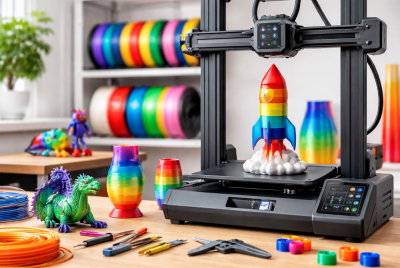
Before you start printing, make sure you’re equipped with the core tools that help your artwork look polished and professional. Having the right setup at the beginning saves time, reduces print failures, and ensures your finished pieces stand out.
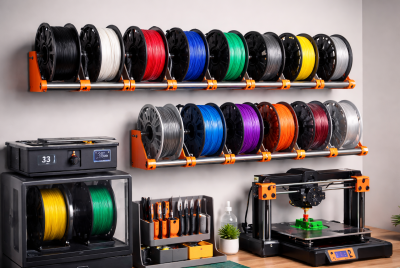
- High-quality filament (like PETG or PLA+) – Strong, reliable filament produces smoother layers, better color consistency, and more durable prints.
- A reliable FDM or resin printer – FDM printers are great for larger décor pieces, while resin printers deliver fine details for artistic sculptures and miniatures.
- Finishing tools – Items like sandpaper, deburring tools, tweezers, and small brushes help clean up rough edges and refine delicate areas.
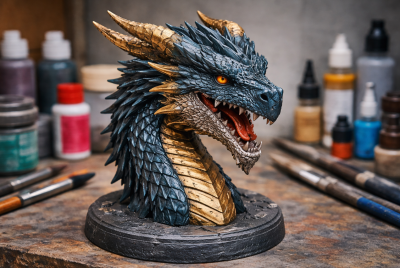
- Paints or sealants – Optional but valuable for adding color, shine, or a protective coating to elevate the final appearance of your art.
- LED components for lighting projects – Small LEDs, diffusers, and wiring kits bring printed lamps and translucent designs to life with warm, ambient lighting.
When your foundation is solid, your prints come out cleaner, more detailed, and ready to display—whether they’re going on a shelf, wall, or tabletop.
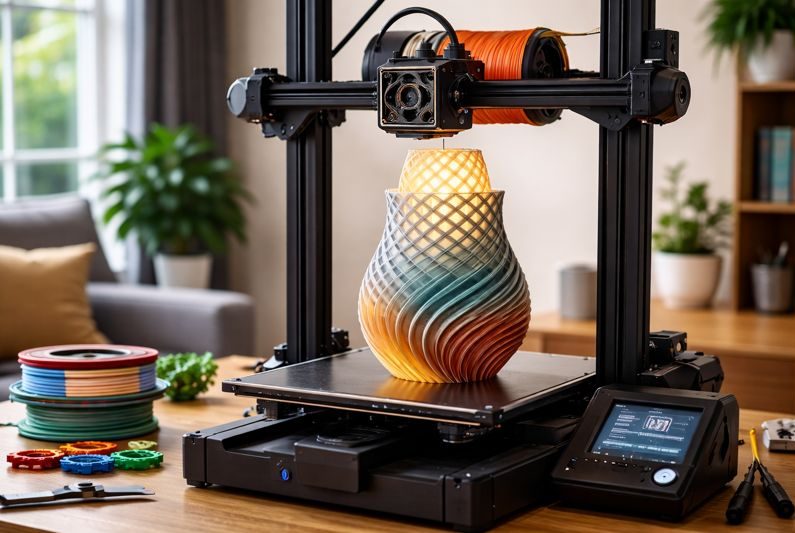
3D Printer Art Ideas to Design and Print at Home
1. Sculptural Home Accents
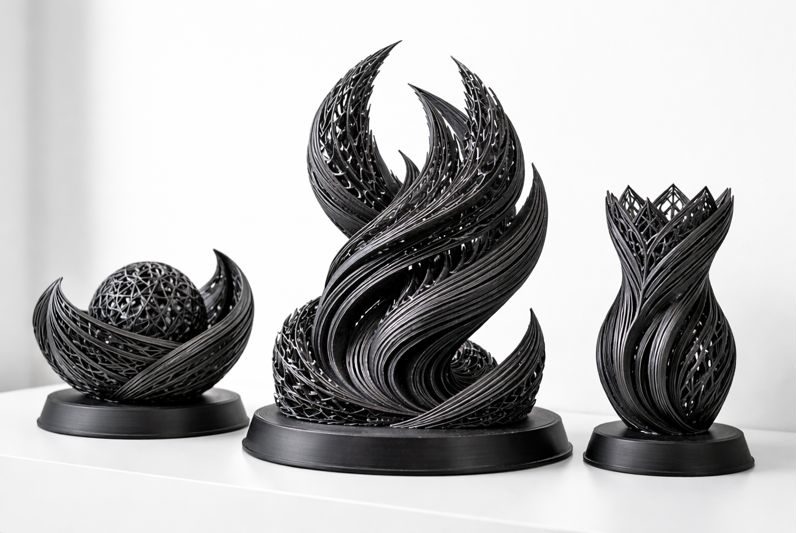
Think of organic shapes, twisting geometric forms, and abstract designs. Your 3D printer lets you replicate museum-style sculpture pieces at a fraction of the cost. Models like “voronoi lamps,” “spiral art objects,” and “flow sculptures” sit beautifully on shelves and coffee tables.
2. Functional Art Pieces
Some of the best décor pieces serve a purpose:
- Custom bowls
- Designer vases
- Modular desk organizers
- Catch-all trays
The beauty of functional art is how seamlessly it blends creativity with everyday utility.
3. Wall Art & Statement Installations
Printing wall panels or multi-piece art arrangements is a trend that’s blowing up on Pinterest and maker forums. Because you can scale parts individually, you can turn a small concept into a huge wall centerpiece.
4. Artistic Lighting Projects
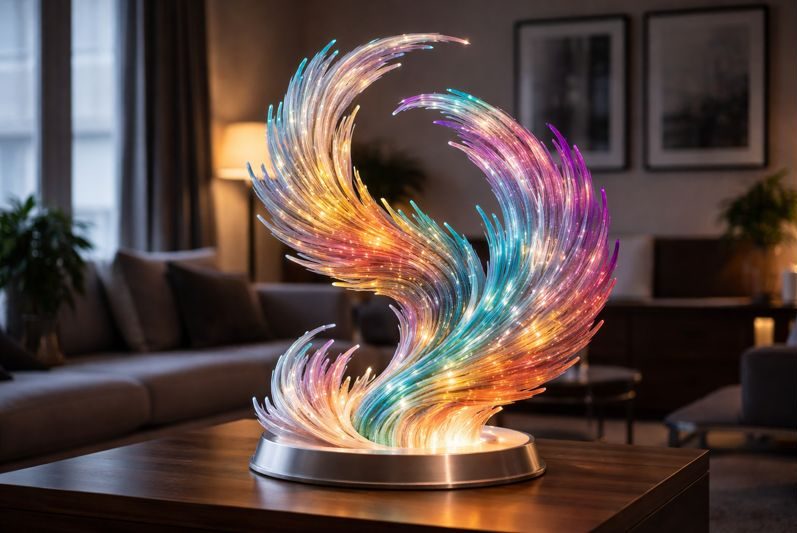
3D printed lamps, lanterns, and LED covers create an instant “wow” effect. When you play with translucent filaments, your prints scatter light beautifully, producing a warm, soft glow.
5. Nature-Inspired Decorations
Leaf patterns, coral-inspired structures, 3D printed flowers, and mushroom-themed accents bring a fresh, earthy vibe into your home. These designs look especially stunning when printed in matte or wood filaments.
How 3D Printing Is Transforming Modern Art and Design
3D printing isn’t just a hobbyist trend anymore — it’s becoming a major force in the art world and even influencing architectural design. Recent research highlights how this technology is reshaping creativity, preservation, and the way we interact with physical spaces.
3D Printing’s Growing Role in Artistic Innovation
According to new insights on emerging trends in 3D printed artwork, artists are using advanced scanning and printing techniques to recreate sculptures with remarkable accuracy. These methods preserve fine details, textures, and proportions that traditional reproduction techniques often lose.
The same research notes how 3D printing expands creative expression. Instead of simply reproducing old forms, artists can digitally manipulate scans, alter scale, remix textures, and blend traditional shapes with futuristic designs. This opens the door to:
- Restoring missing pieces of historical sculptures
- Converting digital art into physical gallery pieces
- Reimagining classical forms into new interpretations
- Creating hybrid art that blends old and new aesthetics
What stands out most is how 3D printing prompts a fresh conversation around authenticity and artistic identity. Prints don’t replace originals — they broaden what creativity can look like in a digital age.
Architectural Insights That Influence Large-Scale Art
Beyond traditional art, 3D printing is also making waves in architecture. A review on advancements in 3D printed construction techniques shows how designers are using additive manufacturing to produce complex shapes, lightweight structures, and highly detailed surface patterns.
These architectural breakthroughs inspire many large-format 3D printing artists. The study highlights how 3D printing enables:
- Organic shapes impossible with manual building
- Ultra-precise geometric patterns
- Scalable art pieces, from tabletop objects to room-sized installations
- Material experimentation that blends structure with visual art
This merging of architecture and artistic design is encouraging creators to think bigger — literally. Many modern installations now use 3D printing as the backbone for immersive environments and sculptural forms that redefine space.
Helpful Tips for Designing 3D printer art
- Print slowly for detailed pieces.
- Use supports wisely—too many add cleanup time.
- Try vase mode for elegant, seamless curves.
- Experiment with filament colors to match your décor.
- Sand and seal prints if you want a smoother finish.
- Mix and match materials—wood filament with metallic accents looks stunning.
And if you want vibrant color blends, check out these multi-color printing options.
Conclusion
3D printer art gives you the freedom to design décor that reflects your personal style while staying affordable and customizable. With the right tools, thoughtful designs, and a bit of experimentation, you can create pieces that look polished and elevate any room in your home. Whether you’re printing sculptures, lighting, or functional art, 3D printing offers endless possibilities—making it one of the most creative ways to bring your ideas to life.
FAQs
1. What type of filament is best for 3D printer art?
PLA and PETG are the most popular choices. PLA gives vibrant colors and smooth finishes, while PETG offers strength and durability.
2. Can I paint my 3D printer art pieces?
Absolutely! Acrylic paints work beautifully on sanded PLA or resin prints.
3. What’s the best printer for detailed art?
Resin printers, like the Anycubic Photon Mono series, produce the highest detail for artistic miniatures and decorative sculptures.
4. How do I make my prints look more professional?
Use a finishing kit, sand your prints, adjust your print speed, and try higher-end filaments like silk, matte, or metallic PLA.
5. Is 3D printer art cost-effective?
Yes! Most décor pieces cost just a few dollars in filament—much cheaper than store-bought art.