3D Printer Filament Storage That Keeps Spools Dry
A smooth, reliable 3D print starts long before the filament reaches the nozzle. Moisture in filament is one of the most common and avoidable causes of weak layers, stringing, and inconsistent extrusion. Even high-quality materials can absorb humidity quickly, which affects how they melt and bond during printing. Understanding how to store filament properly gives you cleaner surfaces, stronger parts, and far fewer print failures. If you want consistent results from every spool, proper 3D printer filament storage is one of the most valuable habits you can build.
How Humidity Quietly Sabotages 3D Prints
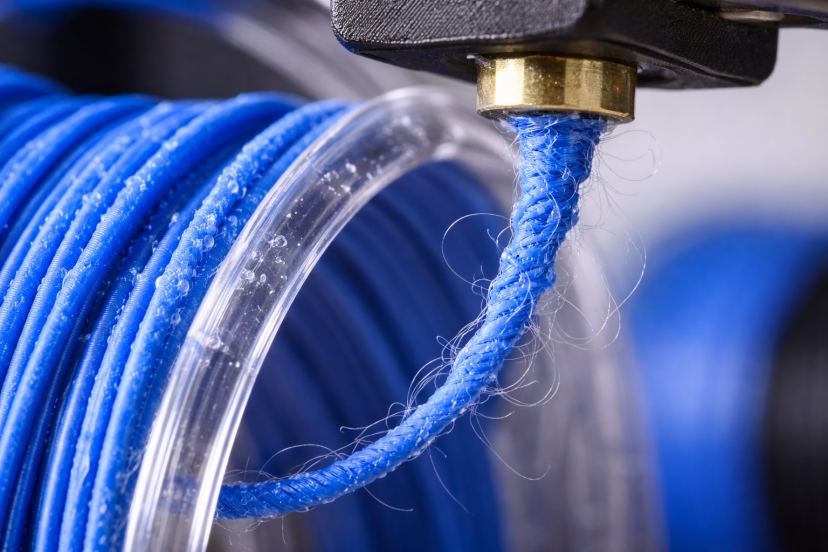
Humidity is the silent villain of 3D printing. Filament absorbs moisture from the air, and once that happens, everything goes downhill fast. As the wet filament heats up in the nozzle, the trapped water turns into steam. That tiny burst of pressure causes popping sounds, bubbles, weak layers, and rough surfaces.
You’ll notice the symptoms quickly: stringing that won’t disappear, brittle parts, inconsistent extrusion, or a strange “spit” texture on your prints. Studies in Additive Manufacturing and Polymer Testing confirm that moisture reduces filament strength and disrupts melt flow, which explains why even perfectly calibrated printers struggle with wet spools.
The worst part? Humidity damage starts long before you can see it. This is exactly why reliable 3d printer filament storage plays such a big role in preventing moisture-related print failures. Keep your filament dry, and your prints instantly become smoother, stronger, and far more reliable.
How to Protect Your Filament From Humidity
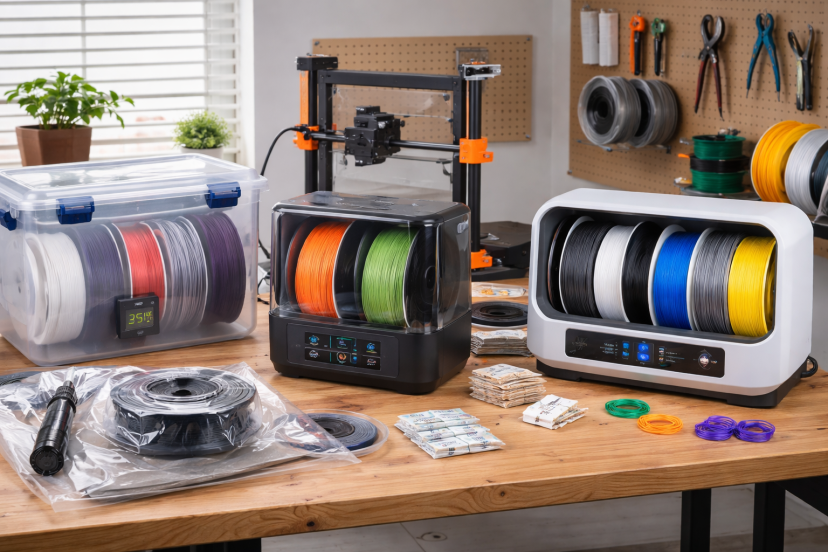
Humidity doesn’t need much time to sneak into your filament, but preventing it is surprisingly simple. The goal is to limit exposure from the moment you open a spool. Store your filament in airtight containers or vacuum bags whenever it’s not on the printer. Add fresh silica gel packs inside those containers—they absorb residual moisture and help maintain a stable, dry environment.
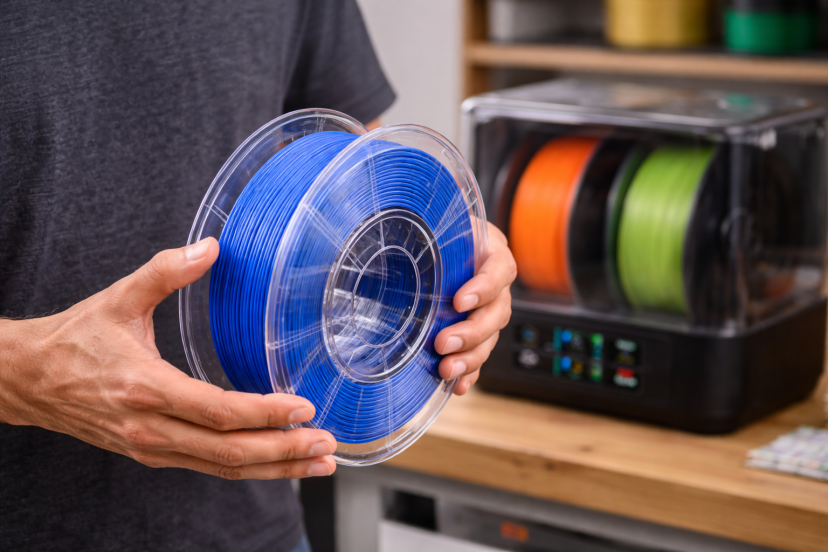
If you print often, consider using a 3d printer filament storage box. It keeps humidity low while letting you feed filament directly from the enclosure, which is a huge win in humid climates. For spools that feel soft, brittle, or already show signs of moisture, use a filament dryer or a low-heat dehydrator to bring them back to a usable state.
Once you dry a spool, seal it immediately to prevent reabsorption. Small habits like closing lids, swapping out desiccants regularly, and storing every spool right after use make a noticeable difference. Protect the filament early, and your prints stay smooth, strong, and far easier to tune.
Best Ways to Store Filament at Home
Filament storage doesn’t need to be fancy. Depending on your setup and the materials you use, several options work incredibly well.
1. Airtight Plastic Storage Containers
Clear storage bins with a rubber seal are a budget-friendly and efficient solution. Add a few desiccant packs, label the spools, and keep the lid shut. For most hobbyists, this setup works beautifully.
2. Vacuum Storage Bags
These bags remove excess air and keep moisture out. They save space and are great for long-term storage. Many come with zipper seals and pumps.
3. Dedicated Dry Boxes
Dry boxes offer controlled humidity and let you print directly from the container. They’re useful in humid environments or when you’re working with nylon and flexible filaments.
4. Electric Filament Dryers
These devices act like dehydrators. They pull moisture out of spools and hold stable temperatures. Many hobbyists dry their filament before major projects.
5. Classic Desiccant Packs
They’re not glamorous, but they work. Place silica gel or calcium chloride inside your container to pull out ambient moisture. Just remember to “recharge” or replace them periodically.
Best Filament Storage Products
If you want consistent print quality, reliable 3d printer filament storage is one of the smartest investments you can make. These five options keep humidity out, revive moisture-exposed spools, and help you maintain stable filament conditions year-round.
1. Comgrow Filament Dryer Box
A solid all-around dryer designed for everyday hobbyists. It offers steady temperature control and works well for PLA, ABS, PETG, and more. If you frequently battle humidity or notice popping sounds during extrusion, this dryer is an excellent first step.
2. YOOPAI Filament Storage Box (Water-Proof, Airtight)
This airtight, water-resistant storage box is ideal for long-term filament protection. It seals tightly, includes moisture indicators, and fits most standard spools. Perfect if you need passive storage that doesn’t take up much space.
3. Polymaker PolyDryer Box
A premium drying and storage unit with uniform heating and a clean, compact design. It’s great for restoring older or moisture-damaged spools and keeping high-sensitivity materials—like Nylon—stable between prints.
4. SUNLU Filament Dryer Box
A popular choice thanks to its simple controls and reliable performance. It actively dries filament while allowing direct feeding into your printer, making it extremely useful if you print in humid climates or use flexible filaments.
5. Creality Filament Drying Station (Multi-Spool)
Designed for serious makers, this station holds multiple spools and maintains consistent temperature and humidity. Ideal for print farms or hobbyists who keep several materials on rotation and want a single, organized drying setup.
Expert Tips to Keep Filament Dry Year-Round
Even the best container won’t help if you store it in a garage that hits 80% humidity. Here are some practical strategies:
- Monitor humidity using a small hygrometer
- Regenerate silica gel by heating it in the oven
- Avoid storing spools near windows or vents
- Keep unused spools sealed at all times
- Dry filament before large prints—especially Nylon and PETG
If you’re experimenting with new materials, these tips make troubleshooting easier.
Why Dry Filament Makes a Real Difference
If you’ve ever wondered whether keeping filament dry truly matters, the research says yes—loud and clear. And what’s interesting is how closely the findings match what makers notice in everyday printing.
One widely referenced study on humidity and print quality found that when filament sits in a damp environment, it develops tiny pockets of moisture that expand during extrusion. The result? Prints with more internal voids, uneven surfaces, and a rougher finish. It’s the same kind of “mystery issue” many hobbyists blame on slicer settings, when in reality the problem starts long before the filament reaches the nozzle.
Another tensile-strength comparison of PLA stored dry vs. humid showed that moisture doesn’t just change how a print looks—it changes how it behaves. Filament exposed to humidity produced weaker, more flexible parts, while filament kept in vacuum-sealed bags with desiccants held nearly the same strength as fresh material. That’s a pretty good reminder that print reliability isn’t only about calibration; it’s also about how you store your tools.
Proper 3d printer filament storage directly affects print strength and consistency. And the best part? Keeping your spools dry is something you can control with just a few small habits.
When You Should Consider Active Filament Drying
If you live in a humid region or regularly print with Nylon, ASA, or TPU, passive storage may not be enough. Active drying helps remove moisture already inside the spool.
Oven Drying
Low and slow works best. Keep the temperature below the filament’s glass transition point.
Food Dehydrators
Great for daily maintenance—steady, gentle heat.
Professional Dryers
Designed specifically for 3D materials and offer precise temperature control.
Drying isn’t something you must do every day, but if you’re gearing up for a long print or planning intricate functional parts, it’s worth it.
Want Print Ideas While You Store Your Spools?
If you’re organizing your filament stash, you might also want fresh ideas for what to create next. This list of easy 3D printing ideas is an inspiring place to start.
Conclusion
Good 3d printer filament storage doesn’t need to be expensive or complicated. What matters most is consistency—keeping moisture out, monitoring humidity, and drying spools when needed. With the right setup, your prints become noticeably stronger, smoother, and more reliable. Whether you’re a weekend hobbyist or running a home print farm, dry filament is one of the easiest upgrades you can make.
FAQs
1. How long does filament last if stored properly?
Many spools stay usable for years when kept in airtight containers with desiccants.
2. Do all filaments absorb moisture?
Yes, but some absorb more quickly—Nylon, TPU, and PETG are especially sensitive.
3. Can I use rice instead of silica gel?
Rice helps a little, but silica gel and calcium chloride are significantly more effective.
4. Should I dry filament before every print?
Not always. However, drying is smart if your environment is humid or you hear popping noises during extrusion.
5. Does vacuum-sealed filament still need a container?
It helps, but storing vacuum bags inside an airtight bin offers the best protection.