The Best 3D Printer Glue for Perfect Adhesion
Getting consistent bed adhesion is one of the biggest challenges in 3D printing. When the first layer doesn’t stick, prints warp, lift, or fail entirely—wasting both time and filament. That’s where 3D printer glue comes in. Used correctly, it creates a controlled bonding layer that helps filament adhere during printing while still allowing clean removal once the bed cools. In this article, we’ll look at what 3D printer glue actually does, when it’s worth using, and which options deliver the most reliable results for everyday printing.
Why Bed Adhesion Is So Important
Every successful print starts with a solid first layer. When filament bonds evenly to the build surface, the rest of the print builds on that stability. Poor adhesion, on the other hand, introduces stress as the filament cools and contracts. That stress is what causes warping, corner lift, and sudden print failures.
Environmental factors like room temperature, drafts, and even humidity can make adhesion unpredictable. Larger prints, tall objects, and materials such as ABS or PETG are especially sensitive. Using a reliable 3D printer glue creates a consistent interface between the filament and the bed, reducing these risks dramatically.
What 3D Printer Glue Really Does
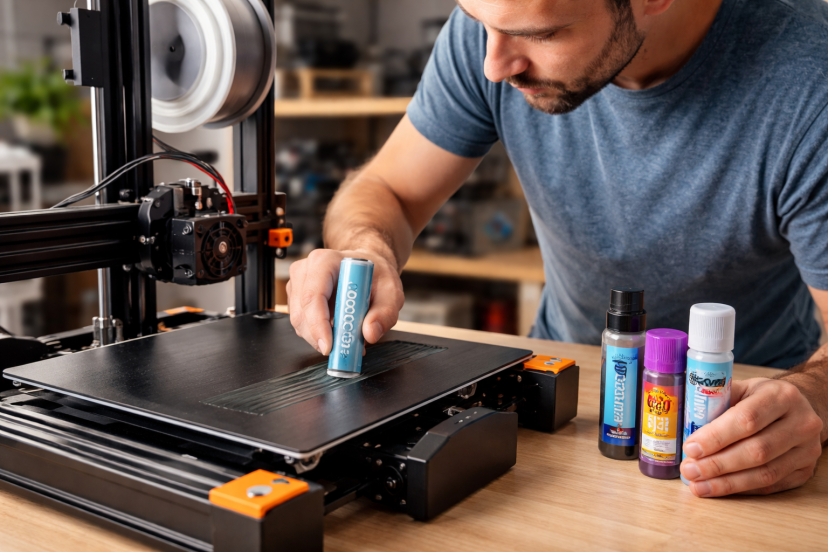
Despite the name, 3D printer glue doesn’t permanently bond your print to the bed. Most formulations are designed to activate with heat and lose grip once the surface cools. This means the glue holds the filament firmly during printing but allows easy removal afterward.
Instead of acting like traditional adhesive, it increases friction and surface energy. That slight tackiness gives molten filament something to grab onto during extrusion. Once the bed cools, the bond weakens naturally, protecting both the print and the build plate.
With that in mind, let’s look at a few 3D printer glue options that consistently deliver reliable adhesion in real-world printing.

Top 3D Printer Glue Options Worth Using
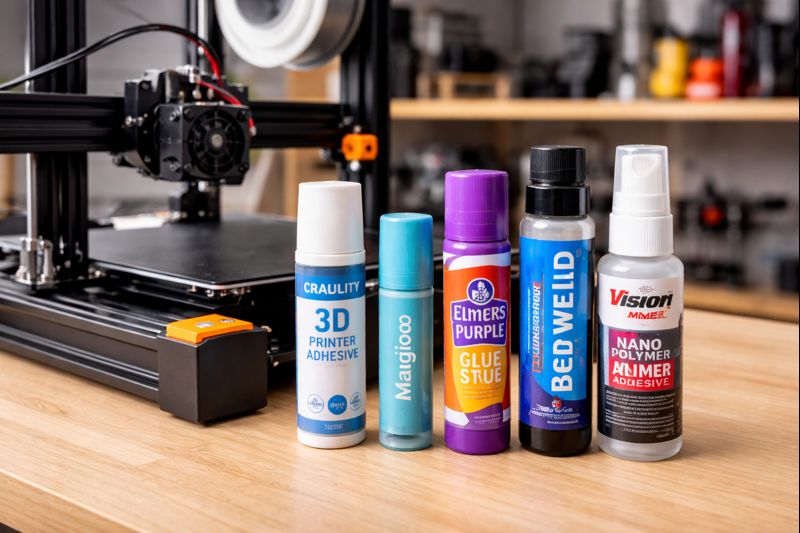
Creality 3D Printer Adhesive (Warping-Reducing Glue)
Designed by Creality specifically for FDM printers, this adhesive focuses on reducing warping and improving first-layer grip. It performs well on heated beds and is a dependable everyday option for PLA, PETG, and ABS—especially for users running Creality machines.
Magigoo Pen – All-in-One Adhesive
A purpose-built 3D printer glue trusted by both hobbyists and professionals. Magigoo activates with heat to hold prints firmly during printing, then releases cleanly once the bed cools. It’s particularly reliable on glass and other smooth build surfaces.
YallCanDiy 3D Printing Adhesive
Well suited for small parts and detailed prints, this adhesive allows for precise application where accuracy matters most. It provides consistent adhesion for common filaments and cleans up easily without leaving heavy residue.
Layerneer Original Bed Weld
A high-strength liquid adhesive known for its powerful grip on demanding prints. It activates under heat and often lasts through multiple print cycles per application, making it ideal for larger prints and long print jobs.
Print Super Glue (Extra Strong)
This product is intended for post-print use rather than bed adhesion. It’s best for permanently bonding or repairing printed parts after printing, making it a useful addition to a 3D printing toolkit—but not a replacement for build plate adhesive.
Product Comparison Table
| Product Name | Best For | Compatible Filaments | Build Surface Types | Why It Stands Out |
| Creality 3D Printer Adhesive (Warping-Reducing Glue) | Creality printers & everyday printing | PLA, PETG, ABS | Glass, smooth beds | Designed by Creality to reduce warping and improve first-layer grip |
| Magigoo Pen – All-in-One Adhesive | Reliable, all-purpose adhesion | PLA, PETG, ABS, TPU | Glass, PEI, smooth beds | Heat-activated hold with easy release after cooling |
| YallCanDiy 3D Printing Adhesive | Small parts & detailed prints | PLA, PETG | Glass, smooth beds | Precise application, clean removal, beginner-friendly |
| Layerneer Original Bed Weld | Large or demanding prints | PLA, PETG, ABS | Glass, smooth beds | Extremely strong adhesion; one application lasts multiple prints |
| Print Super Glue (Extra Strong) | Permanent bonding & repairs | Printed plastic parts | N/A (post-print use) | Best for assembling or repairing prints, not for bed adhesion |
How Glue Compares to Other Adhesion Methods
Some makers prefer painter’s tape, hairspray, or textured build plates. Each method works, but all have trade-offs. Tape requires frequent replacement and can affect first-layer consistency. Hairspray provides strong adhesion but often creates overspray that coats nearby printer components. PEI sheets are excellent but still benefit from glue when printing difficult geometries.
Glue stands out because it’s controlled, predictable, and reversible. You apply it only where needed, and it washes away easily. That balance makes it one of the most forgiving adhesion solutions available.
Why Heat, Materials, and the First Layer Make or Break a Print
If you’ve ever wondered why a print sticks perfectly one day and fails the next, science actually backs up what most makers learn through trial and error. A well-known study on fused filament fabrication found that bed temperature plays a huge role in how well filament grips the build surface, especially when the bed is heated close to the filament’s glass transition point. When the material stays slightly softer during those first layers, it bonds better and resists warping instead of peeling up mid-print.
On a broader level, a comprehensive review of FDM printing research reinforces this idea by showing that first-layer adhesion is never just one factor. Filament type, surface interaction, extrusion settings, and thermal conditions all work together to determine print success. Taken together, these studies explain why so many experienced users rely on bed adhesives like 3D printer glue.
Glue helps stabilize that critical first layer by improving surface contact and compensating for small temperature or material inconsistencies—essentially giving your print a better chance to succeed before problems ever start.
Common Mistakes to Avoid
Using too much glue is one of the most common errors. Applying glue too thickly won’t help it stick better and can lead to an uneven first layer instead. Another mistake is applying glue to a dirty bed, which prevents proper bonding. Some users also forget to re-level their bed after cleaning, leading to inconsistent results.
Thin, even application on a clean surface remains the best approach.
Maximizing Results Without Damaging Your Bed
Allowing the bed to cool before removing prints protects both the model and the surface. Cleaning with warm water between applications prevents buildup. Applying glue only to active print zones also reduces unnecessary residue.
These small habits extend the lifespan of your build plate and improve print consistency over time.
Conclusion
When you look at both real-world experience and scientific research, one thing becomes clear: successful prints depend heavily on first-layer stability. Bed temperature, material behavior, and surface interaction all work together, but even small inconsistencies can cause prints to fail. That’s why 3D printer glue remains such a valuable tool. It helps smooth out those variables, improves surface contact, and gives your prints a better chance to succeed—especially on longer or more demanding jobs. If you’re optimizing beyond adhesives, simple upgrades like 3D-printed office accessories can also improve print consistency and overall quality.
FAQs
Do I really need glue for PLA?
PLA often prints without glue, but adhesion improves significantly on glass beds or for large prints.
Will glue ruin my build plate?
No. Most printer glues are water-soluble and safe when cleaned properly.
How often should glue be reapplied?
Usually after cleaning the bed or when adhesion weakens, which may be every few prints.
Is glue better than hairspray?
Glue offers targeted application and easier cleanup without overspray or residue buildup.
Can I remove prints more easily with glue?
Yes. Most glues release prints naturally as the bed cools, making removal safer and cleaner.