3D Printing Pen Options for Fun DIY Creations (Kid-Friendly)
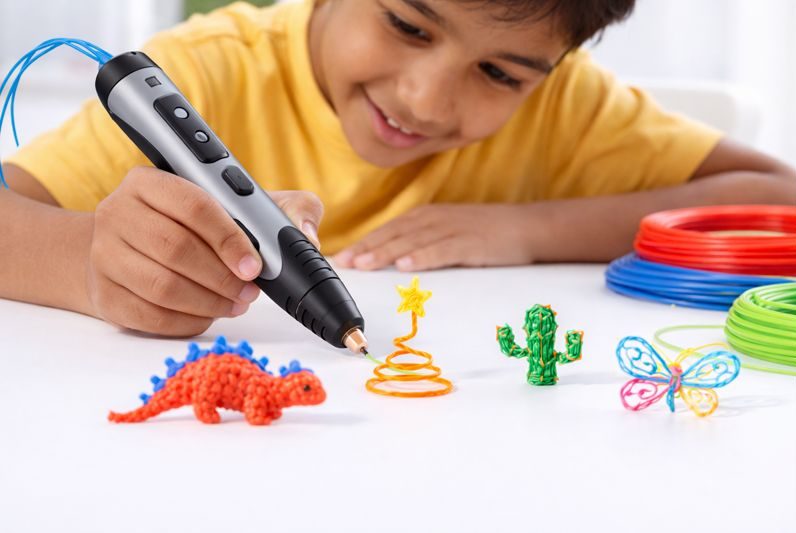
When you’re introducing kids to the world of 3D art, a 3D printing pen can be the perfect gateway tool. It turns simple plastic strands into shapes, figures, and mini sculptures—without the heavy learning curve of a full printer. Because of that, many young makers start here before moving on to more advanced projects. And with so many options available, finding one that’s safe, easy to use, and actually fun can make all the difference.
Before you choose a pen, it helps to understand how they work, what safety features matter, and how each model performs in real-world use. Let’s walk through everything you need to know so your kids can jump into DIY creations confidently.
What Makes a 3D Printing Pen Great for Kids?
Not every 3D pen is ideal for a younger audience. Some come with hot nozzles, complicated control panels, or filaments that require higher temperatures. A kid-friendly pen should keep the learning process light, safe, and enjoyable.
Here’s what to look for:
- Low-temperature filament that won’t burn skin
- Simple one-button controls to reduce frustration
- Lightweight design for small hands
- No exposed hot parts, especially on the tip
- Non-toxic materials that are classroom-safe
- Rechargeable batteries or USB power for convenience
These small details shape the overall experience. When kids feel comfortable, they get more creative—and that’s exactly what these pens were made for.
Benefits of Using a 3D Printing Pen for Creative Learning
A 3D printing pen is more than a toy. It’s a learning tool that blends art, engineering, and play in a way few gadgets can. Many teachers and parents use them to help kids build fine motor skills, practice spatial awareness, and reinforce early STEM concepts.
Some of the biggest benefits include:
- Boosts creativity by encouraging open-ended projects
- Reinforces design thinking, similar to entry-level 3D modeling
- Improves hand-eye coordination
- Strengthens problem-solving skills through trial and error
- Introduces basic engineering concepts such as structure, layers, and support
A study published in Frontiers in Psychology found that hands-on creative activities significantly improve cognitive flexibility in children. Another research review in Learning & Instruction showed that tactile learning boosts retention compared to passive instruction. A 3D printing pen taps into both.
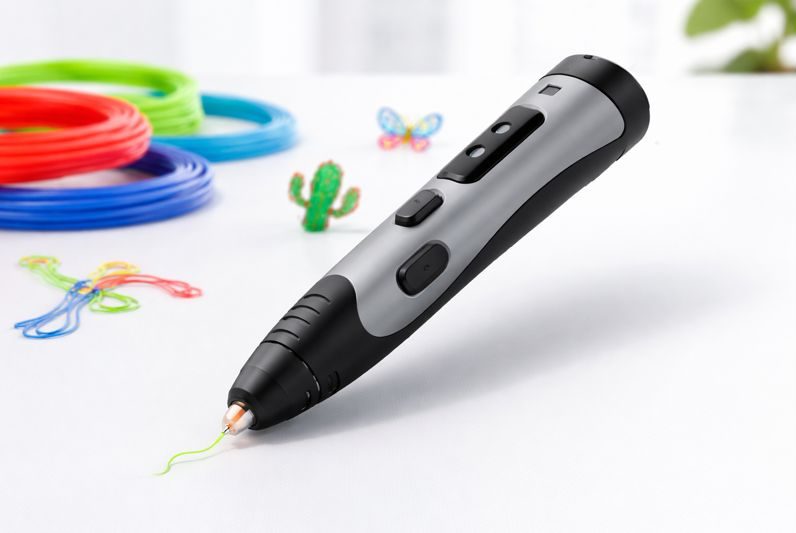
Top 5 Kid-Friendly 3D Printing Pens
1. MYNT3D Junior 3D Printing Pen
This pen was designed specifically for young users. It uses low-temperature PCL filament, which means the tip stays cool during use. Kids can draw on paper, cardboard, or templates without worrying about burns.
Why it works well for kids:
- Plug-and-play setup
- Lightweight and comfortable
- Auto-shutoff feature for safety
- Uses safe, colorful PCL filaments
This is a solid entry-level choice for families who want a reliable, uncomplicated pen.
2. 3Doodler Start+ Essentials
3Doodler is one of the biggest names in the industry, and their Start+ model remains a favorite among parents and educators. It’s known for its smooth extrusion and extremely safe design.
Notable features:
- Fully insulated tip
- Biodegradable, low-heat filament
- No complicated speed settings
- Tons of kid-friendly project kits available
Kids can create everything from animals to geometric shapes, and the guided project books make learning effortless.
3. PIKA3D Super Safe Starter Pen
If you want a pen that’s durable and fuss-free, the PIKA3D Starter Pen hits that sweet spot. It’s sturdy enough for daily use and simple enough that most kids figure it out within a few minutes.
Highlights:
- Designed for younger kids (ages 6+)
- Uses ultra-safe PCL filament
- Soft, ergonomic grip
- Rechargeable battery for wire-free projects
Its portability makes it great for classrooms and travel.
4. SCRIB3D P1 3D Pen
While the SCRIB3D P1 runs at higher temperatures, older kids benefit from its flexibility. It offers adjustable speed settings and a comfortable body that’s easy to control.
Why it’s a good step-up choice:
- Faster drawing speeds
- More filament color options
- Good for both beginners and tweens
- Includes a clear LED display for quick adjustments
This pen is perfect for kids who are ready to move from basic projects to more advanced creations.
5. MYNT3D Super 3D Pen
This pen isn’t exclusively kid-oriented, but many young makers enjoy its precision. It has a high-quality nozzle and adjustable speed, giving kids more creative control.
Key features:
- Works with standard 1.75mm filament
- Lightweight but durable
- Adjustable temperature for advanced drawing
- Smooth, consistent filament flow
If your child is already familiar with crafting tools, this pen can support more detailed and ambitious projects.
Why Kids Learn Better When Their Hands Are Busy
There’s solid scientific evidence showing that hands-on learning boosts creativity, confidence, and deeper understanding in children. When kids use a 3D printing pen, they’re not just drawing shapes—they’re building, experimenting, and engaging multiple parts of the brain at once.
A study published in Psychological Science found that physical interaction with learning materials activates the brain’s sensorimotor systems, leading to stronger conceptual understanding compared to passive observation. In other words, when children create with their hands, their brains process information more deeply and more creatively.
Another study from Developmental Science showed that active motor experiences, such as handwriting, stimulate neural circuits linked to memory, perception, and spatial reasoning far more effectively than passive tasks like tracing or typing. This demonstrates that tactile creation sparks cognitive engagement in ways screens alone cannot.
When kids work with a 3D printing pen, they naturally tap into these same brain-boosting effects. They sculpt and they refine. They problem-solve. This active learning process doesn’t just spark imagination—it strengthens long-term retention, improves spatial awareness, and builds the foundation for more advanced 3D design later on. The layered nature of 3D pen projects mirrors the principles behind full 3D printing, making it a perfect stepping stone for young makers.
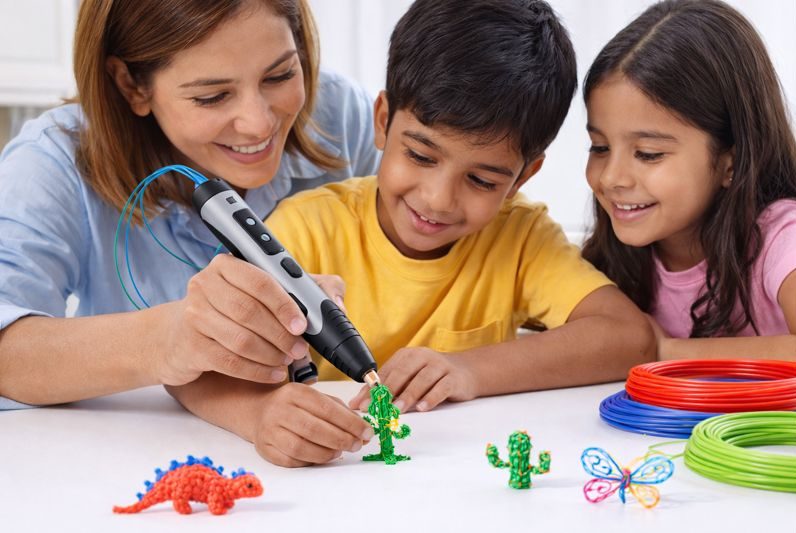
Tips for Helping Kids Use a 3D Printing Pen Safely
Even with the safest pens, guiding kids during their projects is important. Small, consistent habits make a big difference.
- Spread work mats or cardboard on the table
- Keep filament strands organized to avoid tangling
- Show kids how to change colors slowly
- Start with simple shapes and templates
- Encourage short breaks to avoid hand fatigue
Most importantly, celebrate progress—not perfection. Children pick things up faster when the experience feels fun and engaging.
Conclusion
A kid-friendly 3D printing pen gives young makers a simple way to experiment, build confidence, and explore hands-on creativity. With the right tools, kids can practice spatial thinking, learn through play, and create projects that grow with their imagination. For more beginner-friendly ideas, check out this guide to 3D printer art.
FAQs
1. Are 3D printing pens safe for kids?
Yes—especially low-temperature models that use PCL filament. Always check the product’s age recommendation and supervise young users.
2. What filament should kids use?
Most child-safe pens use PCL because it melts at low temperatures and stays cool enough for safe handling.
3. Do 3D printing pens smell or release fumes?
PCL is odorless and non-toxic, making it ideal for indoor crafting.
4. How quickly can a child get the hang of a 3D printing pen?
Most kids understand the basics in under 20 minutes. Mastering control comes with practice.
5. Can kids create real 3D objects with these pens?
Absolutely. They can build small models, characters, structures, and decorative objects—layer by layer.