The Most Profitable 3D Printed Products To Sell
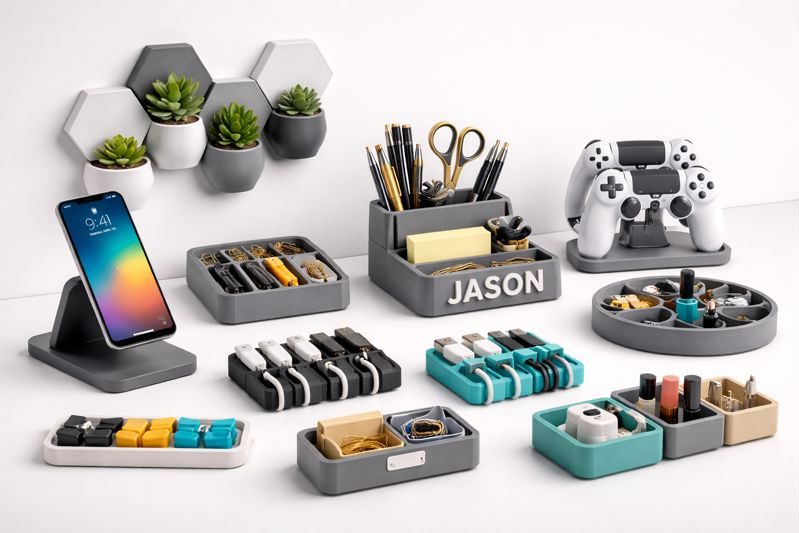
The market for 3D Printed Products To Sell has matured. That’s good news—because profit now favors creators who understand what to print, why people buy it, and how to position it.
Gone are the days of printing random trinkets and hoping they sell. Today’s successful sellers focus on function, personalization, and repeat demand. If you approach 3D printing like a business instead of a hobby, the profit potential is very real.
Let’s break it down properly.
Why 3D Printed Products Are Still Profitable in 2026
3D printing didn’t fade—it evolved.
According to multiple additive manufacturing market reports, consumer demand has shifted from novelty items to problem-solving products. People now buy prints because they fix something, organize something, or personalize something.
That shift matters.
Why? Because functional products:
- Command higher prices
- Have lower return rates
- Create repeat buyers
Add to that the low startup cost of desktop printers, and you get a business model with excellent risk-to-reward balance.
If you stay aligned with current trends—like modular living, ergonomic workspaces, and customization—you’re not late. You’re right on time.
For a broader view of where this industry is heading, read this article on 3D printing innovations.
What Makes a 3D Printed Product Truly Profitable
Not all prints are created equal. Profit comes from smart filtering.
Here’s what actually matters:
1. Material Cost vs Perceived Value
PLA that costs $0.40 can sell as a $15 product—if the item solves a problem or looks polished.
2. Print Time Efficiency
A 6-hour print that sells for $10 loses money.
A 90-minute print that sells for $18? That scales.
3. Niche Demand
General items compete on price.
Niche items compete on relevance.
The most profitable sellers don’t chase trends. They serve specific use cases.
The Most Profitable 3D Printed Products to Sell Right Now
Home Organization & Storage Solutions
This category quietly dominates.
People love organizers that:
- Fit awkward spaces
- Solve drawer chaos
- Match modern aesthetics
Examples that sell well:
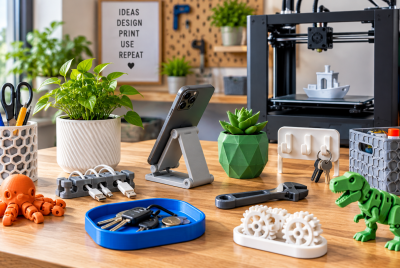
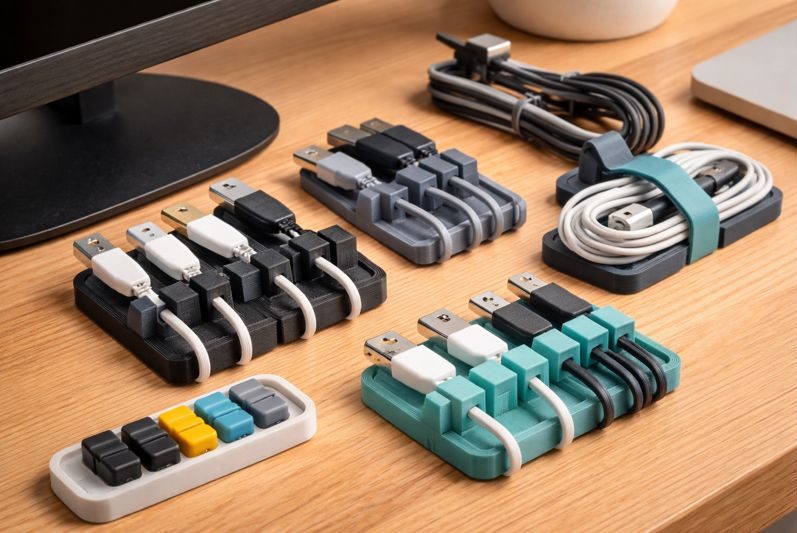
- Cable organizers
- Modular drawer dividers
- Stackable pantry bins
Why it works: Everyone has clutter, and most homes aren’t standardized.
Desk Accessories & Ergonomic Gear
Remote work made this niche explode—and it hasn’t slowed down.
Top sellers include:
- Laptop stands
- Headphone hooks
- Monitor risers
- Controller stands
These products benefit from repeat demand, especially when marketed toward home offices and gamers.
Replacement Parts & Functional Fixes
This is one of the highest-margin categories—and the least flashy.
People search daily for:
- Broken clips
- Missing knobs
- Custom brackets
- Appliance spacers
If it fixes something without buying a new product, buyers happily pay.
Hobby, Gaming & Collectibles
Customization wins here.
Think:
- Tabletop gaming accessories
- Controller mods
- Display stands
- Terrain pieces
These buyers aren’t price-sensitive. They care about quality and detail.
Personalized & Custom Products
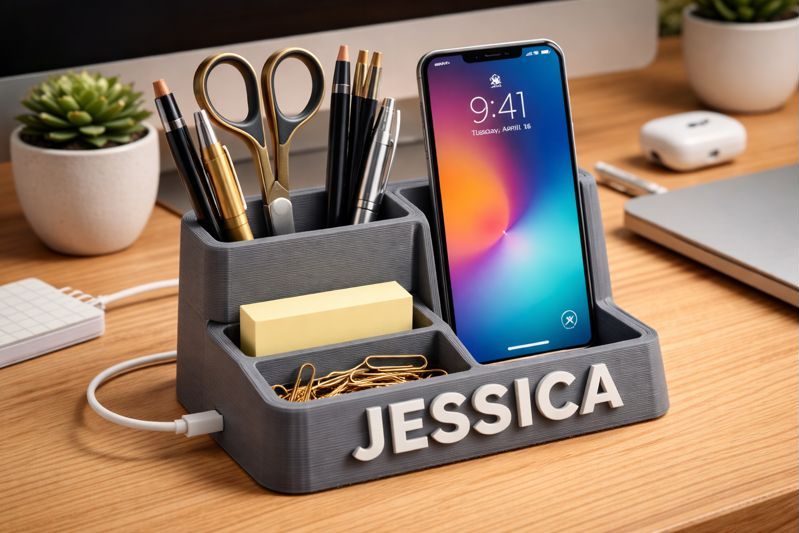
Names, measurements, dates—personalization boosts perceived value instantly.
Popular examples:
- Custom nameplates
- Personalized planters
- Tailored mounts
The key is offering customization without complicating production.
Recommended Tools
These tools consistently show up in profitable creator setups:
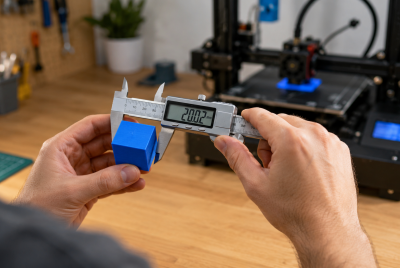
- Digital Calipers (High Precision) – Essential for replacement parts
- PLA+ Filament Multipacks – Better finish, fewer failed prints
- PEI Flexible Build Plate – Faster removal, less damage
- Nozzle Cleaning Kit – Reduces downtime and defects
- Dry Storage Filament Box – Improves consistency and surface quality
Each of these tools directly improves output quality or production speed—which translates to profit.
How Successful Sellers Turn One Design Into Multiple Products
When it comes to 3D Printed Products To Sell, you don’t need dozens of designs to build a profitable shop. Most successful sellers squeeze more value out of one good design instead of constantly starting over.
It usually starts with resizing. A solid base model—like a stand, holder, or organizer—can be scaled up or down to fit different needs. A phone stand becomes a tablet stand. A small hook turns into a heavier-duty version. Same design, new use, wider audience.
Customization is another easy win. Adding simple options like name text, initials, or color choices can turn one product into dozens of variations. Buyers love feeling like something was made just for them, and sellers don’t have to redesign anything major to make that happen.
Bundling also boosts value fast. Instead of selling one item at a time, sellers group related prints together. A cable clip, headphone hook, and controller stand can be sold as a desk bundle. It feels more complete to the buyer and raises the order value without extra marketing work.
Then there’s niche adaptation. This is where things quietly scale. A wall mount designed for a garage might also work for an RV, a boat, or a workshop with small adjustments. The core design stays the same. Only the sizing or use case changes. That lets sellers reach new audiences without reinventing the product.
The main idea is simple: one smart design can turn into many products. When you resize it, customize it, bundle it, or tweak it for different niches, you extend its lifespan and increase its earning potential—without burning time on new designs every week.
Why Custom and On-Demand Prints Actually Make Money
If you’ve ever paused and thought, “Okay, but do these custom and functional prints really sell?”—the research gives a pretty clear answer: yes, and for good reason.
One major review published in Additive Manufacturing looked at how 3D printing fits into mass customization. What stood out is how well additive manufacturing handles small runs and one-off products without driving costs through the roof. Since there’s no tooling to change or molds to invest in, creators can tweak designs quickly and offer personalization without adding much overhead. That’s exactly why custom desk accessories, made-to-fit organizers, and personalized mounts tend to perform so well. Buyers aren’t comparing them to factory products—they’re choosing them because those products don’t exist anywhere else.
Another comprehensive review focused on on-demand spare parts, and it connects directly to some of the most profitable 3D printed items people sell today. The researchers examined how decentralized production works when parts are printed only when they’re needed. The key insight was simple: when something breaks and replacements are hard to find, speed matters more than price. That’s why small items like clips, brackets, adapters, and knobs sell so reliably. Customers aren’t buying plastic—they’re buying a fast fix without replacing the whole product.
What this all points to is straightforward. 3D printing makes the most sense when it’s used for flexible, problem-solving products. Custom pieces and functional replacements don’t just fit the technology—they play directly to its strengths. That’s why sellers who focus on these categories usually see steadier sales and healthier margins than those chasing generic novelty prints.
Pricing, Scaling, and Selling Smarter
Pricing isn’t guesswork. Use this simple rule:
Price = (Material + Time + Failure Buffer) × Perceived Value
To scale efficiently:
- Batch print where possible
- Standardize colors and materials
- Limit customization options intelligently
Platforms that work best:
- Etsy for custom and decor
- Amazon Handmade for utility items
- Shopify for brand-focused collections
Each platform rewards consistency more than volume.
Common Mistakes
- Overprinting inventory → Print on demand
- Competing on price alone → Compete on function
- Ignoring finish quality → Sand, tune, refine
- Selling generic designs → Solve specific problems
Avoid these, and you’re already ahead of most sellers.
Conclusion
Profitable 3D Printed Products To Sell aren’t about printing more—they’re about printing smarter. The sellers who do well focus on functional, customizable products that people actually need. They reuse strong base designs, adapt them for different niches, and price based on value rather than material cost. If you approach 3D printing with a business mindset, you set yourself up for consistent sales and long-term growth.
FAQs
1. Are 3D printed products still profitable for beginners?
Yes—especially if you focus on functional or niche items with clear demand.
2. What sells better: decor or functional products?
Functional products outperform long-term due to repeat demand and higher utility value.
3. Do I need expensive printers to make money?
No. Consistency and smart design matter more than machine price.
4. How do I avoid design theft?
Brand your listings, offer customization, and focus on service—not just files.
5. What’s the fastest way to validate a product idea?
List a small batch, watch engagement, and adjust before scaling.