Can You Recycle 3D Prints?
Failed prints are part of 3D printing. Supports pile up. Test models don’t always work. Over time, that plastic waste adds up. So the question becomes simple: can you recycle 3D prints? It’s not a simple yes-or-no answer. It depends on the material, the method, and what you expect from recycled filament. In this guide, you’ll learn how to recycle 3D prints properly, which plastics qualify, and how to reduce waste before it happens. If you care about printing smarter and cutting down on scrap, this is where to start.
Why 3D Printing Waste Is Growing
3D printing gives us freedom. We prototype fast. We iterate constantly. However, that freedom produces waste.
Every calibration cube, every support structure, and every misprint adds up. A 2021 lifecycle review in Additive Manufacturing found that while desktop 3D printing reduces supply chain emissions, material inefficiencies during prototyping remain a major environmental concern.
So yes — the convenience is amazing. But the scraps are real.
That’s why learning how to recycle 3D prints matters.
What Materials Can You Recycle 3D Prints From?
Not all prints recycle equally. Material type makes a huge difference.
PLA
PLA, short for polylactic acid, is the filament most hobbyists use for everyday 3D printing. It’s plant-based and marketed as biodegradable.
However, here’s the catch: PLA requires industrial composting conditions. It will not break down in your backyard.
You can shred and re-extrude PLA. But curbside recycling programs usually reject it because it contaminates PET streams.
ABS
ABS handles heat well. It also melts and re-extrudes efficiently.
That makes it better for home recycling systems. However, ABS fumes require proper ventilation during reprocessing.
PETG
PETG resembles PET plastic bottles. In theory, it’s recyclable.
In practice, many municipal systems still refuse it due to contamination concerns. So local policies matter.
Resin Prints
Resin prints are a different story. Once cured, they become thermoset plastics. That means they do not melt again.
Unfortunately, you cannot recycle cured resin in traditional ways. Follow your local hazardous-waste disposal rules when getting rid of it.
Can You Recycle 3D Prints at Home?
Yes, but with effort.
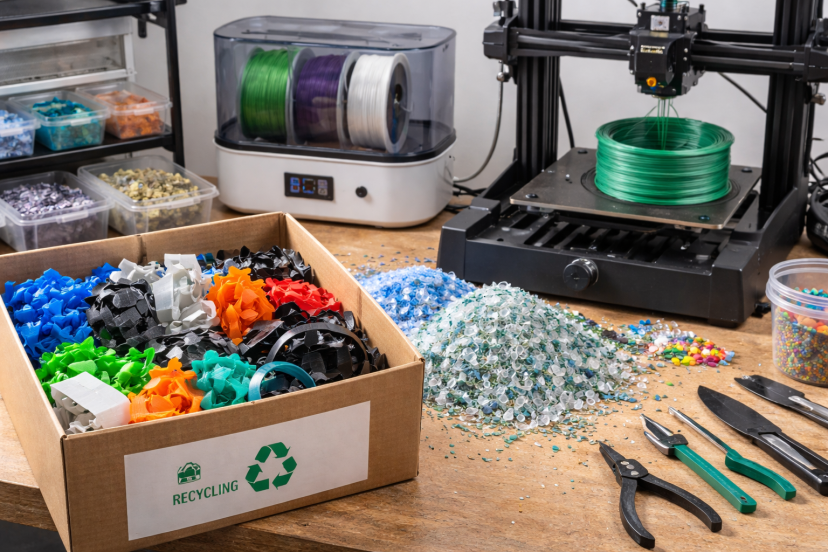
To recycle 3D prints at home, you need to:
- Sort plastics by type
- Shred failed prints
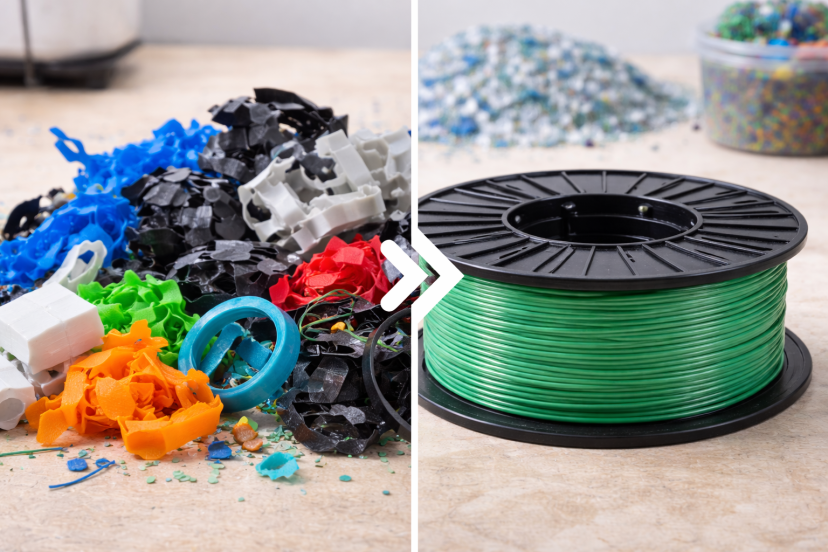
- Melt and extrude into filament
That requires equipment. It also requires patience.
Still, many hobbyists enjoy the challenge. If you print frequently, home recycling may save money over time.
Industrial Recycling vs. DIY Recycling
Industrial recycling facilities operate at controlled temperatures and use filtration systems to maintain filament quality.
DIY recycling, on the other hand, varies in consistency.
According to research published in Resources, Conservation and Recycling, recycled thermoplastics degrade slightly after each melt cycle. Mechanical properties decline. Therefore, blending virgin material with recycled pellets improves results.
In short, home recycling works best for non-structural prints.
Does Recycling 3D Prints Actually Make a Difference?
It’s easy to feel good about tossing failed prints into a shredder. But does it truly help the environment — or is it just a feel-good workshop ritual?
Researchers have actually looked into this.
A detailed review published in the Journal of Cleaner Production examined what’s known as “distributed recycling for additive manufacturing.” In simple terms, that means taking plastic waste locally, turning it back into filament, and printing again. The authors found that this closed-loop approach has real potential to reduce raw material demand and transportation emissions. However, they also pointed out something many makers already discover the hard way: preparation and sorting matter. Clean, well-separated plastic produces usable filament. Mixed or contaminated scraps don’t.
That lines up with real-world experience. Recycling works — but only when you control the process.
On a broader scale, another large review in the Journal of Manufacturing Systems looked at life cycle assessments of additive manufacturing. After analyzing dozens of studies, the researchers concluded that 3D printing often reduces material waste compared to traditional subtractive methods. However, they stressed that the environmental benefits depend heavily on what happens after printing. End-of-life decisions — reuse, recycling, or disposal — directly influence whether additive manufacturing remains a sustainable option.
In other words, recycling your 3D prints isn’t just symbolic. It plays a measurable role in lowering overall impact. But it works best when combined with smarter printing habits, proper filament storage, and waste reduction from the start.
So yes — your recycling efforts matter. Just make sure they’re intentional, not automatic.
How to Reduce 3D Printing Waste Before It Happens
Recycling matters. Prevention matters more.
Start here:
• Dial in your bed leveling
• Optimize support settings
• Lower infill for prototypes
• Slice smarter
• Test in smaller scale first
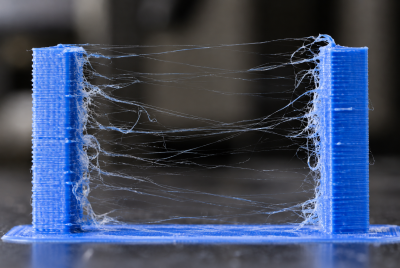
Additionally, keep filament dry. Moist filament leads to brittle prints and stringing failures.
If you want to prevent waste entirely, proper storage is critical. This guide on filament storage best practices explains how to protect spools from humidity damage.
Moisture ruins prints faster than bad settings.
5 Tools That Help You Recycle 3D Prints
If you’re serious about recycling or reducing 3D printing waste, these tools are widely available on Amazon and make the process easier and more consistent.
1. Filament Extruder
A desktop filament extruder designed for makers who want to produce filament from plastic pellets or shredded prints. It allows temperature control and diameter calibration, helping you create usable recycled filament at home.
2. Creality Filament Cutter & Spiral Cutting Tool
This handheld cutter lets you chop failed prints and supports into short, uniform pieces. While not a motorized shredder, it makes manual preparation faster and cleaner, which is crucial before extrusion or reuse.
3. SUNLU Filament Dryer S2
Removes moisture from filament before printing. Dry filament prevents weak layers and stringing, reducing failed prints and cutting down on material waste before recycling becomes necessary.
4. SUNLU Filament Connector
Fuses leftover filament ends into a single continuous strand. It’s a simple and affordable way to reduce small scrap pieces and extend spool life.
5. Digital Hygrometer
Monitors storage conditions in filament boxes or cabinets. Keeping humidity low protects filament quality and minimizes print failures that create waste in the first place.
Creative Ways to Repurpose Failed Prints
Not every scrap needs shredding.
You can:
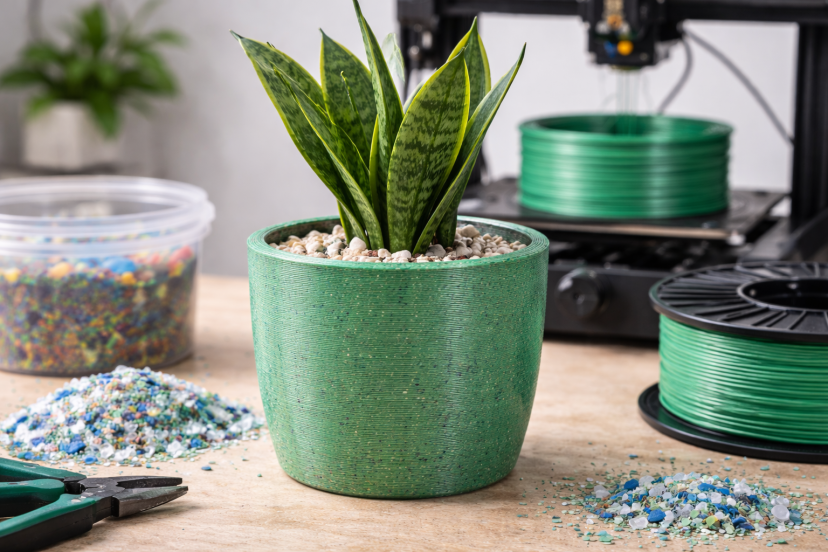
• Use failed prints as test pieces for painting
• Melt scraps into molds
• Turn supports into art
• Create textured collage panels
• Use scrap as filler in epoxy projects
Sometimes reuse beats recycling.
Is Recycling 3D Prints Worth It?
That depends.
If you print occasionally, probably not. Equipment costs outweigh benefits.
However, if you run a print farm or prototype daily, recycling reduces material expenses significantly.
Moreover, it lowers environmental guilt. And for many makers, that alone feels worth it.
Environmental Impact of 3D Printing Plastics
3D printing reduces shipping emissions because parts print locally.
However, plastic production still carries carbon costs.
A review in Journal of Cleaner Production notes that additive manufacturing reduces material waste compared to subtractive machining. Still, thermoplastic production contributes to greenhouse gas emissions.
Therefore, recycling 3D prints reduces raw material demand. That’s a meaningful step.
Common Mistakes When Trying to Recycle 3D Prints
• Mixing plastic types
• Ignoring contamination
• Re-extruding wet filament
• Expecting identical strength
• Skipping temperature calibration
Small errors compound quickly.
The Future of Sustainable 3D Printing
Eco-friendly and biodegradable filament options continue to improve and expand. Researchers now test algae-based polymers and recycled ocean plastics.
Closed-loop filament systems are gaining popularity. Some manufacturers already offer spool return programs.
Over time, sustainability will likely become standard practice in hobby printing.
When You Should NOT Recycle 3D Prints
Avoid recycling if:
• Prints contain mixed materials
• Resin contamination exists
• Structural strength matters
• You lack proper ventilation
Safety always comes first.
Final Thoughts
Recycling 3D prints is possible, but it works best when you approach it with realistic expectations. Some materials reprocess well. Others don’t. And every recycling cycle slightly changes performance. However, the bigger win comes from reducing waste before it starts. Dial in your settings. Store filament properly. Repurpose scraps when you can. Then recycle what remains. If you combine prevention, smart reuse, and responsible recycling, your 3D printing setup becomes more efficient — and far more sustainable.
FAQs
1. Can you recycle PLA 3D prints at home?
Yes, you can shred and re-extrude PLA, but it requires specialized equipment.
2. Does recycled filament lose strength?
Yes. Mechanical strength decreases slightly with each melt cycle.
3. Can resin prints be recycled?
No—once resin is fully cured, it becomes a thermoset material, so it won’t melt down again.
4. Is PETG recyclable in curbside programs?
Usually not. Check local regulations first.
5. What is the easiest way to reduce 3D printing waste?
Improve print settings and store filament properly to prevent failed prints.