Top 10 3D Printer Build Plate
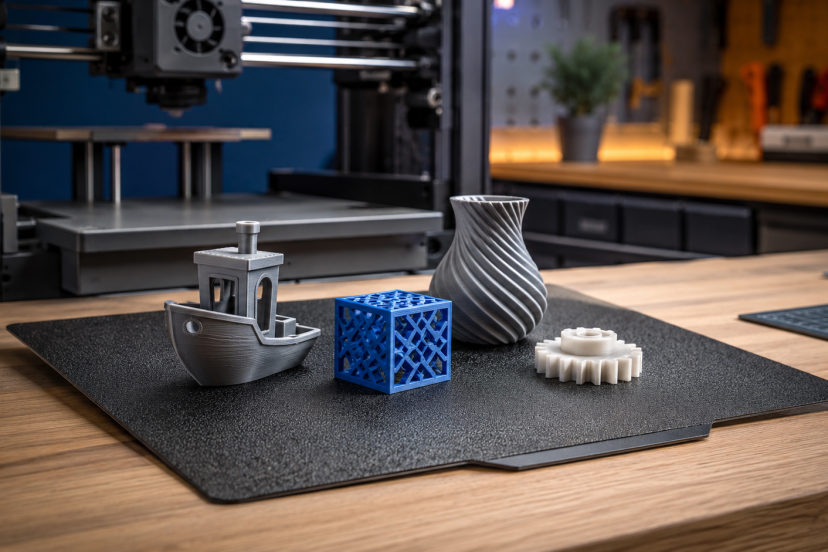
A dependable 3D printer build plate improves first-layer adhesion, reduces curled corners, and makes finished parts easier to remove. PLA-friendly plates can grip PETG too aggressively, while a Bambu sheet may not fit an Ender-style printer.
This guide compares ten well-reviewed Amazon options, including smooth PEI, textured PEI, patterned plates, low-temperature surfaces, and adhesive sheets. Confirm bed size and compatibility before ordering.
Our Top Picks
| Product | Best For | Key Feature | Rating | Read more |
| HICTOP Double-Sided PEI | Best overall | Smooth and textured sides | ★★★★⯪ | Read more |
| COMGROW Textured PEI | Best value | Broad 235 mm compatibility | ★★★★⯪ | Read more |
| YOOPAI PEI + PEO | Decorative bottoms | Two surface finishes | ★★★★⯪ | Read more |
| BIQU CryoGrip Pro | Low-temperature PLA | High-grip coating | ★★★★⯪ | Read more |
| Gizmo Dorks PEI 235 mm | Rigid-bed retrofit | Preapplied 3M adhesive | ★★★★⯪ | Read more |
| IdeaFormer PEO + PET | Patterned Bambu prints | Diamond and carbon effects | ★★★★⯪ | Read more |
| Wefuit Textured PEI | Budget Bambu spare | Identification-code design | ★★★★⯪ | Read more |
| Creality Smooth PEI | Creality printers | Smooth bottom finish | ★★★★⯪ | Read more |
| Gizmo Dorks Large PEI | Large-format beds | Thick cut-to-fit sheet | ★★★★⯪ | Read more |
| Creality Original Magnetic Build Surface | Ender-series printers | Two flexible magnetic 235 x 235 mm surfaces | ★★★★⯪ | Read more |
Top 10 3D Printer Build Plate Reviews
1. HICTOP Double-Sided PEI Build Plate

HICTOP’s 235 x 235 mm spring-steel plate is the strongest all-around choice for common Ender-class machines. Its smooth side creates a clean base; the textured side offers reliable grip and a matte finish.
- Features/Best for: Double-sided PEI and magnetic base; Ender-style 235 mm printers
- Pros/Cons: Two finishes and easy flex removal; PETG may need a release layer
- Why recommend it: It is versatile, proven, and convenient.
2. COMGROW Textured PEI Spring Steel Plate

COMGROW is a practical replacement for a worn stock surface. Its textured 235 x 235 mm PEI sheet grips everyday filaments well and fits many Creality, Elegoo, and Anycubic-style beds.
- Features/Best for: Textured PEI, spring steel, magnetic base; budget hobbyists
- Pros/Cons: Broad compatibility and simple installation; texture transfers to prints
- Why recommend it: It delivers the upgrade most beginners need.
3. YOOPAI Double-Sided PEI + PEO Build Plate

YOOPAI combines workhorse PEI with a PEO side that leaves a decorative pattern on the print bottom. It suits signs, display pieces, and organizers where the first layer remains visible.
- Features/Best for: PEI and PEO sides; decorative and functional projects
- Pros/Cons: Two finishes and easy release; patterned side can scratch
- Why recommend it: It adds visual polish without post-processing.
4. BIQU Panda CryoGrip Pro Build Plate

CryoGrip Pro holds PLA and other materials at lower bed temperatures than traditional PEI. The 257 x 257 mm version fits popular Bambu Lab X1, P1, and A1 machines.
- Features/Best for: Double-sided composite coating; Bambu users fighting warping
- Pros/Cons: Exceptional adhesion and less glue; some materials stick too firmly
- Why recommend it: It handles difficult adhesion better than standard PEI.
5. Gizmo Dorks PEI Sheet 235 mm

This thick PEI sheet uses preapplied 3M adhesive instead of a magnetic flex system. It suits a glass or metal bed that is flat but has a worn surface.
- Features/Best for: Thick adhesive-backed PEI; permanent rigid-bed upgrades
- Pros/Cons: Durable with a smooth finish; harder to install and replace
- Why recommend it: It refreshes a good platform without replacing the bed.
6. IdeaFormer PEO + PET Build Plate
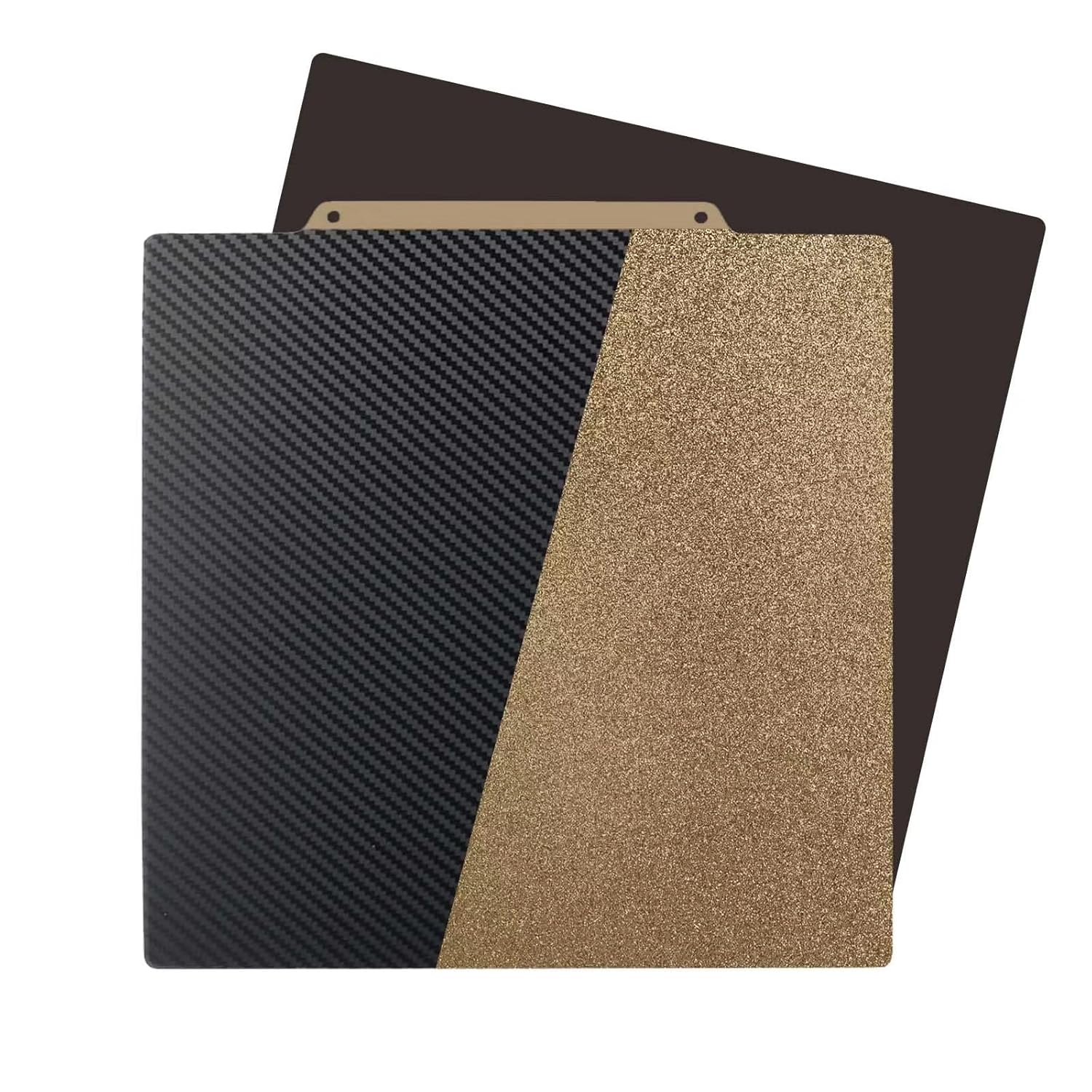
IdeaFormer’s 257 x 257 mm plate targets Bambu users who care about presentation. The PEO side creates a diamond-like effect, while the PET side leaves a carbon-fiber-style pattern.
- Features/Best for: PEO and PET spring steel; gifts, signs, and display models
- Pros/Cons: Two striking patterns; more setting-sensitive than textured PEI
- Why recommend it: It gives visible surfaces a premium finish.
7. Wefuit Double-Sided Textured PEI Plate
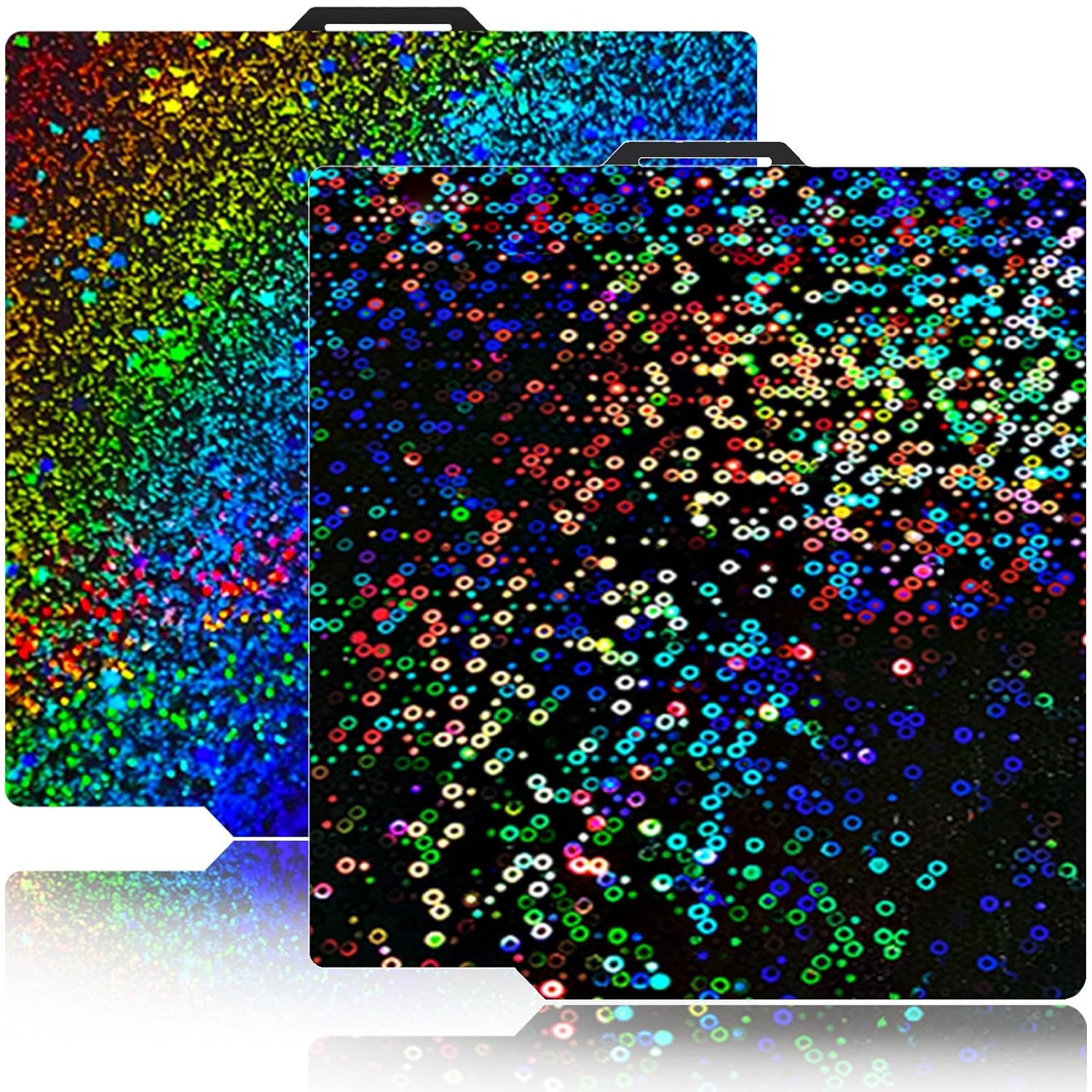
Wefuit’s 257 x 257 mm plate is an affordable Bambu-compatible option with texture on both sides. Its identification-code design may reduce plate-detection warnings, but buyers should verify current images and specifications before ordering.
- Features/Best for: Dual textured PEI and alignment tabs; inexpensive spare plate
- Pros/Cons: Reversible and grippy; smaller review base and mixed quality control
- Why recommend it: It works well as a backup or dedicated material plate.
8. Creality Smooth PEI Build Plate

Creality’s smooth PEI plate suits owners who prefer an OEM-style fit. Its clean surface works well for visible bases, flat mating faces, or labels applied after printing, while the spring steel bends for easier removal.
- Features/Best for: Smooth 235 x 235 mm PEI; compatible Creality printers
- Pros/Cons: Clean finish and familiar fit; shows scratches and fingerprints
- Why recommend it: It reduces compatibility guesswork.
9. Gizmo Dorks Large-Format PEI Sheet
Large printers need consistent adhesion across a wider area. Gizmo Dorks offers thick PEI sheets for 300 mm-class beds, with adhesive backing for glass or metal.
- Features/Best for: Large adhesive-backed PEI; CR-10-style and custom beds
- Pros/Cons: Durable and reliable for wide prints; permanent and difficult to trim
- Why recommend it: Good large-format retrofit surfaces are uncommon.
10. Creality Original Ultra Removable Magnetic Build Surface

This two-pack provides an affordable way to replace a worn or damaged printing surface on compatible Creality machines. Each 235 x 235 mm system includes a flexible upper build surface and a magnetic adhesive base that attaches to the printer’s existing bed.
- Features/Best for: Two 235 x 235 mm flexible magnetic build surfaces; Ender-series owners who want inexpensive replacement plates
- Pros/Cons: Easy print removal, simple peel-and-stick installation, and two surfaces per pack; less heat-resistant and durable than spring-steel PEI
- Why recommend it: It offers excellent value for PLA users who prefer a lightweight, flexible surface and want a spare ready when the first one becomes worn.
How to Choose the Best 3D Printer Build Plate
Start with exact dimensions and compatibility. Check bed size, alignment tabs, magnetic base, probe method, and plate-identification requirements. Do not assume every “Ender-compatible” plate fits every Ender model.
For most hobbyists, double-sided PEI spring steel is the safest choice. Textured PEI hides first-layer marks and releases easily after cooling. Smooth PEI creates a cleaner underside. PEO and PET plates prioritize decorative patterns, while adhesive sheets suit custom or rigid beds.
PETG, TPU, and engineering filaments can grip some surfaces too strongly. Glue may act as a release barrier rather than only an adhesive. This guide to the best 3D printer glue explains when it helps.
A premium plate cannot compensate for poor setup. Clean the surface, calibrate at printing temperature when appropriate, and fine-tune the Z offset using this 3D printer bed leveling guide.
Final Thoughts
The HICTOP double-sided PEI plate is the best 3D printer build plate for most 235 mm Ender-style machines because it combines two useful finishes, strong feedback, and easy flex removal. Bambu users fighting warping should consider BIQU CryoGrip Pro, while YOOPAI and IdeaFormer suit decorative work. Confirm dimensions, clean the surface, relevel the bed, and adjust the Z offset before starting a long print.
FAQs
What is the best 3D printer build plate for PLA?
Textured or smooth PEI spring steel is the best all-around choice. It normally holds PLA firmly while hot and releases it after cooling, often without glue.
Is a PEI build plate better than glass?
PEI is usually more convenient because flexible steel makes removal easier. Glass offers excellent flatness but is heavier, slower to heat, and may need clips or adhesive.
Can I put a magnetic build plate over glass?
Yes, when the system permits it, but extra layers add weight and slow heat transfer. Confirm that the heater, probe, and Z-axis can handle the thickness.
How often should a build plate be replaced?
Replace it when the coating is peeling, deeply scratched, warped, or no longer holds prints after cleaning and calibration. Flipping a double-sided plate extends its life.
How do I clean a PEI build plate?
Use warm water and mild dish soap for a deep clean. Isopropyl alcohol suits quick maintenance on many PEI surfaces, but follow the instructions for specialty coatings.