Top 10 PETG Filaments
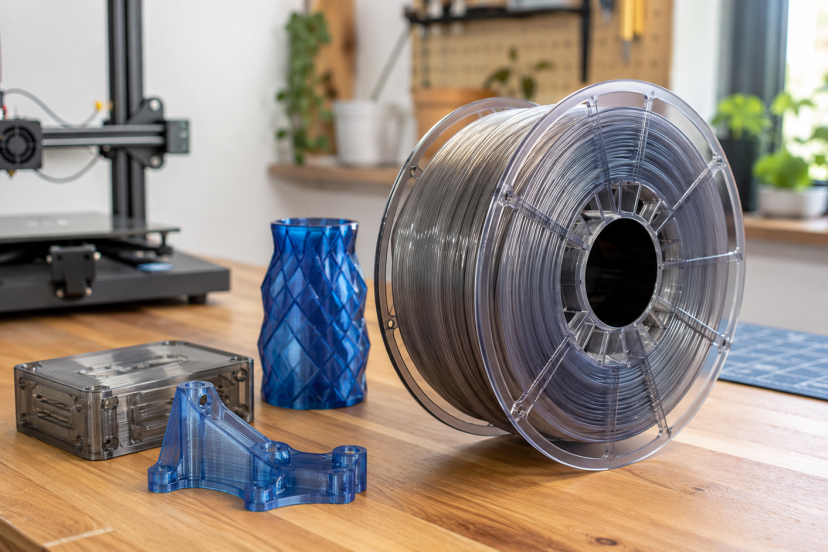
PETG sits in a particularly useful middle ground. It is tougher and more temperature-resistant than standard PLA, yet generally easier to print than ABS, nylon, and many engineering materials. The best PETG filaments produce strong layer bonds, resist everyday wear, and print without turning every model into a stringing experiment. This guide compares ten Amazon options for beginners, high-speed printer owners, budget-conscious makers, and anyone producing functional parts.
Our Top Picks
| Product | Best For | Key Feature | Rating | Review |
| OVERTURE PETG | Best overall | Forgiving performance | ★★★★⯪ | Read more |
| SUNLU PETG | Best value | Strong layer adhesion | ★★★★⯪ | Read more |
| ELEGOO Rapid PETG | Fast printers | Up to 600 mm/s claimed speed | ★★★★⯪ | Read more |
| eSUN PETG | Functional parts | Tough, dependable prints | ★★★★⯪ | Read more |
| HATCHBOX PETG | Consistent results | Reliable quality control | ★★★★⯪ | Read more |
| Polymaker PETG | Everyday premium use | Balanced strength and finish | ★★★★⯪ | Read more |
| Prusament PETG | Precision printing | Per-spool quality control | ★★★★⯪ | Read more |
| Creality Hyper PETG | Creality printers | High-flow formulation | ★★★★⯪ | Read more |
| Sovol PETG | Budget projects | Affordable standard PETG | ★★★★⯪ | Read more |
| SUNLU PETG-CF | Stiff components | Carbon-fiber reinforcement | ★★★★⯪ | Read more |
Top 10 PETG Filaments Reviewed
1. OVERTURE PETG Filament — Best Overall

OVERTURE PETG is a sensible starting point for makers moving beyond PLA. Its wide printing window and consistent extrusion make it suitable for brackets, enclosures, organizers, planters, and other frequently handled parts.
The current Amazon product has substantial customer feedback, although the experience can vary slightly between colors and printer profiles. Independent comparisons consistently place OVERTURE among the easiest mainstream PETG options to tune.
Best for: Beginners and everyday functional printing
Key features:
- 1.75 mm filament
- Claimed dimensional accuracy of ±0.02 mm
- Broad FDM printer compatibility
- Good balance of strength, price, and printability
Pros:
- Forgiving for first-time PETG users
- Strong layer bonding
- Large color selection
Cons:
- May need drying before use
- Some colors require separate calibration
Why we recommend it: OVERTURE offers the most balanced combination of accessibility, consistency, and value for the average maker.
2. SUNLU PETG Filament — Best Value
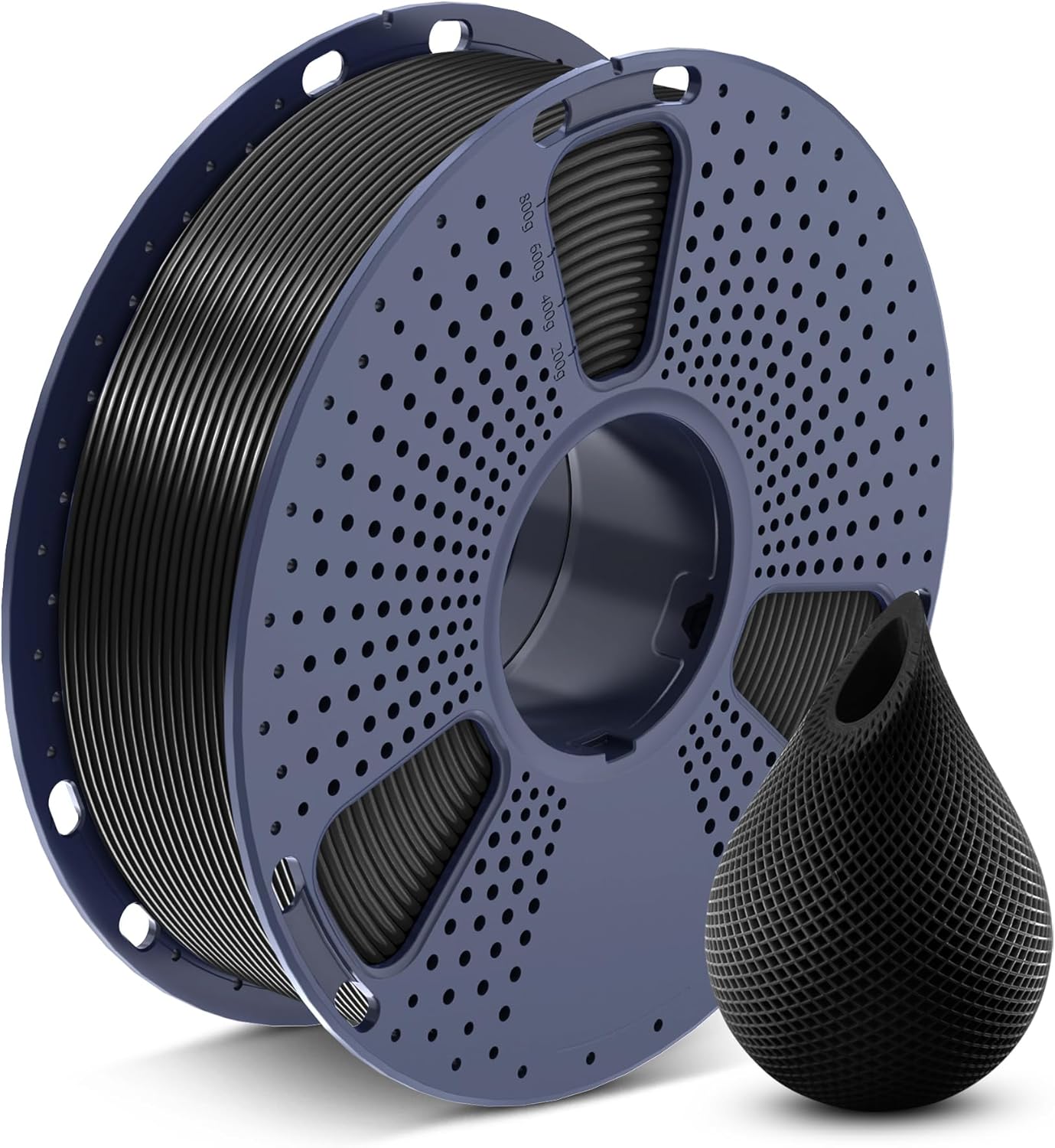
SUNLU PETG is a strong choice when you print frequently and want to control material costs. It works well for workshop organizers, replacement components, protective covers, and larger prototypes where premium filament would be unnecessary.
SUNLU specifies a 240–260°C nozzle range for its standard PETG and highlights water resistance, chemical resistance, and broad printer compatibility. Its standard PETG has stronger customer-review volume than many similarly priced alternatives.
Best for: Budget-conscious makers and multipack buyers
Key features:
- ±0.02 mm claimed diameter tolerance
- Multiple spool sizes and colors
- Low shrinkage
- Suitable for functional parts
Pros:
- Competitive cost per spool
- Consistent feeding when dry
- Useful for larger projects
Cons:
- Retraction often needs tuning
- Can string after absorbing moisture
Why we recommend it: SUNLU delivers dependable everyday performance without charging a premium for branding or packaging.
3. ELEGOO Rapid PETG — Best for Fast Printing

Owners of modern CoreXY and high-speed bed-slinger printers may find conventional PETG unnecessarily slow. ELEGOO Rapid PETG uses a higher-flow formulation intended to maintain steady extrusion at faster speeds.
ELEGOO advertises speeds up to 600 mm/s, although the practical limit depends on the printer’s hotend flow, model geometry, cooling, and desired surface quality. Its Amazon listing has accumulated thousands of ratings, providing considerably more buyer feedback than many newer rapid PETG formulas.
Best for: Bambu Lab, Creality K-series, QIDI, and other fast printers
Key features:
- High-flow PETG formula
- ±0.02 mm claimed dimensional accuracy
- Cardboard spool
- Good layer adhesion at elevated speeds
Pros:
- Faster than traditional PETG profiles
- Strong value in multipacks
- Well suited to batch printing
Cons:
- Maximum advertised speed is not realistic for every model
- Requires flow-rate calibration
Why we recommend it: It offers one of the strongest combinations of high-speed capability, review volume, and affordability.
4. eSUN PETG Filament — Best for Functional Parts

eSUN PETG is a proven option for mounts, clips, tool holders, storage components, and other parts that need more toughness than ordinary PLA. It generally produces strong layer adhesion and a slightly glossy surface.
Its standard PETG has gathered thousands of customer ratings and remains widely available in common colors. Proper drying is important, particularly when printing detailed parts or models with frequent travel moves.
Best for: Durable household and workshop components
Key features:
- 1 kg spool
- Broad color selection
- Good impact resistance
- Strong interlayer bonding
Pros:
- Suitable for load-bearing utility parts
- Established filament brand
- Predictable temperature range
Cons:
- Can produce fine strings
- Spool winding should be checked before long prints
Why we recommend it: eSUN is a dependable workhorse for users who care more about mechanical performance than decorative surface texture.
5. HATCHBOX PETG — Best for Consistency

HATCHBOX has built its reputation around predictable consumer filament. Its PETG is a good fit for users who would rather pay slightly more than spend an afternoon troubleshooting inconsistent diameter or poor winding.
The material works particularly well for household fixtures, printer modifications, containers, and small production runs. Independent comparisons praise its quality control and dependable packaging, while its Amazon rating remains comfortably above the minimum threshold for this roundup.
Best for: Makers who prioritize repeatability
Key features:
- ±0.03 mm claimed dimensional accuracy
- Vacuum-sealed packaging
- Wide printer compatibility
- Consistent color appearance
Pros:
- Predictable spool-to-spool behavior
- Clean extrusion after calibration
- Strong brand reputation
Cons:
- Usually costs more than budget PETG
- Not designed specifically for extreme speeds
Why we recommend it: HATCHBOX is the safe choice when failed prints would cost more than the modest filament premium.
6. Polymaker PETG — Best Premium All-Rounder

Polymaker PETG targets users who want reliable mechanical performance without stepping into specialty engineering filament. It produces clean-looking functional parts and is available in carefully managed color options.
Its balanced formulation works for enclosures, brackets, cosplay components, display stands, and practical household items. Drying is still recommended because even premium PETG can arrive or become moisture-affected.
Best for: Makers seeking a refined everyday PETG
Key features:
- Strong layer adhesion
- Controlled color consistency
- Low-warp formulation
- Suitable for moderate-speed printing
Pros:
- Clean surface finish
- Reliable extrusion
- Good technical documentation
Cons:
- More expensive than SUNLU or Sovol
- Wet filament can still string heavily
Why we recommend it: Polymaker combines dependable performance with better documentation and color control than many low-cost alternatives.
7. Prusament PETG — Best for Precision

Prusament PETG is aimed at buyers who value traceability and tightly controlled manufacturing. Each spool has an individual quality-control record, making it attractive for dimensional parts and repeat production.
The premium becomes easier to justify when a long print failure would waste several hours or when multiple parts must fit together consistently. Its Amazon listing meets the requested review threshold and has more than 500 ratings.
Best for: Precision components and production-quality prints
Key features:
- ±0.02 mm manufacturing tolerance
- Per-spool inspection data
- Strong layer bonding
- Neat, consistent winding
Pros:
- Excellent manufacturing consistency
- Reliable for long prints
- Detailed recommended settings
Cons:
- Expensive for prototypes
- Limited savings for casual decorative prints
Why we recommend it: Prusament reduces the uncertainty that often comes with bargain filament, especially on fit-sensitive projects.
8. Creality Hyper PETG — Best for Creality Printers

Creality Hyper PETG is designed around the faster material profiles used by machines such as the K1 and newer Ender models. It can also work with other high-speed printers after temperature and flow calibration.
A current Amazon version advertises speeds up to 600 mm/s and has a strong average rating, though its review count remains lower than ELEGOO Rapid PETG.
Best for: Creality K-series and high-flow hotends
Key features:
- High-speed PETG formulation
- Claimed 600 mm/s capability
- 1 kg spool
- Compatible with open material systems
Pros:
- Convenient Creality profile matching
- Fast extrusion on capable hardware
- Strong layer adhesion
Cons:
- Lower review volume than established formulas
- Claimed top speed depends heavily on geometry
Why we recommend it: It is an easy shortlist choice for Creality owners who want manufacturer-aligned settings.
9. Sovol PETG — Best Budget Alternative
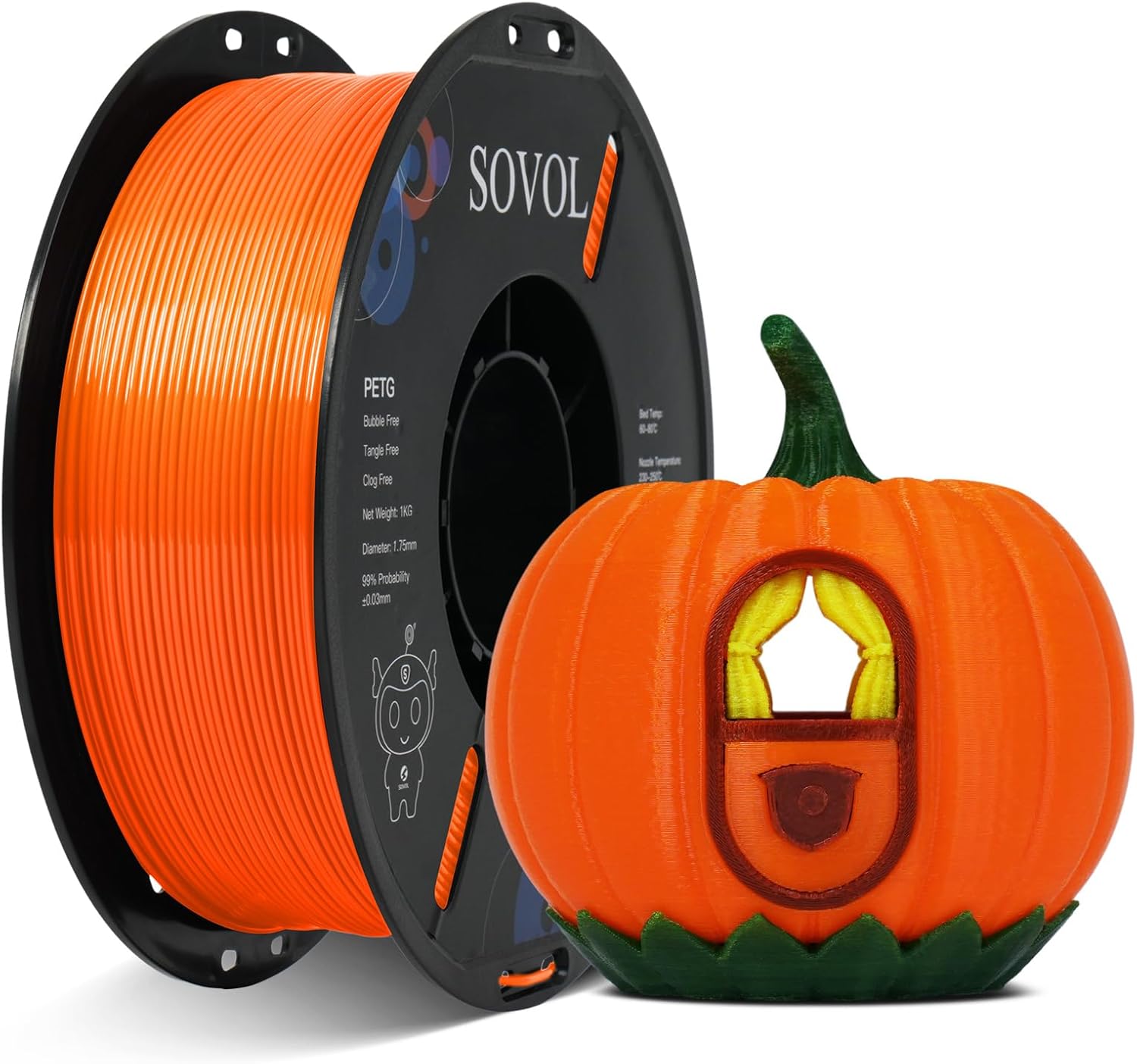
Sovol PETG gives hobbyists another affordable option for practical parts, prototypes, organizers, and printer accessories. It is especially appealing when a project needs several kilograms of material but does not justify premium filament.
Its Amazon product has more than 800 ratings and meets the requested minimum score. The main compromise is a smaller ecosystem of carefully tuned slicer profiles compared with brands such as Prusament or Polymaker.
Best for: Large projects and inexpensive utility printing
Key features:
- ±0.03 mm claimed accuracy
- Tightly wound 1 kg spool
- Standard PETG temperature range
- Multiple basic colors
Pros:
- Affordable
- Suitable for large functional prints
- Good customer-review volume
Cons:
- Fewer official printer profiles
- May require extra retraction testing
Why we recommend it: Sovol is a credible low-cost alternative for makers who prioritize usable parts over premium packaging.
10. SUNLU PETG-CF — Best Reinforced PETG

SUNLU PETG-CF adds carbon-fiber reinforcement to create a stiffer, more matte-looking material. It is suited to jigs, fixtures, machine brackets, structural housings, and printer components where ordinary PETG feels too flexible.
This is a specialty choice with far fewer customer ratings than the standard filaments above. It also requires a hardened nozzle because reinforced filament can quickly wear standard brass nozzles.
Best for: Stiff brackets, fixtures, and technical-looking parts
Key features:
- Ten-percent carbon-fiber reinforcement
- Matte black appearance
- Increased stiffness
- Reduced glossy PETG finish
Pros:
- More rigid than standard PETG
- Attractive textured surface
- Easier material step than many nylon composites
Cons:
- Low review volume
- Requires an abrasion-resistant nozzle
- Not ideal for beginners
Why we recommend it: It fills a legitimate gap between flexible standard PETG and more demanding reinforced engineering materials.
How to Choose the Best PETG Filaments
Start with your printer rather than the marketing claims. A conventional printer does not need a 600 mm/s formula, while a modern high-flow machine may benefit noticeably from rapid PETG.
Consider these factors:
- Diameter tolerance: Consistent diameter helps maintain steady extrusion and dimensional accuracy.
- Printing speed: Choose rapid PETG only when your hotend and motion system can use the additional flow.
- Mechanical needs: Standard PETG works for most utility parts. Reinforced PETG provides additional stiffness but requires a hardened nozzle.
- Spool size: Multipacks reduce material costs, but only when you can store opened spools properly.
- Color and finish: Transparent, matte, and reinforced formulations may need different temperatures and flow settings.
- Moisture management: Popping, bubbles, excess stringing, and rough surfaces often indicate damp filament rather than a defective brand.
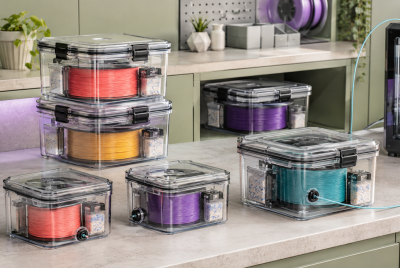
PETG filaments absorbs moisture from humid air, so even a high-quality spool can deteriorate after opening. This guide to 3D printer filament storage that keeps spools dry explains how sealed containers, desiccant, and active drying protect print quality.
For a broader comparison with PLA, ABS, TPU, and nylon, read this guide to choosing the right 3D printing filament.
Final Thoughts
The best PETG filaments are not necessarily the most expensive. OVERTURE is the strongest all-around choice, SUNLU offers excellent everyday value, and ELEGOO Rapid PETG makes sense for high-speed machines. Prusament is worth its premium when consistency matters, while SUNLU PETG-CF serves more specialized structural projects. Whichever spool you choose, dry it properly, calibrate temperature and flow, and judge the material by the finished part—not just the speed printed on the box.
FAQs
What is the best PETG filament for beginners?
OVERTURE PETG is the strongest general recommendation for beginners because it offers a forgiving printing window, broad availability, and substantial customer feedback. Start with the manufacturer’s temperature range, then run small temperature and retraction tests.
Does PETG need a heated bed?
A heated bed is strongly recommended. Most PETG formulas perform well with a bed temperature around 70–85°C, although the correct setting depends on the filament, build surface, and printer.
Why is my PETG filament stringing?
PETG filaments stringing commonly results from excess nozzle temperature, inadequate retraction, slow travel moves, or absorbed moisture. Dry the spool before making large slicer changes; otherwise, you may be calibrating around wet material.
Is PETG stronger than PLA?
PETG filaments are generally tougher and less brittle than standard PLA. It is often better for clips, brackets, containers, and frequently handled parts. PLA can still provide greater stiffness and cleaner fine details in some applications.
Can PETG be used outdoors?
PETG filaments handles moisture and moderate outdoor exposure better than standard PLA. However, long-term sunlight, heat, and weather can still degrade it. ASA is usually the stronger choice for parts requiring extended UV and weather resistance.