25 Practical and Useful Things to 3D Print
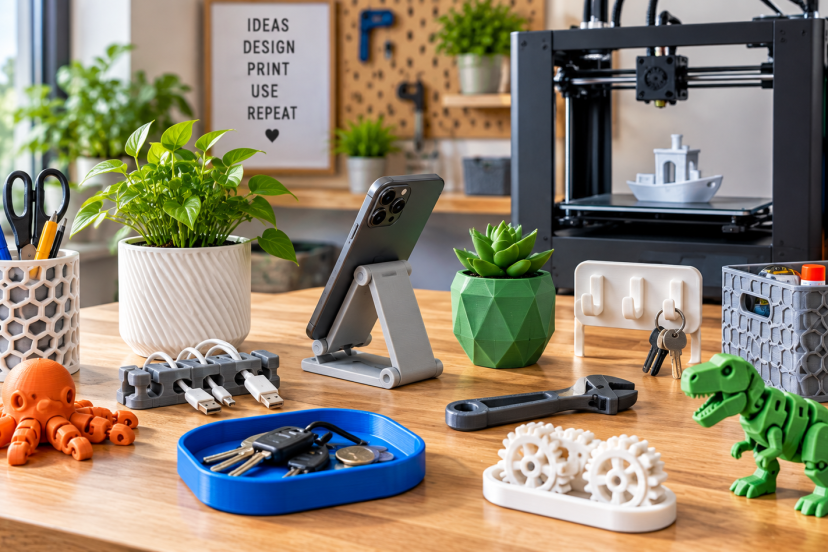
What if your 3D printer could do more than make models and decorative pieces? Some of the most useful things to 3D print are simple objects that solve everyday problems, from cable clips and organizers to replacement parts and workshop tools. In this guide, you’ll find 25 practical 3D printing ideas for the home, desk, kitchen, and garage, plus tips for choosing the right material and getting a better fit.
Useful Things to 3D Print for Your Desk
1. Cable Clips
Charging cables have a remarkable ability to vanish behind a desk at exactly the wrong moment. A few small 3D-printed cable clips can solve that problem permanently.
You can customize the openings for USB cables, power cords, audio cables, or thicker charging leads, then attach the clips wherever they are easiest to reach.
2. Headphone Stand
Leaving headphones flat on a crowded desk takes up space and can put unnecessary pressure on the ear pads. A printed headphone stand gives them a dedicated place between uses.
If desk space is limited, consider an under-desk hanger that keeps the headset accessible without adding another object to the work surface.
3. Phone Stand
A simple phone stand becomes useful far more often than you might expect. It can hold your phone upright during video calls, keep a recipe visible while you cook, or position the screen at a comfortable angle while charging.
Because you are printing it yourself, you can adjust the viewing angle, width, and cable opening to match your phone and case.
4. Pen and Tool Organizer
A generic pen cup works until it becomes a jumble of markers, tweezers, USB drives, scissors, and miscellaneous tools.
A custom organizer lets you create individual compartments based on what you actually keep at your desk. You could even include small slots for SD cards, flash drives, or frequently used printer tools.
5. Laptop Riser
A laptop riser can lift the screen closer to eye level while leaving space underneath for airflow or a compact keyboard.
For this project, choose a sturdy design with a wide base. Also consider the temperature around the laptop, particularly if you are using a filament that can soften when exposed to prolonged heat.
Useful Things to 3D Print for Home Organization
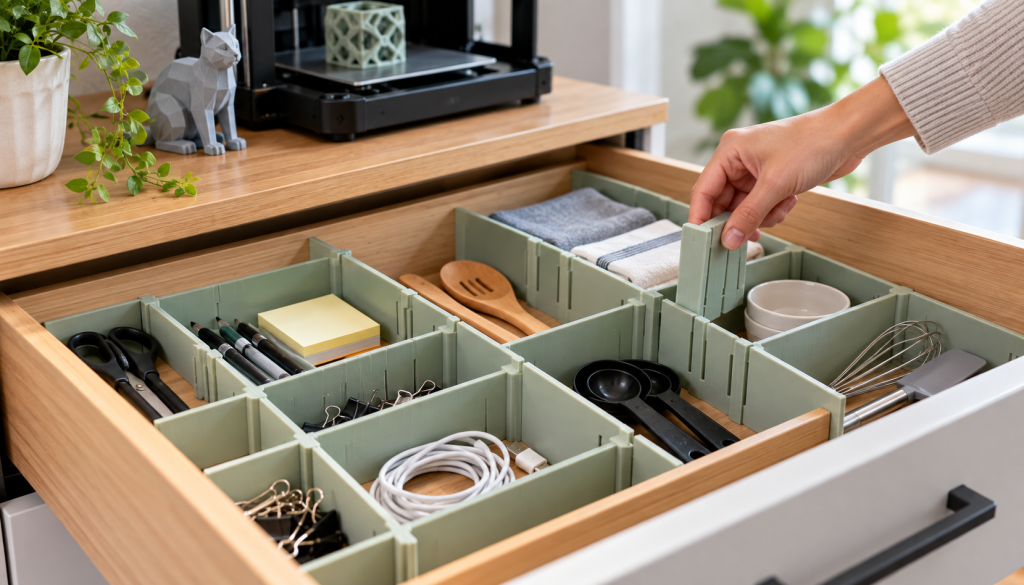
6. Custom Drawer Dividers
Drawer organizers rarely fit as neatly as the packaging suggests. There is usually an awkward gap somewhere, or one compartment ends up being the wrong size for the item you wanted to store.
With 3D printing, you can measure the drawer first and create dividers around your actual belongings. The result feels far more intentional and wastes less space.
7. Battery Holder
Loose batteries rolling around inside a drawer make it difficult to see what you have available.
A printed battery holder can separate AA, AAA, 9V, and coin batteries into clearly defined sections. It also makes it much easier to notice when supplies are running low.
8. Remote Control Holder
If your remote controls regularly disappear between sofa cushions, giving them a permanent home can save a surprising amount of frustration.
Print a compact tabletop holder for a side table or create a wall-mounted version beside the television.
9. Wall Hooks
Small wall hooks are useful for keys, light cables, headphones, and other everyday accessories.
The important word here is “small.” A printed hook may be perfectly suitable for lightweight belongings, but heavier objects should be supported with appropriate hardware and a design intended for the load.
10. Stackable Storage Bins
Stackable bins are particularly useful in workshops, hobby rooms, and craft spaces where small items seem to multiply over time.
Print a few for screws, electronic components, spare printer nozzles, sewing supplies, or other loose items. Because the system is modular, you can simply add more bins when you need them.
Useful Things to 3D Print for Kitchen and Bathroom
11. Bag Clips
Bag clips are among those small household objects you never think about until you need one.
A printed clip can help close bags of cereal, coffee, snacks, or other dry foods. They are quick to make, use little filament, and can easily be printed in several sizes.
12. Sponge Holder
A wet sponge left flat on the sink takes much longer to dry. A ventilated holder lifts it away from the surface and allows air to move around it.
Since the part will regularly encounter moisture, PETG may be a more suitable material than standard PLA for this type of project.
13. Toothbrush Stand
A custom toothbrush stand allows you to create exactly as many openings as your household needs.
Simple, open designs tend to work best because they allow water to drain and are easier to rinse. Avoid unnecessary crevices where moisture and residue can collect.
14. Measuring Spoon Organizer
Measuring spoons tend to disappear into utensil drawers or become tangled together at the worst possible time.
A small wall-mounted or drawer-mounted organizer keeps the set together while making each spoon easy to grab when you are cooking.
15. Cabinet Knob
One missing cabinet knob can make an otherwise tidy kitchen look unfinished. Fortunately, it is also one of the easier replacement parts to model and print.
Measure the original carefully, recreate its basic proportions, or print an entirely new matching set if you want to update several cabinets at once.
Be cautious when printing anything intended for the kitchen. Direct and repeated food contact introduces questions about layer lines, contamination, filament additives, and cleaning. For many people, organizers, holders, and external accessories are useful things to 3d print than items that touch food directly.
Garage, Workshop, and DIY Prints
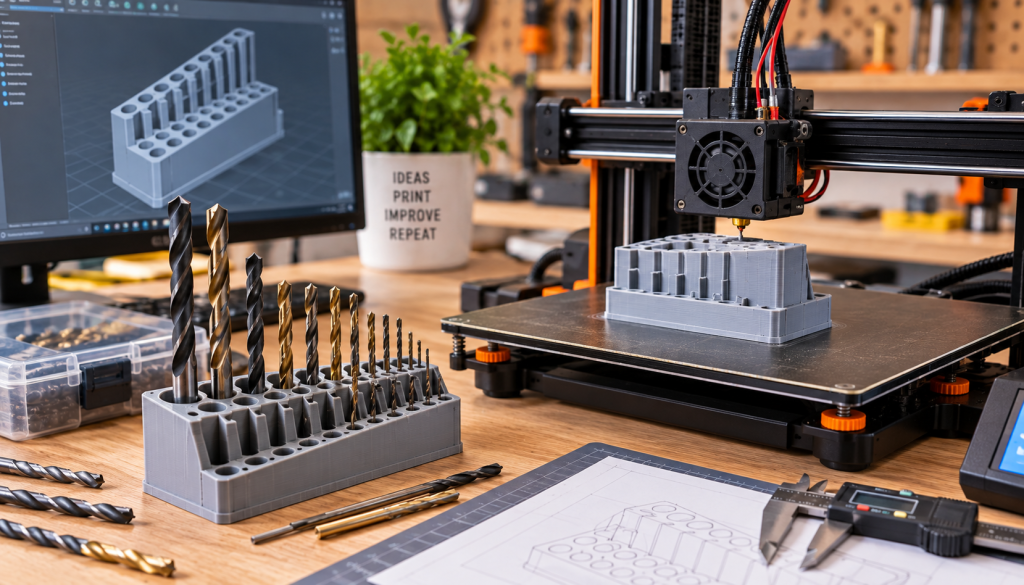
16. Drill Bit Organizer
A drill-bit organizer can turn a drawer full of loose metal pieces into a properly arranged set.
You can label or size individual openings for each bit so you immediately know where a missing size belongs. That is especially helpful when you are in the middle of a project and do not want to search through a toolbox.
17. Screwdriver Rack
A wall-mounted screwdriver rack uses vertical space that would otherwise go unused.
More importantly, it keeps every screwdriver visible. Instead of digging through a drawer for the correct tip, you can see the entire set at a glance.
18. Sanding Block
A printed sanding block gives you a solid surface for holding folded sandpaper and can make hand sanding more comfortable.
One of the advantages of printing your own is that you can make different shapes for different jobs. A flat block suits broad surfaces, while curved or narrow versions can reach areas that a conventional sanding block cannot.
19. Small Parts Tray
Anyone who has watched a tiny screw roll off a workbench knows the value of a simple parts tray.
Shallow printed trays give screws, nuts, washers, bearings, and electrical components somewhere to stay while you repair or assemble something. Add several compartments if you need to keep different pieces separated.
20. Custom Jig or Drill Guide
This is where 3D printing starts to feel less like a hobby and more like a workshop tool.
You can create templates, spacers, alignment blocks, or drill guides for repetitive tasks. Once the dimensions are correct, a printed jig can help you place holes or components consistently across several pieces.
Replacement Parts and Everyday Fixes
21. Appliance Knob
A perfectly functional fan, radio, lamp, or small appliance can become irritating to use simply because one plastic knob has broken.
If the shaft is still intact, measure its shape and dimensions carefully. In many cases, designing a replacement knob is fairly straightforward and saves you from replacing the entire appliance over one missing piece.
22. Furniture Foot
A missing furniture foot can leave a chair or table uneven and may even scratch the floor.
Printing a replacement gives you control over the exact height and diameter. For surfaces that benefit from a little cushioning, TPU can provide a softer contact point than rigid plastic.
23. Broken Clip or Bracket
Tiny clips and brackets are among the most satisfying practical prints because the original components are often difficult—or disproportionately expensive—to replace.
A carefully measured 3D-printed substitute can restore light-duty covers, organizers, fixtures, and household accessories that might otherwise be thrown away.
24. Vacuum or Hose Adapter
Two hoses that almost fit together are not particularly useful. A custom adapter solves that problem.
Measure the outside and inside diameters, allow enough tolerance for a comfortable fit, and print an adapter suited to your setup. This can be particularly helpful with shop vacuums, workshop dust collection, and older accessories.
25. Replacement Battery Cover
Remote controls, toys, and small electronic devices frequently outlive their thin plastic battery doors.
A replacement cover takes relatively little material and can restore an otherwise functional item. If the original uses small clips, print a test section first so you can check the fit before producing the complete cover.
If designing replacement parts sounds a little ambitious right now, these beginner 3D printing projects are a good place to build confidence with sizing, orientation, supports, and everyday printer settings.
Recommended Products
1. Kynup 6-Inch Digital Caliper
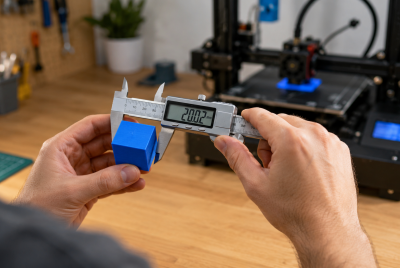
A digital caliper becomes invaluable once you start creating replacement parts and custom-fit accessories. It allows you to measure outside dimensions, internal openings, shaft diameters, and depths much more accurately than a basic ruler.
For projects such as knobs, hose adapters, clips, or fitted covers, a fraction of a millimeter can make the difference between a satisfying fit and another trip back to the slicer.
2. OVERTURE PLA Filament 1.75mm
PLA remains a practical everyday filament for desk organizers, stands, storage trays, prototypes, and many other indoor projects.
It is relatively approachable for newer users and works well when the finished object does not need to withstand substantial heat, flexing, or outdoor conditions.
3. SUNLU S2 Filament Dryer
Filament can absorb moisture from the surrounding air, and once that happens, print quality may begin to suffer. Symptoms can include popping during extrusion, excess stringing, uneven surfaces, or inconsistent results.
A filament dryer such as the SUNLU S2 can be useful for restoring moisture-sensitive materials and keeping filament in better printing condition.
4. AFA Tooling Deburring Tool
Functional prints do not always come off the build plate ready to use. Brims, support marks, and sharp edges often need a little finishing.
A swivel deburring tool gives you more control when cleaning the edges of holes and printed parts, making it a useful addition to a basic finishing kit.
5. Magigoo Original 3D Printer Adhesive
There are few things more disappointing than seeing the corner of a large print begin to lift after several successful hours.
Magigoo is designed to improve first-layer adhesion on compatible print surfaces while still allowing the completed model to release after the build plate cools. For larger functional parts, better adhesion can help prevent a considerable amount of wasted filament.
References and Further Reading
A review of process parameters and dimensional accuracy in FDM parts, published in Materials Today: Proceedings, examines how variables such as layer thickness, extrusion temperature, printing material, and model orientation can influence dimensional results. These factors become especially important when producing clips, adapters, knobs, and other parts that need to fit accurately.
For safety guidance, NIOSH’s Safe 3D Printing is for Everyone, Everywhere discusses potential concerns associated with 3D printing, including ultrafine particles, chemical emissions, moving equipment, and heated components. It is a useful reference when deciding where and how to operate a printer safely.
Conclusion
The most useful things to 3D print are often the ones that make everyday life a little easier, whether that means organizing a cluttered drawer, replacing a broken part, or creating a tool that fits your exact needs. The key is to match the design, material, and print settings to the job, then test and refine when necessary. Once you start looking at small household problems as opportunities to design practical solutions, your 3D printer becomes far more than a hobby machine—it becomes a genuinely useful tool for the home, desk, and workshop.
FAQs
What are some useful things to 3d print that are ideal for beginners?
Cable clips, phone stands, bag clips, battery organizers, small trays, and drawer dividers are excellent choices for beginners. They have simple shapes, require relatively little filament, and produce something you can actually use once the print finishes.
What filament is best for practical 3D prints?
There is no single best filament for every functional project. PLA works well for many indoor objects, PETG is a better choice when you need extra toughness or moisture resistance, and TPU suits flexible components such as feet, grips, and protective pieces. Match the filament to the conditions the finished part will face.
Can 3D printed parts replace store-bought parts?
In many situations, yes. 3D printing works particularly well for replacement knobs, battery covers, adapters, organizers, clips, and other light-duty components.
However, hobby-grade prints should not automatically replace critical structural, electrical, pressure-bearing, or safety-related components. Those applications require appropriate engineering, materials, and testing.
How can I make functional prints stronger?
Start with the right material, then pay attention to wall thickness, layer adhesion, geometry, and print orientation. Increasing infill can help in some cases, but simply setting a model to extremely high infill does not guarantee a stronger part.
Consider where the object will experience force and orient the model so its layer structure can handle that load effectively.
Where can I find useful 3D models?
Printables, MakerWorld, Thingiverse, and Thangs are popular places to look for functional 3D models. Before printing, review the model dimensions, photos, user comments, licensing terms, and recommended settings.
A few minutes spent checking whether other people had fit or strength problems can save you from wasting several hours on a model that needs modification.