Top 10 3D Printer Filament
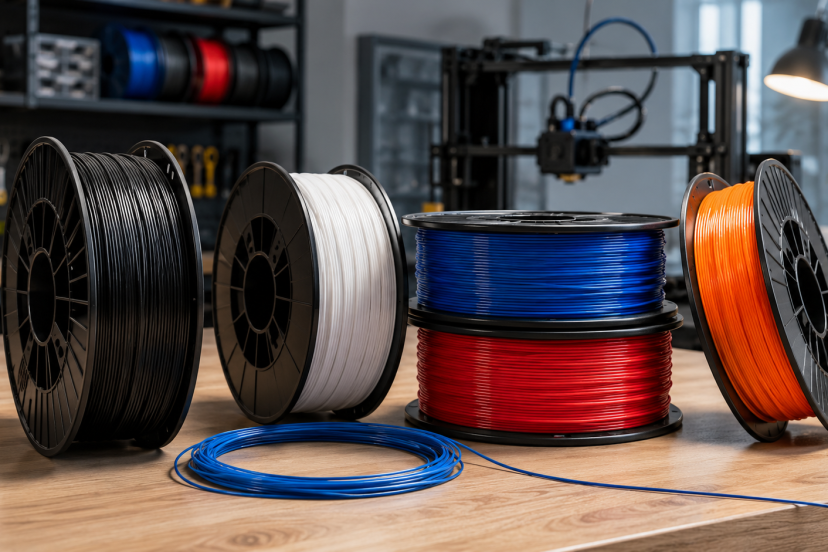
A dependable 3D printer filament can make printing feel almost effortless. The wrong spool, meanwhile, can leave you troubleshooting stringing, brittle layers, clogged nozzles, and poor bed adhesion long after you should have finished the project.
This guide compares ten well-reviewed filaments for different users and applications. Whether you print detailed models, outdoor brackets, flexible parts, prototypes, or decorative pieces, you will find an option that fits the job instead of simply buying whichever spool looks cheapest.
Our Top Picks
| Product | Best For | Key Feature | Rating | Read More |
| HATCHBOX PLA | Best overall | Consistent, beginner-friendly printing | ★★★★★ | Read more |
| eSUN PLA+ | Strong everyday prints | Tougher than standard PLA | ★★★★⯪ | Read more |
| OVERTURE PETG | Functional parts | Strong layer adhesion | ★★★★⯪ | Read more |
| SainSmart TPU | Flexible projects | Durable 95A flexibility | ★★★★⯪ | Read more |
| Polymaker ASA | Outdoor parts | Weather and UV resistance | ★★★★⯪ | Read more |
| AMOLEN Silk PLA Bundle | Decorative prints | Multicolor glossy finish | ★★★★⯪ | Read more |
| SUNLU PLA+ | Budget printing | Strong value in multiple colors | ★★★★⯪ | Read more |
| ELEGOO PLA | Bulk printing | Affordable multipack options | ★★★★⯪ | Read more |
| Creality PLA | High-speed printers | Fast melting and smooth flow | ★★★★★ | Read more |
| Polymaker PolyLite PLA-CF | Matte functional parts | Carbon-fiber texture and rigidity | ★★★★★ | Read more |
How to Choose the Best 3D Printer Filament
Start by matching the material to what the finished print must do.
PLA is usually the easiest option for models, organizers, prototypes, and decorative objects. PETG works better for tougher everyday parts, while TPU is designed for flexible prints such as bumpers, grips, and protective covers.
ASA is more suitable for outdoor components because it handles sunlight and weather exposure better. Carbon-fiber blends create stiff parts with an attractive matte surface, but abrasive additives may require a hardened nozzle.
For a closer look at each material, read our guide to choosing between common 3D printing filaments.
Top 10 3D Printer Filament Products
1. HATCHBOX PLA Filament
Best for: Reliable everyday printing

HATCHBOX PLA is our best overall pick because it delivers the predictable behavior most hobbyists want. It is easy to tune, widely compatible with 1.75mm FDM printers, and available in a broad selection of practical colors.
Its clean extrusion makes it suitable for figurines, prototypes, organizers, educational projects, and replacement parts that will not face high temperatures. HATCHBOX PLA has also accumulated tens of thousands of customer ratings, making it one of the most established choices in this roundup.
Key features:
- 1.75mm diameter
- Low-warping PLA formula
- Wide color selection
- Consistent dimensional tolerance
Pros: Easy to print, dependable quality, excellent color range
Cons: More expensive than some budget PLA; limited heat resistance
2. eSUN PLA+ Filament
Best for: Stronger everyday parts

eSUN PLA+ is a sensible upgrade when ordinary PLA feels too brittle. It retains much of PLA’s beginner-friendly behavior while improving toughness for brackets, tool holders, cosplay pieces, toys, and frequently handled objects.
The material generally produces strong layer bonding without forcing users to move immediately to more demanding PETG or ABS. Its Amazon variants have received thousands of ratings, although recent feedback suggests spool winding may occasionally vary between batches.
Key features:
- Toughened PLA formulation
- Broad printer compatibility
- ±0.03mm stated dimensional accuracy
- Large color selection
Pros: Tougher than basic PLA, good detail, widely available
Cons: May need drying; occasional winding complaints
3. OVERTURE PETG Filament
Best for: Durable functional prints

OVERTURE PETG offers a useful balance between ease of printing and real-world durability. It is a strong option for mounts, storage brackets, printer upgrades, clips, workshop accessories, and parts exposed to occasional moisture.
PETG can produce stronger layer adhesion and better heat resistance than basic PLA, but it normally requires more retraction and temperature tuning. OVERTURE’s PETG has gathered a substantial review history, with users frequently highlighting its toughness while noting that excessive speed can increase stringing.
Key features:
- Durable PETG construction
- Neatly wound 1kg spool
- ±0.02mm stated tolerance
- Broad FDM compatibility
Pros: Tough, moisture-resistant, good value
Cons: Can string; may bond aggressively to some build plates
4. SainSmart TPU Filament
Best for: Flexible parts

SainSmart TPU is the standout choice for prints that need to bend, compress, or absorb impacts. It works well for phone cases, protective feet, seals, vibration pads, grips, bumpers, and flexible hinges.
Its 95A hardness provides useful flexibility without feeling excessively soft. Customer feedback is especially positive once the correct feeding and speed settings are established, although direct-drive extruders generally make flexible filament easier to control.
Key features:
- 95A Shore hardness
- Flexible and abrasion-resistant
- 1.75mm diameter
- Multiple color options
Pros: Strong flexibility, durable, proven customer feedback
Cons: Requires slow printing; harder to use with long Bowden tubes
5. Polymaker ASA Filament
Best for: Outdoor and weather-exposed parts

Polymaker ASA is made for projects that must survive beyond the workshop. It provides ABS-like toughness with improved resistance to sunlight and weathering, making it useful for exterior brackets, garden equipment, automotive accessories, enclosures, and outdoor signs.
ASA is not a beginner filament. It prints best inside an enclosure with controlled cooling and proper ventilation. Polymaker’s version stands out for its established customer feedback and consistent reputation among functional-printing users.
Key features:
- UV- and weather-resistant ASA
- Heat-resistant construction
- Recycled cardboard spool
- Designed for outdoor parts
Pros: Excellent outdoor durability, strong finish, reputable brand
Cons: Needs an enclosure; fumes require ventilation
6. AMOLEN Silk PLA Bundle
Best for: Decorative and multicolor prints

AMOLEN Silk PLA is designed for projects where appearance matters more than maximum mechanical strength. Its shiny, color-shifting surface works beautifully for vases, dragons, figurines, ornaments, gifts, cosplay details, and display models.
The bundle format lets makers experiment with several colors without purchasing multiple full-size spools. The smaller rolls run out quickly on large projects, but they are ideal for testing creative finishes or producing a varied collection of small prints.
Key features:
- Glossy silk surface
- Multiple gradient colors
- Vacuum-sealed packaging
- Beginner-friendly PLA base
Pros: Eye-catching finish, useful color variety, easy to print
Cons: Small spools; silk PLA can be more brittle than standard PLA
7. SUNLU PLA+ Filament
Best for: Budget-conscious makers
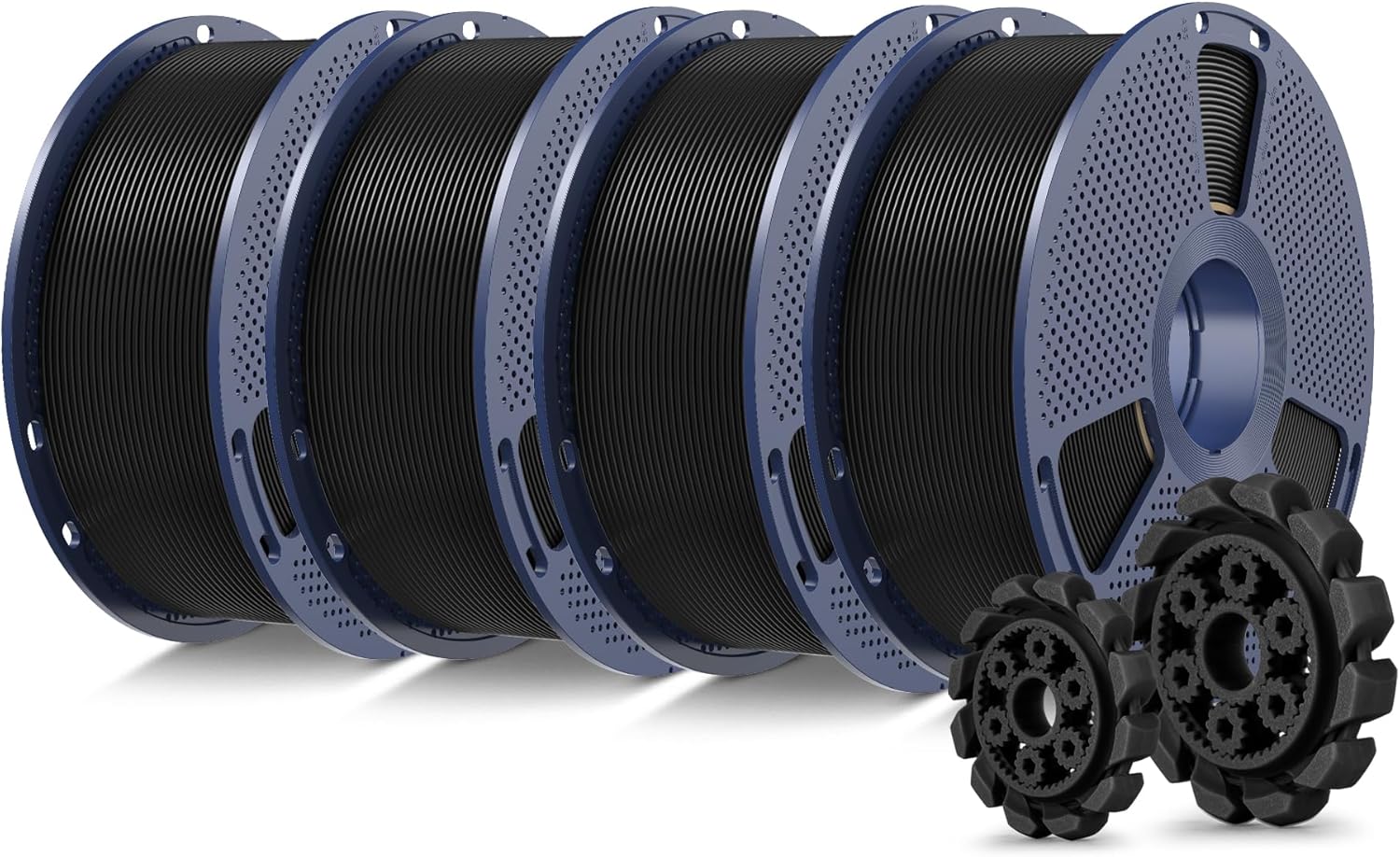
SUNLU PLA+ offers strong value for makers who print frequently and want more toughness than entry-level PLA. It suits prototypes, toys, organizers, costume pieces, and functional household accessories.
Its extensive color selection and frequent multipack options make it appealing for print farms and high-volume hobbyists. Customer ratings are strong across many variants, though different colors may occasionally require separate temperature or flow calibration.
Key features:
- Reinforced PLA+ formula
- ±0.02mm stated accuracy
- Numerous colors and bundles
- Compatible with most 1.75mm printers
Pros: Competitive value, good strength, large review base
Cons: Color consistency can vary; best results may require drying
8. ELEGOO PLA Filament
Best for: Bulk PLA printing

ELEGOO PLA is a practical choice for makers who want affordable multipacks for prototypes, terrain, organizers, school projects, and large decorative prints. Its two-spool and bulk packages can reduce the cost per kilogram without forcing users into an unfamiliar material.
The filament is supplied on cardboard spools and has built a sizable customer-review history. It performs best after basic flow and temperature calibration, particularly when switching from a different PLA brand.
Key features:
- Bulk and multipack options
- ±0.02mm stated tolerance
- Cardboard spools
- Standard 1.75mm diameter
Pros: Good bulk value, straightforward printing, widely compatible
Cons: Large bundles limit color flexibility; spool edges require careful handling
9. Creality PLA Filament
Best for: Creality printers and faster printing

Creality PLA is an easy recommendation for Ender, K1, CR-Series, and other open-material FDM printers. Its regular and high-speed formulas are designed for steady flow, making it useful for rapid prototypes, cosplay components, toys, and everyday models.
It is not restricted to Creality machines, but owners of Creality printers may find the available profiles easier to dial in. Researched variants have maintained strong customer ratings and are commonly sold in economical two-spool packs.
Key features:
- Standard and high-speed formulas
- Multipack availability
- Vacuum-sealed spools
- Broad FDM compatibility
Pros: Good value, smooth feeding, suitable for faster printers
Cons: Basic color selection; regular PLA is not heat-resistant
10. Polymaker PolyLite PLA-CF
Best for: Stiff parts with a matte finish

Polymaker PolyLite PLA-CF combines PLA with chopped carbon fiber to produce rigid prints with a professional-looking matte texture. It is particularly appealing for camera accessories, brackets, printer components, housings, robotics parts, and models where visible layer lines would be distracting.
The blend contains abrasive fibers, so a hardened nozzle is a smart long-term upgrade. Customer feedback praises its finish and print consistency, although layer adhesion may not suit parts exposed to heavy impacts.
Before printing abrasive composites, review these useful 3D printer parts and nozzle upgrades.
Key features:
- Carbon-fiber-reinforced PLA
- Matte, low-glare surface
- Increased rigidity
- 1kg cardboard spool
Pros: Excellent surface finish, stiff prints, hides layer lines
Cons: Costs more; abrasive; not ideal for impact-loaded parts
3D Printer Filament Buying Guide
Before ordering, confirm that your printer accepts the filament’s diameter, nozzle temperature, bed temperature, and enclosure requirements. Most current hobby printers use 1.75mm filament, but that does not mean every printer can safely handle ASA, carbon-fiber blends, nylon, or high-temperature materials.
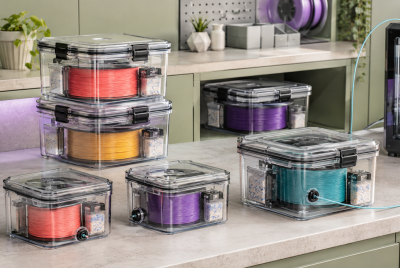
Also consider spool size and storage. PLA is fairly forgiving, while PETG, TPU, nylon, and many composites can show stringing, popping, rough surfaces, or weak bonding after absorbing moisture. Store opened spools inside sealed containers with desiccant and dry them when print quality starts declining.
Finally, do not assume one profile works for every brand or color. Run a temperature tower, flow test, and retraction test when changing materials. Twenty minutes of calibration can save an overnight print.
Final Thoughts
The best 3D printer filament is the one that matches the finished part, your printer, and your experience level. HATCHBOX PLA is the safest all-around recommendation, eSUN PLA+ adds toughness, and OVERTURE PETG is better for functional projects. Choose SainSmart TPU for flexibility, Polymaker ASA for outdoor use, or PolyLite PLA-CF when you want stiff prints with a premium matte finish. Rather than searching for one spool that does everything, keep two or three dependable materials ready for the different jobs your printer handles.
Frequently Asked Questions
What is the best 3D printer filament for beginners?
PLA is the best starting material for most beginners. It prints at relatively low temperatures, usually warps less than ABS or ASA, and works with most entry-level FDM printers.
Is PLA+ better than regular PLA?
PLA+ is generally tougher and less brittle than basic PLA, making it better for handled or lightly functional parts. Regular PLA remains a good choice for decorative prints, prototypes, and models where easy printing matters most.
What filament should I use for outdoor prints?
ASA is one of the better choices for outdoor parts because it resists sunlight and weather exposure. PETG can work for less demanding outdoor projects, but long-term performance depends on the environment and the specific formulation.
Does 3D printer filament need to be dried?
Filament can absorb moisture after opening. Drying is especially important for PETG, TPU, nylon, and composite materials, although even damp PLA can become brittle or produce rough, stringy prints.
Can carbon-fiber filament damage a nozzle?
Carbon-fiber-filled filament is abrasive and can gradually enlarge a standard brass nozzle. A hardened-steel, ruby-tipped, or similarly wear-resistant nozzle is recommended for repeated use.