Top 10 3D Printer Hotends
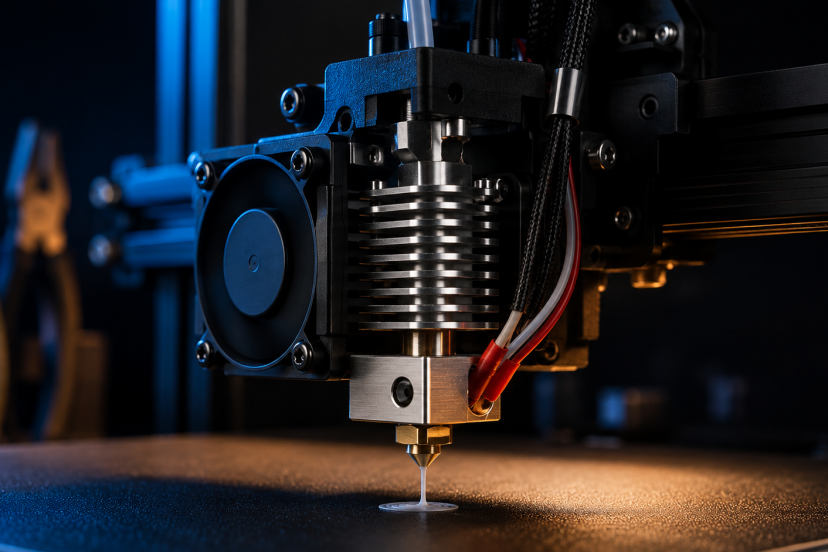
A dependable hotend can improve extrusion consistency, reduce clogs, and unlock faster printing or higher-temperature materials. However, choosing among the many 3D printer hotends available is not as simple as buying the model with the highest advertised temperature.
Compatibility, heater voltage, mounting style, nozzle ecosystem, and firmware limits all matter. This guide compares ten worthwhile options for Ender, CR-10, Prusa, Voron, and other upgrade-friendly FDM printers.
Our Top Picks
| Product | Best For | Key Feature | Rating | Review |
| Micro Swiss All Metal Hotend | Best overall | Drop-in Creality upgrade | ★★★★⯪ | Read more |
| Creality Spider V3 Pro | High-speed printing | High-flow ceramic heater | ★★★★⯪ | Read more |
| Sovol All-Metal MK8 Bowden Extruder | Affordable Creality upgrade | Aluminum body with 40-tooth drive gear | ★★★★⯪ | Read more |
| E3D Revo Six | Nozzle changes | Tool-free cold swapping | ★★★★⯪ | Read more |
| Phaetus Dragonfly BMS | High temperatures | Bimetal heat break | ★★★★⯪ | Read more |
| Phaetus Dragonfly BMO | V6-style mounts | Copper-alloy construction | ★★★★★ | Read more |
| Slice Engineering Mosquito | Premium builds | Rigid, low-mass design | ★★★★⯪ | Read more |
| Creality K1 Ceramic Hotend | K1-series printers | Fast ceramic heating | ★★★★⯪ | Read more |
| HysiPrui P1P/P1S Ceramic Hotend Kit | Bambu Lab P1P and P1S replacements | Three integrated hotends with hardened-steel nozzles | ★★★★★ | Read more |
| POLISI3D V6 Hotend | Budget custom builds | Affordable V6 format | ★★★★⯪ | Read more |
Our guide to 3D printer extruder upgrades explains the other half of the filament-delivery system.
Top 10 3D Printer Hotends Reviewed
1. Micro Swiss All Metal Hotend Kit
Best for: A dependable Ender 3 or CR-10 upgrade

Micro Swiss offers one of the most straightforward ways to replace the PTFE-lined hotend on compatible Creality printers. Its titanium heat break creates an all-metal filament path, making it better suited to elevated temperatures than a stock PTFE-lined assembly.
Installation is relatively approachable because the kit reuses the printer’s existing heater cartridge and thermistor. Retraction usually needs retuning after installation, especially on Bowden machines.
Key features:
- Drop-in design for numerous Ender and CR-10 models
- Grade 5 titanium heat break
- Plated, wear-resistant 0.4 mm nozzle
- Made in the USA
Pros:
- Excellent machining and material quality
- Broad Creality compatibility
- No custom firmware required when retaining stock electronics
Cons:
- Costs more than generic replacements
- All-metal heat breaks can require lower retraction settings
Why we recommend it: It is a proven upgrade for owners who value fit, finish, and long-term reliability over the lowest possible price.
2. Creality Spider V3 Pro Hotend
Best for: Faster printing on compatible Creality machines

The Spider V3 Pro 3D printer hotends targets users who have increased their printer’s motion speed but still encounter extrusion limits. Its longer melt zone and ceramic heating system transfer heat quickly, helping the hotend maintain flow during faster infill and thicker layer printing.
Creality specifies high-temperature capability, but your thermistor, firmware, wiring, and printer construction must support the intended temperature.
Key features:
- High-flow melt zone
- Fast-heating ceramic element
- All-metal filament path
- Multiple mounting options
Pros:
- Strong flow performance for the price
- Heats rapidly
- Useful for large models and wider nozzles
Cons:
- Installation varies by printer
- Fan duct or mount changes may be required
Why we recommend it: The Spider provides a practical bridge between inexpensive stock replacements and premium high-flow systems.
Best for: Custom printers and established V6 toolheads
3. Sovol All-Metal MK8 Bowden Extruder
Best for: Affordable Ender and CR-10 extruder upgrades

The Sovol All-Metal MK8 Bowden Extruder replaces the plastic extruder commonly supplied with several Creality printers. Its aluminum construction is more resistant to cracking and flexing, while the 40-tooth drive gear helps feed filament consistently.
It fits popular machines such as the Ender 3, Ender 3 V2, Ender 3 Pro, Ender 5, and CR-10 series. Installation is relatively straightforward because it follows the familiar stock-style extruder layout.
Key features:
- Durable aluminum-alloy construction
- 40-tooth filament drive gear
- Adjustable spring tension
- Compatible with multiple Creality printers
Pros:
- More durable than a plastic stock extruder
- Simple, budget-friendly upgrade
- Easy to install and maintain
- Strong customer rating
Cons:
- Not a dual-gear extruder
- Does not replace or upgrade the hotend
- Filament tension may require adjustment
Why we recommend it: This is a practical replacement for a cracked or slipping plastic extruder. It offers better durability without requiring major modifications to the printer.
4. E3D Revo Six Hotend
Best for: Makers who frequently change nozzle sizes

The Revo Six fits many V6-style mounts but replaces the traditional heater block and separate nozzle with E3D’s integrated Revo system. Once cool, its nozzles can be changed by hand without holding the heater block with a wrench or performing a hot tightening procedure.
That convenience is valuable if you regularly alternate between fine-detail and high-flow prints.
Key features:
- Tool-free cold nozzle changes
- Rapid HeaterCore warm-up
- Integrated nozzle and heat-break design
- Fits many V6 mounting systems
Pros:
- Exceptionally convenient nozzle changes
- Reduced chance of leaks around the nozzle
- Compact, lightweight assembly
Cons:
- Revo nozzles are proprietary
- Replacement nozzles cost more than standard V6 models
Why we recommend it: Few upgrades save as much setup time for users who regularly switch nozzle diameters.
5. Phaetus Dragonfly BMS Hotend
Best for: High-temperature Ender and CR-10 upgrades

The Dragonfly BMS combines a copper-alloy body with a bimetal heat break designed to limit unwanted heat transfer into the cold zone. Its bolt pattern suits several Creality-style machines, making it easier to integrate than a groove-mounted V6.
The heater cartridge and temperature sensor may not be included, so inspect the selected package carefully.
Key features:
- Bimetal heat break
- Copper-alloy heat block
- Creality-style mounting pattern
- High-temperature material support with suitable electronics
Pros:
- Effective thermal separation
- Solid machining
- Handles a wide variety of filaments
Cons:
- Installation instructions could be clearer
- Package contents vary
Why we recommend it: It is a well-built option for experienced users moving beyond PLA and PETG.
6. Phaetus Dragonfly BMO Hotend
Best for: V6-compatible Prusa, Titan, and BMG setups

The Dragonfly BMO uses a V6-style groove mount, distinguishing it from the Creality-oriented BMS. Its copper-alloy construction promotes efficient heat transfer, while the bimetal heat break helps control heat creep.
Amazon showed especially positive feedback during our research, although its review pool was smaller than that of long-established products.
Key features:
- V6-compatible groove mount
- Copper-alloy construction
- Plated copper nozzle
- Conical heat-break connection
Pros:
- Excellent thermal performance
- Suitable for compact custom toolheads
- Quality materials and machining
Cons:
- Limited benefit for PLA-only printing
- Verify that your mount accepts the BMO format
Why we recommend it: The BMO offers a refined V6-style upgrade without locking users into a proprietary nozzle family.
7. Slice Engineering Mosquito Hotend
Best for: Premium custom and high-performance printers

The Mosquito 3D printer hotends uses a rigid internal structure that isolates mechanical loads from its thin heat break. This design improves durability and allows one-handed nozzle changes when the hotend is properly mounted.
It is a premium component aimed at serious builders. Confirm whether the package includes the heater, sensor, fan, and nozzle because configurations differ.
Key features:
- Low-mass, rigid construction
- One-handed nozzle changes
- Open nozzle compatibility
- High-temperature upgrade potential
Pros:
- Excellent engineering
- Compact and thermally efficient
- Works well in performance-focused builds
Cons:
- Expensive
- Often requires a dedicated mount and separately purchased parts
Why we recommend it: The Mosquito makes sense for a carefully planned machine where serviceability, rigidity, and performance justify the investment.
8. Creality K1 Ceramic Hotend Kit
Best for: Creality K1, K1C, or K1 Max repair and replacement
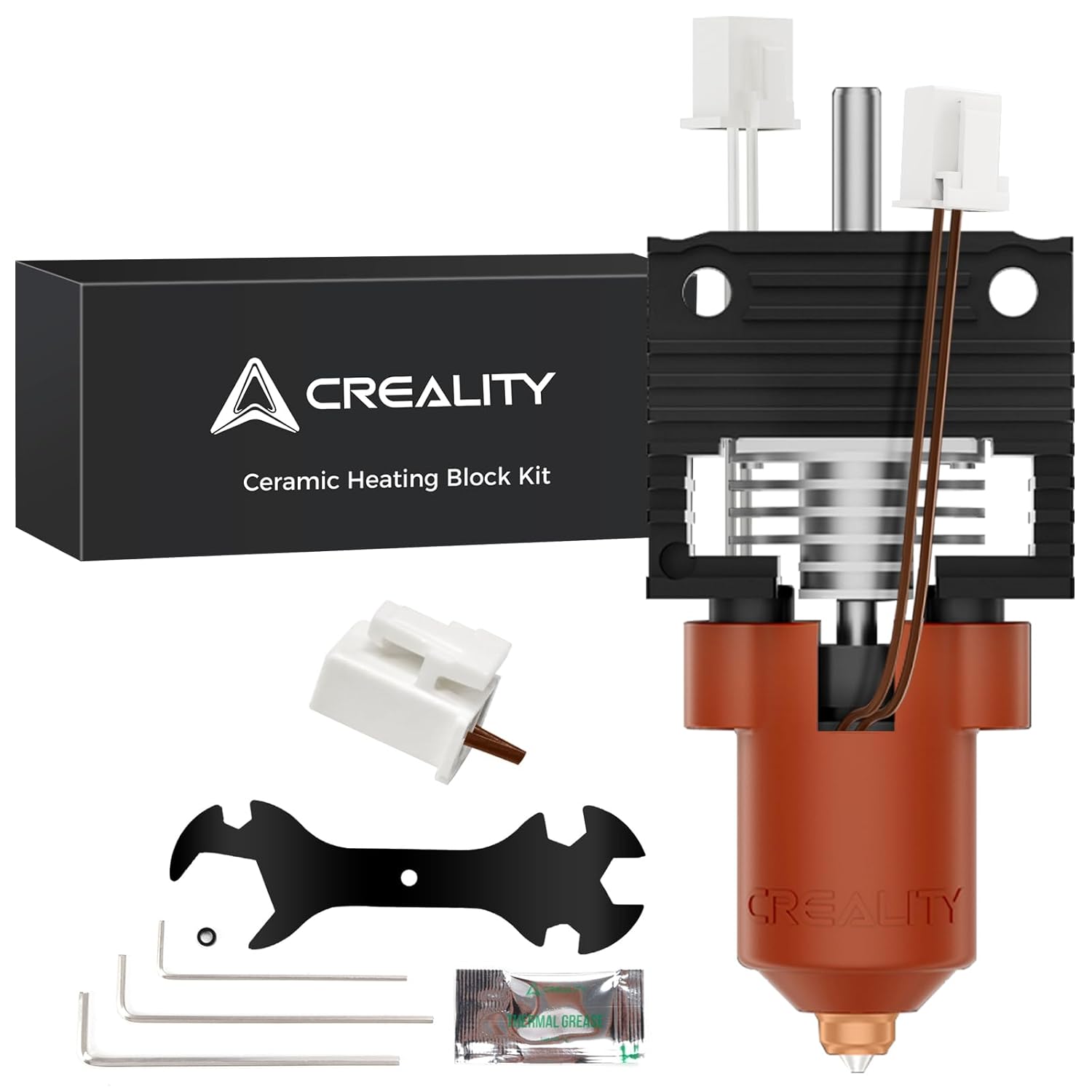
This official-style assembly restores the compact ceramic heating system used in compatible K1-series printers. It heats quickly and is designed around the machines’ higher-speed workflow.
Creality has revised parts across the K1 family, so buyers should match the product photos, connector, and stated model compatibility to their printer’s production version.
Key features:
- Ceramic heating element
- Compact integrated assembly
- High-speed filament melting
- K1-series compatibility
Pros:
- Quick warm-up
- Cleaner fit than adapting a universal hotend
- Convenient replacement package
Cons:
- Model and revision compatibility can be confusing
- Less universal than V6-style designs
Why we recommend it: A purpose-built replacement is generally the simplest way to return a K1-series machine to reliable operation.
9. HysiPrui P1P/P1S Ceramic Hotend Kit
Best for: Bambu Lab P1P and P1S replacement hotends

This three-pack provides complete 0.4 mm hotend assemblies for Bambu Lab P1P and P1S printers. Each assembly combines a hardened-steel nozzle, ceramic heater, thermistor, heat break, heatsink, and silicone sock.
The integrated nozzle and throat design helps reduce potential leaks around threaded connections. Standard modular connectors also simplify installation without requiring users to splice or strip wires.
Key features:
- Three complete 0.4 mm hotend assemblies
- Hardened-steel nozzles
- Integrated ceramic heating system
- Included thermistors and heater cartridges
- Compatible with Bambu Lab P1P and P1S
Pros:
- Convenient three-pack
- Suitable for abrasive filament
- Preassembled components save installation time
- Integrated design helps prevent filament leaks
Cons:
- Not compatible with other Bambu Lab models
- Very limited customer-review history
- Print bed should be recalibrated after installation
Why we recommend it: This pack gives P1P and P1S owners several ready-to-install replacement hotends. The hardened-steel nozzles are particularly useful when printing carbon-fiber, glow-in-the-dark, and other abrasive filaments.
10. POLISI3D V6 All-Metal Hotend
Best for: Budget experiments and DIY printers
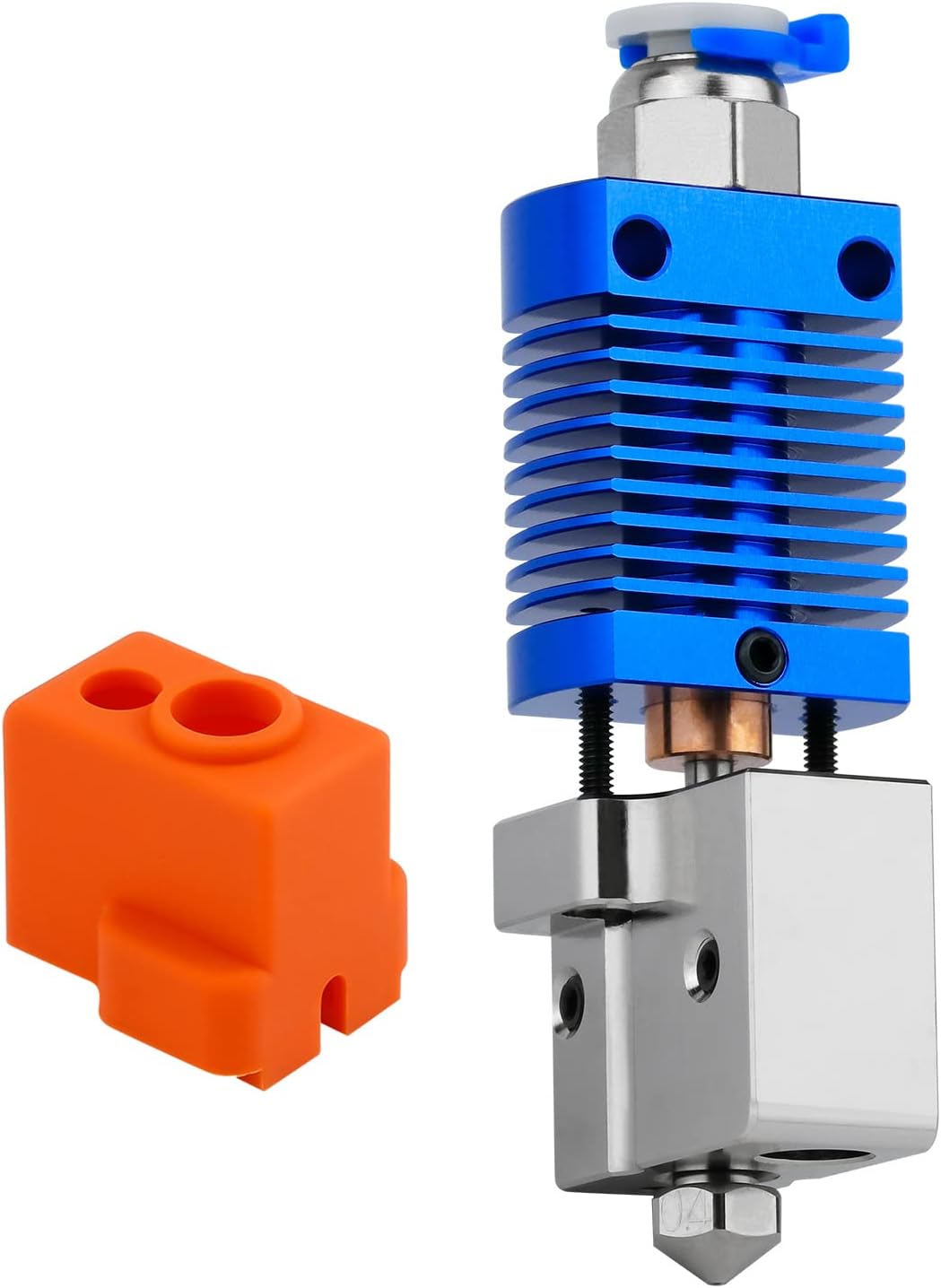
The POLISI3D V6 is an affordable entry into the V6 ecosystem. It works well for hobbyists building a secondary printer or experimenting with custom toolheads without committing to a premium hotend immediately.
Quality control and documentation may not equal genuine E3D hardware, so inspect the heat break, wiring, and nozzle seating before the first heat cycle.
Key features:
- V6-style groove mount
- All-metal configuration
- Standard replaceable components
- Multiple voltage options
Pros:
- Affordable
- Easy to source replacement parts
- Useful for DIY projects
Cons:
- Less consistent quality control
- May require additional tuning or component replacement
Why we recommend it: It provides an accessible starting point for builders who understand the tradeoffs of budget components.
What to Look for When Buying 3D Printer Hotends
Start with exact printer compatibility. Confirm the mount, available space, heater voltage, thermistor type, connector style, and whether your firmware supports the required temperature range.
Other important considerations include:
- Maximum practical flow: Higher flow helps when printing quickly, using thick layers, or installing a large nozzle.
- Filament path: An all-metal path is preferable for sustained high-temperature printing.
- Nozzle ecosystem: Standard V6 and MK8 nozzles are affordable, while integrated systems offer easier changes.
- Replacement parts: Check whether heaters, sensors, socks, nozzles, and heat breaks are readily available.
- Installation difficulty: Universal performance hotends often require printed mounts, rewiring, firmware work, or new fan ducts.
A new hotend cannot compensate for poor maintenance. Follow a proper 3D printer nozzle-cleaning routine when extrusion becomes inconsistent rather than immediately replacing parts.
Final Thoughts
The best 3D printer hotends match the machine and the way it will actually be used. The Micro Swiss is our preferred straightforward Creality upgrade, the E3D Revo Six excels at convenient nozzle changes, and the Creality Spider V3 Pro offers strong value for faster printing. Before buying, verify every mechanical and electrical detail—an accurately matched, well-tuned hotend will outperform a more expensive component installed in the wrong printer.
Frequently Asked Questions
What does a 3D printer hotend do?
The hotend heats and melts filament before forcing it through the nozzle. Its thermal capacity, heat break, cooling, and nozzle design affect extrusion consistency, material compatibility, and maximum printing speed.
Is an all-metal hotend better than a PTFE-lined hotend?
An all-metal model is better for sustained high-temperature printing because PTFE does not extend into the hot zone. However, a PTFE-lined hotend can be easier to tune for ordinary PLA printing.
Will a new hotend make my 3D printer faster?
A high-flow hotend can melt filament faster, but it will not automatically increase print speed. Your extruder, motion system, cooling, firmware, and slicer settings must also handle the higher output.
Do I need to change firmware after replacing a hotend?
Not always. You should at least perform a PID tune after changing the heater assembly. Firmware changes may be necessary when installing a different thermistor or raising the permitted maximum temperature.
How often should 3D Printer Hotends be replaced?
A hotend has no fixed replacement interval. Replace damaged heater blocks, worn nozzles, leaking heat breaks, or unreliable electrical components individually when possible. A complete replacement makes sense when damage is extensive or an upgrade offers a needed capability.