Top 10 3D Printer Resins
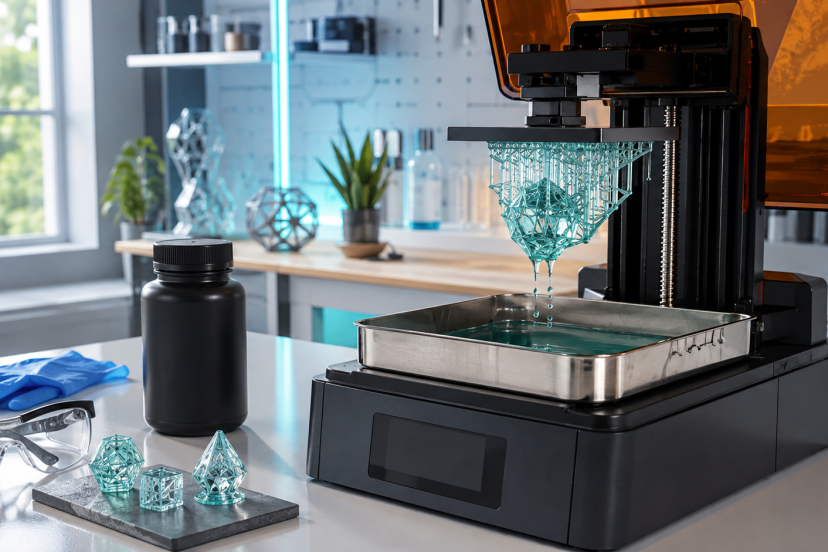
The best 3D printer resins can produce crisp miniature details, smooth prototypes, flexible components, or castable jewelry patterns—but one bottle rarely excels at everything. Resin choice affects far more than surface quality. It also influences durability, exposure settings, cleanup, and how easily supports come away.
This guide compares ten strong 3D printer resins across several categories. Whether you need a dependable everyday formula or a specialized engineering material, the recommendations below will help you narrow the field.
Our Top Picks for 3D Printer Resins
| Product | Best For | Key Feature | Rating | Read More |
| Anycubic Standard Resin | Overall value | Reliable, low-shrink formula | ★★★★⯪ | Read more |
| Siraya Tech Fast | Miniatures | Fast, beginner-friendly printing | ★★★★⯪ | Read more |
| Anycubic ABS-Like Pro 2 | Durable models | Improved impact resistance | ★★★★⯪ | Read more |
| Elegoo Water Washable | Easier cleanup | Cleans without IPA | ★★★★⯪ | Read more |
| Phrozen Aqua Hyperfine | Fine detail | Optimized for high-resolution LCDs | ★★★★⯪ | Read more |
| Siraya Tech Blu | Functional parts | Strong and rigid | ★★★★⯪ | Read more |
| Siraya Tech Tenacious | Flexible parts | High impact resistance | ★★★★⯪ | Read more |
| Siraya Tech Build | Mechanical prototypes | Can be tapped and machined | ★★★★⯪ | Read more |
| Anycubic Water-Washable ABS-Like 3.0 | Tough, easy cleanup | Water-washable ABS-like formula | ★★★★⯪ | Read more |
| Siraya Tech Cast | Jewelry casting | Low-ash burnout | ★★★★⯪ | Read more |
Before buying, confirm the resin’s wavelength, recommended temperature, exposure range, and compatibility with your printer. If you are still selecting a machine, this guide to the best resin 3D printers explains the major printer features that affect resin performance.
1. Anycubic Standard 3D Printer Resin
Best for: Everyday printing and first-time users
Rating: ★★★★⯪

Anycubic Standard Resin is an accessible starting point for miniatures, decorative objects, and general prototypes. Its relatively low shrinkage supports accurate dimensions, while its fluidity helps fresh resin move beneath the build plate between layers.
With more than 10,000 ratings shown on the checked Amazon variant, it also has a longer customer track record than many newer formulas.
Key features:
- 405nm UV-curing formula
- Low shrinkage and smooth surface quality
- Broad LCD and DLP compatibility
- Multiple color options
Pros:
- Straightforward to calibrate
- Good balance of detail and value
- Widely supported by community profiles
Cons:
- More brittle than tough or ABS-like resin
- Requires an appropriate cleaning solvent
Why we recommend it: It is a sensible all-purpose choice when you want predictable results without paying for specialized properties.
2. Siraya Tech Fast ABS-Like Resin
Best for: Miniatures and fast iteration
Rating: ★★★★⯪

Siraya Tech Fast is popular because it combines easy printing with better toughness than many basic resins. Its low viscosity can support shorter curing cycles and efficient vat refill between layers.
Fine textures remain visible, making it well suited to tabletop figures, busts, and display models. The creamy and gray colors also provide a useful surface for inspecting details before painting.
Key features:
- Fast-curing 405nm formula
- Low viscosity
- ABS-like behavior
- Suitable for LCD and DLP printers
Pros:
- Captures small model details
- Less fragile than ordinary standard resin
- Strong customer feedback
Cons:
- Not as impact-resistant as dedicated engineering resin
- Exposure profiles still require testing
Why we recommend it: It offers one of the most convincing combinations of detail, printability, speed, and everyday toughness.
3. Anycubic ABS-Like Resin Pro 2
Best for: Gaming pieces and frequently handled models
Rating: ★★★★⯪

Anycubic ABS-Like Resin Pro 2 targets users who find standard resin too brittle. It retains the precision needed for detailed models while providing improved elongation and resistance to accidental knocks.
That added toughness is valuable for miniature weapons, snap-fit trials, enclosures, fixtures, and prototype parts. It is still a photopolymer resin, however, and should not be treated as identical to injection-molded ABS.
Key features:
- Increased toughness and elongation
- Low-viscosity formulation
- Minimal shrinkage
- Wide 405nm printer compatibility
Pros:
- Better drop resistance
- Useful for thin model components
- Smooth surface finish
Cons:
- Costs more than basic resin
- Thin parts can still break under heavy stress
Why we recommend it: This is a practical upgrade for makers who want detailed prints that survive more handling.
4. Elegoo Water Washable Resin
Best for: Convenient post-processing
Rating: ★★★★⯪

Elegoo Water Washable Resin lets you remove uncured surface residue with water instead of isopropyl alcohol. That can simplify cleanup for hobbyists who print regularly and do not want to store large volumes of IPA.
Printed pieces retain good definition and work especially well for figures and decorative models. Use a separate wash container—resin-contaminated water still needs proper treatment and disposal.
Key features:
- Water-washable formula
- Low odor
- Fast 405nm curing
- Offered in several colors and bottle sizes
Pros:
- Reduces reliance on IPA
- Simple post-processing workflow
- Strong Amazon customer history
Cons:
- Wash water requires responsible disposal
- Can be more brittle than tough resin
Why we recommend it: It offers a more convenient workflow without giving up the sharp details resin printers are known for.
5. Phrozen Aqua Hyperfine Resin
Best for: High-resolution display pieces
Rating: ★★★★⯪

Phrozen Aqua Hyperfine is aimed at 9K, 12K, 14K, and other high-resolution monochrome LCD printers. It emphasizes sharp edges, subtle textures, and controlled shrinkage.
It makes the most sense for detailed busts, premium miniatures, sculptures, and presentation models. A high-resolution label cannot compensate for poor supports or incorrect exposure, but this resin gives a well-calibrated printer suitable material to work with.
Key features:
- Formulated for high-resolution screens
- Fine texture reproduction
- Low shrinkage
- 405nm curing wavelength
Pros:
- Excellent detail potential
- Smooth display-ready surfaces
- Good dimensional stability
Cons:
- Unnecessary for rough prototypes
- Usually carries a premium over standard resin
Why we recommend it: Choose it when surface definition matters more than impact resistance or minimum material cost.
6. Siraya Tech Blu Tough Resin
Best for: Strong functional parts
Rating: ★★★★⯪

Siraya Tech Blu sits closer to engineering resin than ordinary hobby material. It balances rigidity with impact resistance, making it useful for brackets, mounts, housings, and prototypes that will be handled repeatedly.
Blu generally benefits from a warm printing environment. Makers working in cool rooms may need to warm the bottle and maintain a stable enclosure temperature.
Key features:
- High strength and rigidity
- Better impact resistance than standard resin
- Precise 405nm printing
- Suitable for load-bearing prototypes
Pros:
- Strong functional performance
- Handles drops better than brittle formulas
- Can reproduce accurate mechanical features
Cons:
- More demanding temperature requirements
- Supports may be harder to remove
Why we recommend it: Blu is a proven step up for projects where appearance and mechanical performance both matter.
7. Siraya Tech Tenacious Resin
Best for: Flexible components and resin blending
Rating: ★★★★⯪

Siraya Tech Tenacious produces flexible, high-impact parts rather than rigid display models. Potential uses include washers, flexible joints, miniature accessories, gaskets, and shock-absorbing prototype components.
Many makers also blend a modest amount into standard resin to reduce brittleness. Mixing changes exposure and mechanical behavior, so record your ratio and run calibration tests.
Key features:
- High impact resistance
- Flexible after curing
- Can modify more brittle resins
- Compatible with many LCD and DLP machines
Pros:
- Excellent resistance to snapping
- Useful alone or as an additive
- Easier to print than many soft resins
Cons:
- Not ideal when maximum rigidity is required
- Prints best at approximately 25°C or warmer
Why we recommend it: Few materials are as useful for adding controlled flexibility to an otherwise brittle resin workflow.
8. Siraya Tech Build Resin
Best for: Machinable prototypes
Rating: ★★★★⯪

Siraya Tech Build is designed for dimensional accuracy and practical post-print work. Unlike fragile standard resin, it can be drilled or tapped more successfully when fully cured and handled with suitable tools.
This makes it appealing for jigs, enclosures, test fittings, and mechanical prototypes. It balances hardness with enough flexibility to tolerate routine handling.
Key features:
- Low shrinkage
- Drillable and tappable
- Balanced hardness and flexibility
- High-resolution dimensional output
Pros:
- Useful for engineering prototypes
- Better machining potential
- Resists accidental drops
Cons:
- More specialized than hobby resin
- Settings may need careful calibration
Why we recommend it: Build solves a specific problem well: producing accurate resin parts that can undergo additional workshop operations.
9. Anycubic Water-Washable ABS-Like 3.0
Best for: Tough prints with simpler washing
Rating: ★★★★⯪

Anycubic Water-Washable ABS-Like 3.0 combines two desirable qualities: easier water-based cleanup and improved toughness. It suits gaming models, prototypes, and pieces containing thin elements that may snap in standard resin.
It is a newer option with a smaller review history than Anycubic’s standard formula. Buyers who prioritize a long performance record may prefer one of the established picks above.
Key features:
- Water-washable post-processing
- ABS-like toughness
- High precision
- Low-odor formulation
Pros:
- Convenient cleanup
- Less brittle than basic water-washable resin
- Suitable for detailed, handled models
Cons:
- Relatively limited customer history
- Contaminated water still needs treatment
Why we recommend it: It fills the useful middle ground between convenient washing and everyday durability.
10. Siraya Tech Cast Resin
Best for: Jewelry and investment casting
Rating: ★★★★⯪

Siraya Tech Cast is a specialist resin for creating patterns that will be burned out during investment casting. Its high resolution helps reproduce prongs, engraved details, decorative textures, and compact jewelry designs.
Successful casting depends on the complete workflow, not resin alone. Follow the current burnout schedule, cure the pattern properly, and test the investment material before committing an important design.
Key features:
- Low-ash burnout
- Suitable for thin and thicker jewelry patterns
- Fine-detail reproduction
- Strong build-plate adhesion
Pros:
- Purpose-built for casting
- Handles intricate geometry
- Useful for jewelers and metal artists
Cons:
- Not intended as a general model resin
- Requires casting equipment and process control
Why we recommend it: It provides a specialized path from digital model to cast metal part without trying to double as an everyday prototyping material.
What to Consider When Buying 3D Printer Resins
Start with the intended use. Standard 3D printer resins are economical and detailed, ABS-like resin tolerates more handling, engineering formulas suit functional prototypes, and flexible resin works where bending or impact absorption matters.
Also check:
- Wavelength: Most consumer LCD printers use 405nm resin.
- Mechanical behavior: Hardness is not the same as toughness.
- Cleanup method: Water-washable resin still produces hazardous wastewater.
- Temperature: Thick resin may print poorly in a cold room.
- Exposure profile: Use the manufacturer’s settings as a starting point, then calibrate.
- Color: Dark or heavily pigmented resin may require different exposure times.
For more background on how light-based printing works, see this practical explanation of SLA 3D printing technology.
Final Thoughts
The right 3D printer resins depend on what the finished object must do. Anycubic Standard Resin offers excellent everyday value, Siraya Tech Fast stands out for detailed miniatures, and Anycubic ABS-Like Pro 2 provides added durability for handled models. Choose water-washable resin for a simpler cleaning workflow, Blu or Build for functional prototypes, Tenacious for flexibility, and Cast for jewelry production. Match the material to the project, calibrate before a long print, and treat every uncured resin with appropriate care.
FAQs
What is the best resin for a 3D printer?
Anycubic Standard Resin is a dependable general-purpose option, while Siraya Tech Fast is especially good for detailed miniatures. Functional parts usually benefit from tougher formulas such as Siraya Tech Blu or Anycubic ABS-Like Pro 2.
Is ABS-like resin better than standard resin?
ABS-like resin is generally better for parts exposed to handling, drops, or light mechanical stress. Standard 3D printer resins may be less expensive and perfectly adequate for stationary display models.
Can I use any resin in my resin 3D printer?
Not automatically. Confirm that the resin’s curing wavelength matches the printer and that the manufacturer supports your LCD, MSLA, DLP, or SLA technology.
Does water-washable resin need isopropyl alcohol?
Water-washable resin can normally be cleaned without IPA. However, the used water contains uncured resin and must be collected, treated, and disposed of according to local requirements.
Why do my resin prints keep breaking?
Common causes include using a brittle resin, excessive curing, poor part orientation, thin unsupported features, or unsuitable wall thickness. Switching to ABS-like resin or blending with a tough additive may improve durability.