6 3D Printed Storage Solutions for Small Spaces

Small spaces can get cluttered quickly, especially if you work with tools, gadgets, or hobby supplies. That is where 3D Printed Storage becomes incredibly useful. With a 3D printer, you can create organizers designed specifically for your workspace—whether it is a desk, workshop, or small apartment. Instead of relying on generic containers, makers can print custom holders, modular boxes, and wall-mounted racks that maximize every inch of available space. In this guide, you will discover practical storage ideas that help hobbyists stay organized while making the most of small spaces.
Why 3D Printed Storage Works So Well in Small Spaces
Traditional organizers follow fixed dimensions. Unfortunately, real-life spaces rarely match those measurements.
3D printing changes that completely.
You can scale designs, tweak shapes, and print organizers that fit awkward corners, desk edges, or narrow shelves.
Here are a few reasons makers love this approach:
- Custom sizing for tight spaces
- Modular designs that expand over time
- Low cost compared to commercial organizers
- Fast prototyping if you want to tweak a design
- Unlimited creativity
According to research on the sustainability and material efficiency of additive manufacturing, this technology enables the production of highly customized products with minimal material waste. That makes it ideal for personalized household tools and organizers.
In simple terms, 3D printing lets you build storage that fits your life perfectly.
1. Modular Drawer Organizers
Drawers often become black holes of clutter. Small tools, screws, USB drives, and adapters all mix together.
A 3D printed modular drawer organizer fixes that instantly.
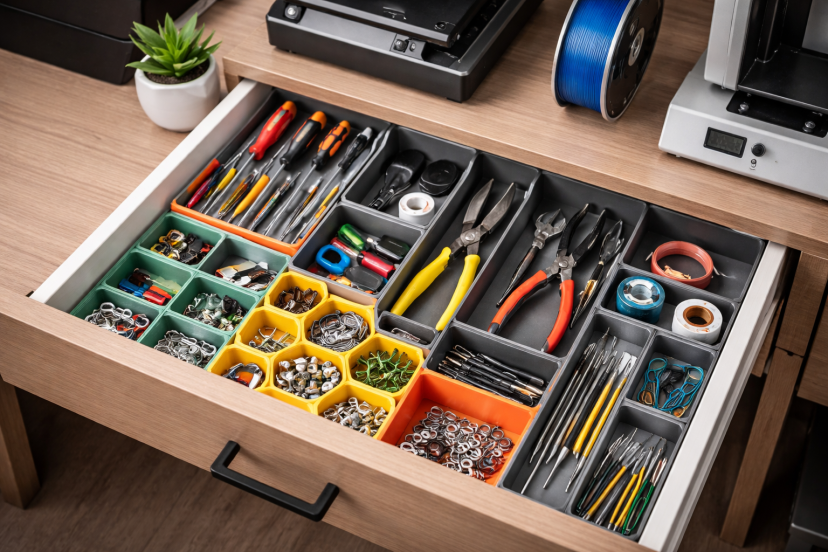
Instead of using one large tray, you print small compartments that snap together like puzzle pieces.
Why it works
- Fits any drawer size
- Expands over time
- Keeps tiny parts separated
You can create dedicated sections for:
- SD cards
- Allen keys
- batteries
- spare screws
- electronic components
Many makers print these with honeycomb structures because they interlock easily.
This design style has become extremely popular in maker communities because it scales so well.
2. Wall-Mounted Tool Holders
When desk space disappears, the best solution is simple: use vertical storage.
Wall-mounted tool holders are one of the most useful 3D Printed Storage projects you can make.
These organizers attach to walls, pegboards, or shelves and hold tools such as:
- pliers
- screwdrivers
- soldering irons
- precision tools
Because you control the design, each holder can fit the exact shape of your tool.
For example:
A soldering iron stand may include slots for tips, cleaning sponges, and wire.
This turns a messy workspace into an organized maker station.
3. Under-Desk Cable Management Clips
Cable clutter is one of the biggest problems in small workspaces.
Charging cables, printer wires, USB hubs, and power strips quickly create chaos.
A simple fix is 3D printed cable clips that mount under desks.
These small prints hold cables neatly in place while keeping them easy to access.
Advantages
- keeps wires off the floor
- prevents tangling
- improves desk aesthetics
- protects connectors
Many designs also include cable labels or snap-fit channels.
That means you can run multiple cables along a single track without them tangling.

4. Stackable Storage Boxes
Stackable boxes are one of the most versatile 3D Printed Storage solutions available.
Unlike store-bought containers, printed boxes can include special features such as:
- sliding lids
- labeling panels
- transparent cutouts
- interlocking bottoms
They work well for storing:
- printer nozzles
- microelectronics
- hobby screws
- craft supplies
- gaming accessories
Some designs even include grid systems so boxes lock together.
This makes them perfect for desks, shelves, or workshop carts.
5. Filament Storage Racks
If you own a 3D printer, you probably own several spools of filament too.
Unfortunately, filament takes up a lot of space.
A 3D printed filament rack helps solve that problem by creating vertical storage.
Many racks mount directly to walls or inside cabinets.
They also keep filament organized by:
- material type
- color
- brand
Proper storage also helps protect filament from dust and humidity.
For a deeper guide on choosing materials, you can explore this helpful resource on 3D printing materials and filament types.
Understanding filament types helps ensure your storage prints remain strong and durable.
6. Magnetic Organizer Systems
Magnetic storage systems might be the smartest 3D Printed Storage solution for tight workspaces.
These systems combine small printed containers with embedded magnets.
You can attach them to:
- metal boards
- tool chests
- refrigerator sides
- steel shelving
Because they move easily, they create flexible storage layouts.
If your workspace changes, you simply reposition the containers.
Many makers use these for:
- screws
- drill bits
- small electronics
- crafting tools
It is a clever way to turn unused surfaces into functional storage.
Recommended Tools and Products
While most storage prints only require filament, a few tools make the process much easier. Here are five helpful products makers often use when printing organizers.
1. eSUN PLA+ Filament – A durable PLA filament perfect for storage prints that need strength.
2. SUNLU Filament Dryer Box – Protects filament from moisture so prints remain strong and accurate.
3. Digital Calipers – Precise measurement helps you design storage containers that fit perfectly.
4. Magnetic Discs for 3D Printing Projects – Ideal for creating modular magnetic storage systems.
5. Self-Adhesive Mounting Pads – Great for attaching wall organizers without drilling holes.
These simple accessories make printing storage systems easier and more reliable.
Tips for Designing Your Own 3D Printed Storage
If you want to design your own organizers, keep these tips in mind.
Measure First – Always measure your space carefully. A difference of even a few millimeters can affect fit.
Use Parametric Models – Many storage designs allow you to adjust dimensions easily.
Print Test Versions – Before printing large pieces, test a small section to confirm sizing.
Consider Layer Orientation – Storage items that hold weight should print with stronger layer alignment.
Choose the Right Filament – PLA works for most organizers, but PETG may offer more durability.
These small steps help ensure your prints remain functional and long-lasting.
Design Flexibility and Customization in 3D Printing
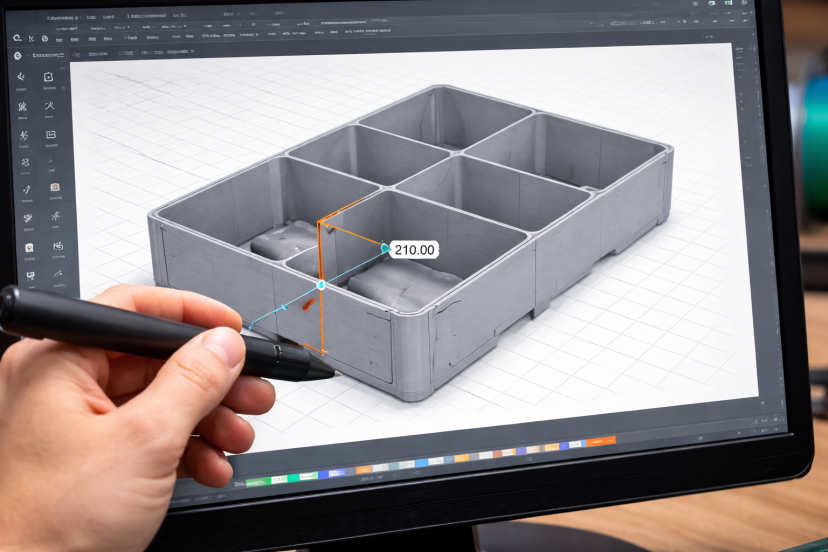
Another reason 3D Printed Storage works so well for hobbyists is the design freedom that additive manufacturing provides. Unlike traditional production methods, 3D printing allows makers to create complex shapes and customized parts without special tooling.
A comprehensive review of additive manufacturing materials and technologies highlights that 3D printing makes it easier to produce intricate geometries and customized components that would be difficult or expensive to produce using conventional manufacturing processes.
Because designs are created digitally and printed layer by layer, makers can quickly modify dimensions, add features, or redesign storage solutions to fit specific tools and spaces.
This flexibility is one of the main reasons hobbyists rely on 3D printing to build custom organizers, modular tool holders, and compact storage systems for small workspaces.
Conclusion
Staying organized in a small workspace can be challenging, especially for makers with tools, parts, and filament to manage. 3D Printed Storage offers a practical solution because it allows you to create organizers that fit your exact space and needs. From modular drawer trays to wall-mounted holders and stackable boxes, these designs help maximize limited areas while keeping tools easy to access. With a 3D printer and a little creativity, hobbyists can build storage systems that keep their workspace clean, efficient, and ready for the next project.
FAQs
What is 3D printed storage?
3D printed storage refers to organizers, containers, or racks created using a 3D printer. These items help store tools, hobby supplies, and accessories in customized designs.
What filament works best for storage prints?
PLA works well for most organizers because it is easy to print. However, PETG offers better durability and heat resistance for heavier storage items.
Are 3D printed organizers strong enough?
Yes. When printed with proper settings and strong infill, many organizers can handle everyday tools and accessories without problems.
Where can I find 3D storage designs?
Websites like Thingiverse, Printables, and MyMiniFactory offer thousands of free 3D printed storage designs created by maker communities.
Can beginners print storage projects?
Absolutely. Many storage prints are beginner-friendly and require minimal printer setup. Simple cable clips or small containers are great first projects.