10 Beginner 3D Printing Projects You Can Do Right Now
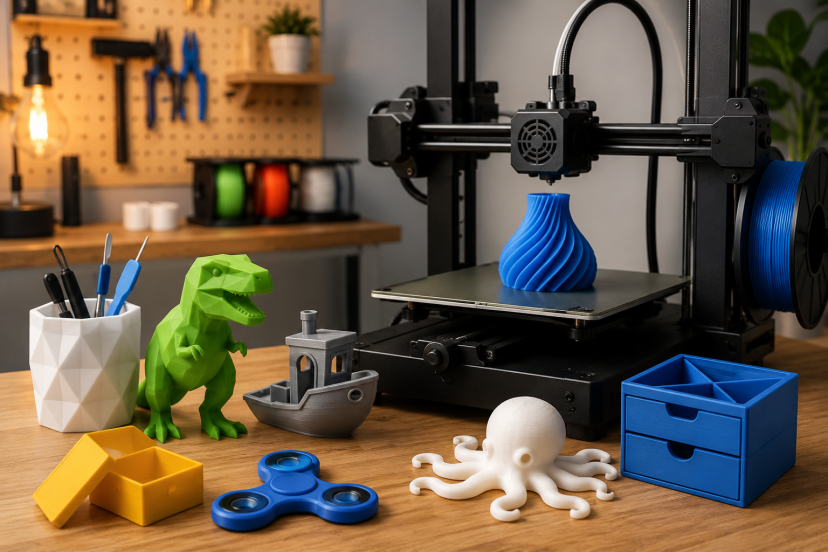
Starting 3D printing can feel exciting and a little intimidating. You have the printer, the filament, and a folder full of models, but choosing the right first project matters. The best beginner 3D printing projects are simple, useful, and forgiving, helping you learn bed adhesion, print settings, and basic design without wasting time or material. In this guide, you’ll find easy projects you can print right now while building real confidence with your machine.
Why Start With Beginner 3D Printing Projects?
Beginner projects help you understand your printer without overwhelming you. You learn bed adhesion, layer height, infill, supports, slicing, and print orientation in a practical way.
Instead of reading endless settings guides, you get hands-on experience. That matters because 3D printing is very much a “learn by doing” hobby.
Studies and education reviews also support this idea. Research on 3D printing in STEM learning shows that hands-on 3D printing can improve problem-solving, creativity, and student engagement because learners build real objects instead of only studying theory.
Essential Tools and Supplies for Easy Prints
You do not need a big workshop to start 3D printing. A few simple tools can make your first prints cleaner, easier, and less stressful.
Start with these basics:
- PLA filament for easy, beginner-friendly printing
- Scraper for removing prints from the bed
- Flush cutters for trimming extra filament
- Small pliers for cleanup and support removal
- Glue stick for better bed adhesion
- Digital caliper for measuring parts accurately
Your print bed also needs attention. If the first layer does not stick well, the whole print can fail. Before you try larger projects, check this helpful guide on 3D printer bed leveling so your prints start on the right foundation.
10 Beginner 3D Printing Projects You Can Try Today
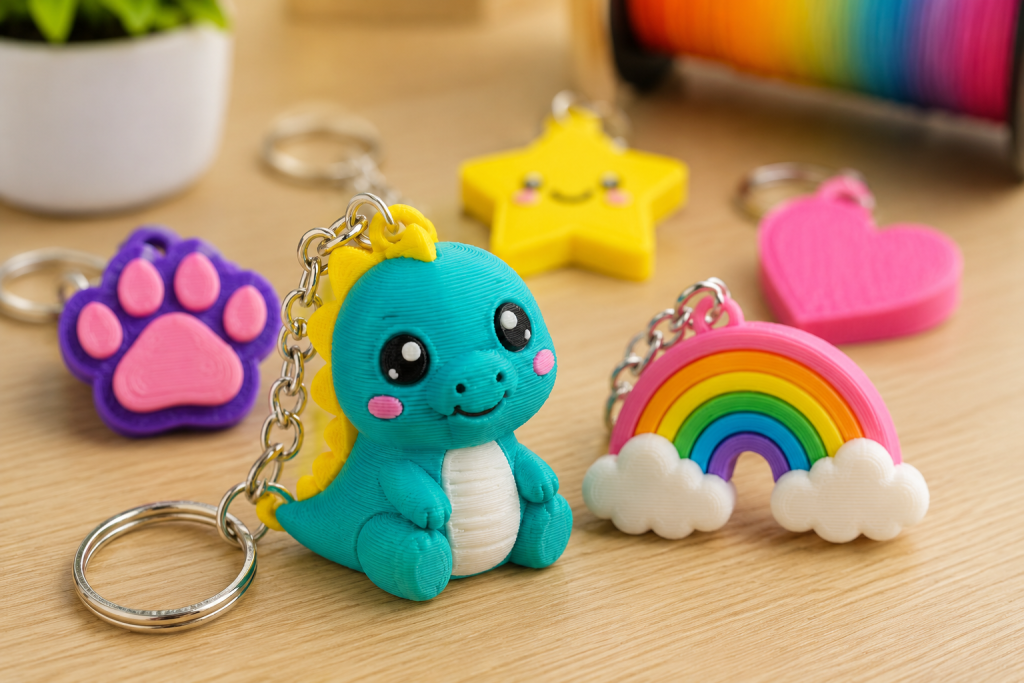
1. Keychains
Keychains are perfect first prints because they are small, fast, and easy to customize. You can print your name, initials, favorite shape, or a simple logo.
They also teach you about text depth, hole placement, and top-layer quality. If the letters look rough, you can adjust your layer height or slow down the print speed.
For best results, use PLA and print flat on the bed. You usually do not need supports.
2. Cable Clips
Cable clips are simple but incredibly useful. They help organize phone chargers, USB cables, headphone wires, and desk cords.
This project teaches basic flexibility and tolerance. If the clip feels too tight, you learn how small design changes affect the final object.
Print a few sizes and test them around your workspace. That tiny “aha” moment when your messy desk looks cleaner? Very underrated.
3. Phone Stand
A phone stand is one of the most satisfying beginner 3D printing projects because you will actually use it every day.
It teaches angles, balance, and strength. If the stand tips over, the base needs more width. If it bends, you may need more infill or a thicker design.
Start with a basic vertical stand before trying folding or adjustable versions.
4. Desk Organizer Tray
A desk tray helps you keep pens, clips, SD cards, screws, or small tools in one place.
This project teaches wall thickness and print size. It also helps you understand how long larger flat prints take compared to tiny parts.
Use a simple rectangular design first. Then, once you feel comfortable, try adding compartments.
5. Plant Labels
Plant labels are great for gardeners, hydroponic hobbyists, and anyone who forgets what they planted two weeks ago.
They finish fast and do not require much filament. You can add raised text for basil, mint, tomato, lettuce, or any plant you grow.
This project teaches text readability. If the words look too thin, increase the font size or use raised letters instead of engraved text.
6. Bag Clips
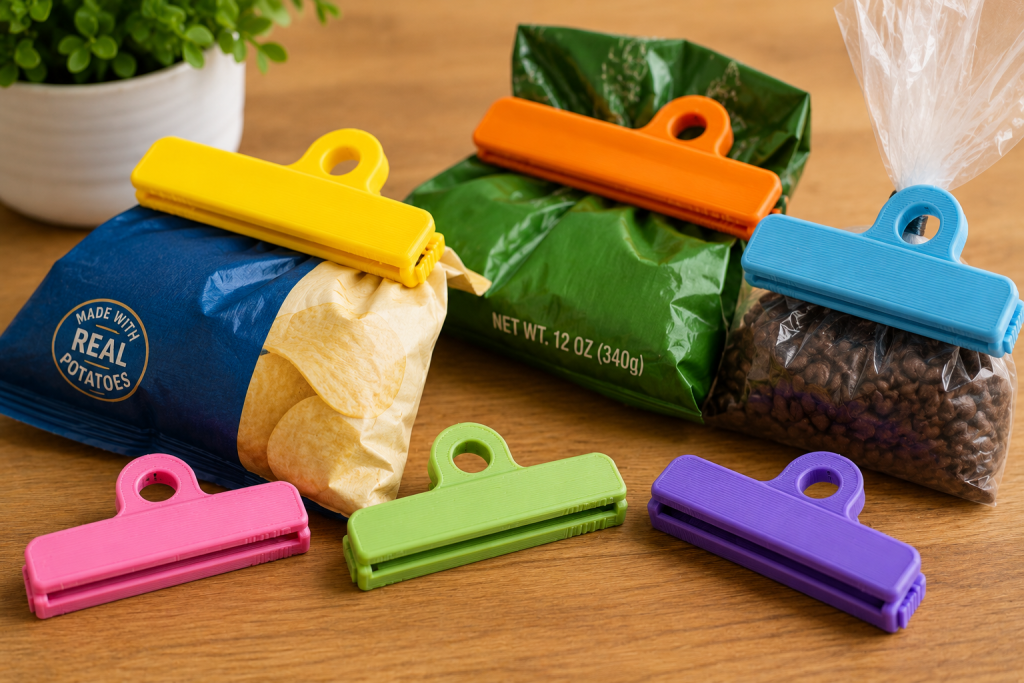
Bag clips are practical and beginner-friendly. You can use them for chips, coffee bags, pet food, snacks, or pantry items.
They teach print orientation and strength. Since clips need to bend slightly, you will quickly see how layer direction affects durability.
PLA works for basic clips, but PETG may last longer if you want more flexibility.
7. Simple Bookmark
A 3D printed bookmark is a fun, low-risk project. You can make it flat, patterned, themed, or personalized.
Because bookmarks are thin, they teach bed adhesion and first-layer quality. If the edges lift, your bed may need cleaning or leveling.
Keep the design slim. A bulky bookmark looks cool but feels awkward inside a book.
8. Measuring Scoop
A measuring scoop is useful for coffee, protein powder, pet food, soil, or craft materials.
This project teaches volume, shape, and functional design. However, avoid using 3D printed scoops for hot food or anything that requires strict food safety unless you understand material safety and post-processing.
For non-food use, it is a fantastic beginner project.
9. Wall Hook
A small wall hook helps you hang keys, headphones, light bags, or craft tools.
This project teaches load-bearing design. You will learn why infill, wall count, and print orientation matter.
Mount them with screws or adhesive strips, based on how the design is made. For heavier items, make the hook thicker and choose stronger print settings.
10. Mini Storage Box
A small storage box is a nice step up from flat prints. It teaches lids, tolerances, and fit.
Start with a simple open box. Then try a snap-fit lid once you understand how your printer handles tight spaces.
This is where 3D printing starts to feel addictive. Suddenly, every drawer in your house becomes a “project opportunity.”
Research-Backed Benefits of 3D Printing
3D printing works well for beginners because it blends creativity with practical problem-solving. A review from Cambridge researchers explains that 3D printing creates new opportunities for teaching, design, and hands-on learning across many subjects.
Another engineering education framework notes that additive manufacturing supports experiential learning because students can move from digital concepts to physical prototypes. That same idea applies to hobbyists at home: you design, print, test, and improve.
Safety matters too. NIOSH has studied 3D printer emissions and recommends paying attention to ventilation, especially when using multiple printers or higher-emission materials. For beginners, PLA in a well-ventilated area is usually the easier and safer starting point.
Common Beginner Mistakes to Avoid
Beginner mistakes are normal, but a few simple choices can save you time, filament, and frustration.
Avoid these common problems:
- Starting with huge prints: Large projects take longer, use more filament, and feel extra painful when they fail.
- Skipping bed leveling: A messy first layer can ruin even the easiest print.
- Using supports too often: Supports waste filament and make cleanup harder when the model does not really need them.
- Printing too fast: Slower settings often give beginners cleaner, more reliable results.
Also, do not expect every print to turn out perfect on the first try. Failed prints are part of learning 3D printing. That little pile of plastic spaghetti? Annoying, yes. But also kind of a beginner badge of honor.
Conclusion
Beginner 3D Printing Projects should feel useful, simple, and fun. Start with small items like keychains, cable clips, phone stands, plant labels, and storage boxes. Each project teaches a real skill without overwhelming you. As you improve, you can adjust settings, customize designs, and move into stronger materials or more complex models. The goal is not to print the most impressive object on day one. The goal is to build confidence, one clean layer at a time.
FAQs
What are the easiest beginner 3D printing projects?
Keychains, cable clips, bookmarks, plant labels, and phone stands are some of the easiest beginner 3D printing projects. They are small, quick, and forgiving.
What filament should beginners use?
PLA is usually the easiest filament for beginners to start with. It prints easily, works on many printers, and suits simple home projects.
Do beginner 3D printing projects need supports?
Many beginner projects do not need supports. Flat objects like keychains, trays, labels, and bookmarks usually print directly on the bed.
What causes 3D prints to fail?
Common causes include poor bed leveling, dirty print surfaces, wrong nozzle temperature, fast print speed, and weak bed adhesion.
Can I sell beginner 3D printed projects?
Yes, you can sell your own designs or models with commercial-use permission. Always check the license before selling downloaded 3D files.