Top 10 TPU 3D Printer Filament
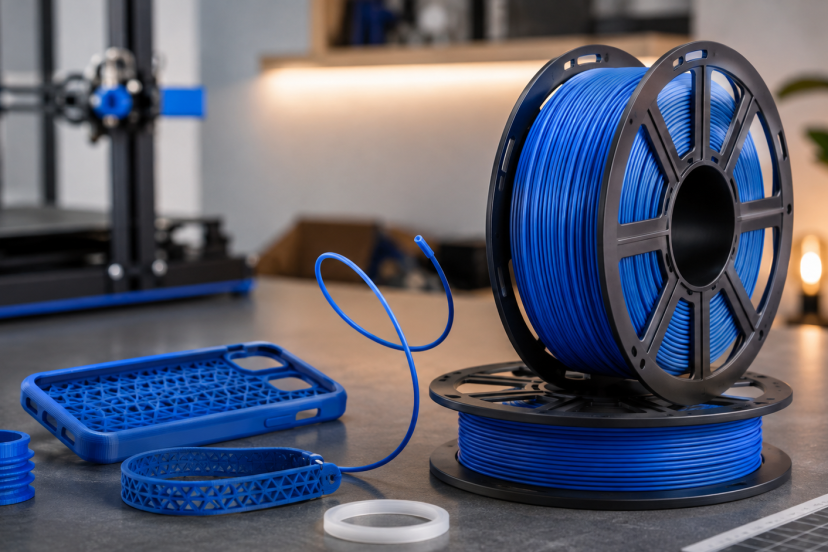
Printing a phone case, protective bumper, flexible hinge, gasket, or vibration-damping foot requires a material that can bend without snapping. That is exactly where TPU 3D printer filament earns its place in a maker’s workshop.
The challenge is choosing the right spool. Some TPU is soft and rubbery, while other formulas feel closer to a flexible plastic. This guide compares ten worthwhile options for different printers, skill levels, and projects, so you can spend less time fighting jams and more time producing useful parts.
Our Top Picks
| Product | Best For | Key Feature | Rating | Read More |
| OVERTURE TPU 95A | Best overall | Reliable 1kg everyday spool | ★★★★⯪ | Read more |
| SUNLU High-Speed TPU 95A | Faster printing | High-flow 95A formula | ★★★★⯪ | Read more |
| eSUN eTPU-95A | Functional parts | Strong resilience and wear resistance | ★★★★⯪ | Read more |
| SainSmart 95A TPU 250g | Testing TPU | Smaller starter spool | ★★★★⯪ | Read more |
| Polymaker PolyFlex TPU95 | Premium consistency | Broad desktop-printer compatibility | ★★★★⯪ | Read more |
| DURAMIC 3D TPU | Durable projects | Strong layer bonding | ★★★★⯪ | Read more |
| SainSmart 87A TPU | Softer prints | More flexible than standard 95A TPU | ★★★★⯪ | Read more |
| AMOLEN Rainbow TPU Bundle | Color variety | Four transparent multicolor spools | ★★★★☆ | Read more |
| YOYI 95A TPU | Small functional projects | Tough, flexible 95A material | ★★★★⯪ | Read more |
| PRILINE 98A TPU | Stiffer flexible parts | Firm 98A Shore hardness | ★★★★☆ | Read more |
Before choosing a TPU 3D Printer Filament, it helps to understand how it compares with PLA, PETG, ABS, and nylon. This guide to common 3D printing filament types explains where each material works best.
Top 10 TPU 3D Printer Filament Options
1. OVERTURE TPU 95A Filament
Best for: Most hobbyists and first-time TPU users
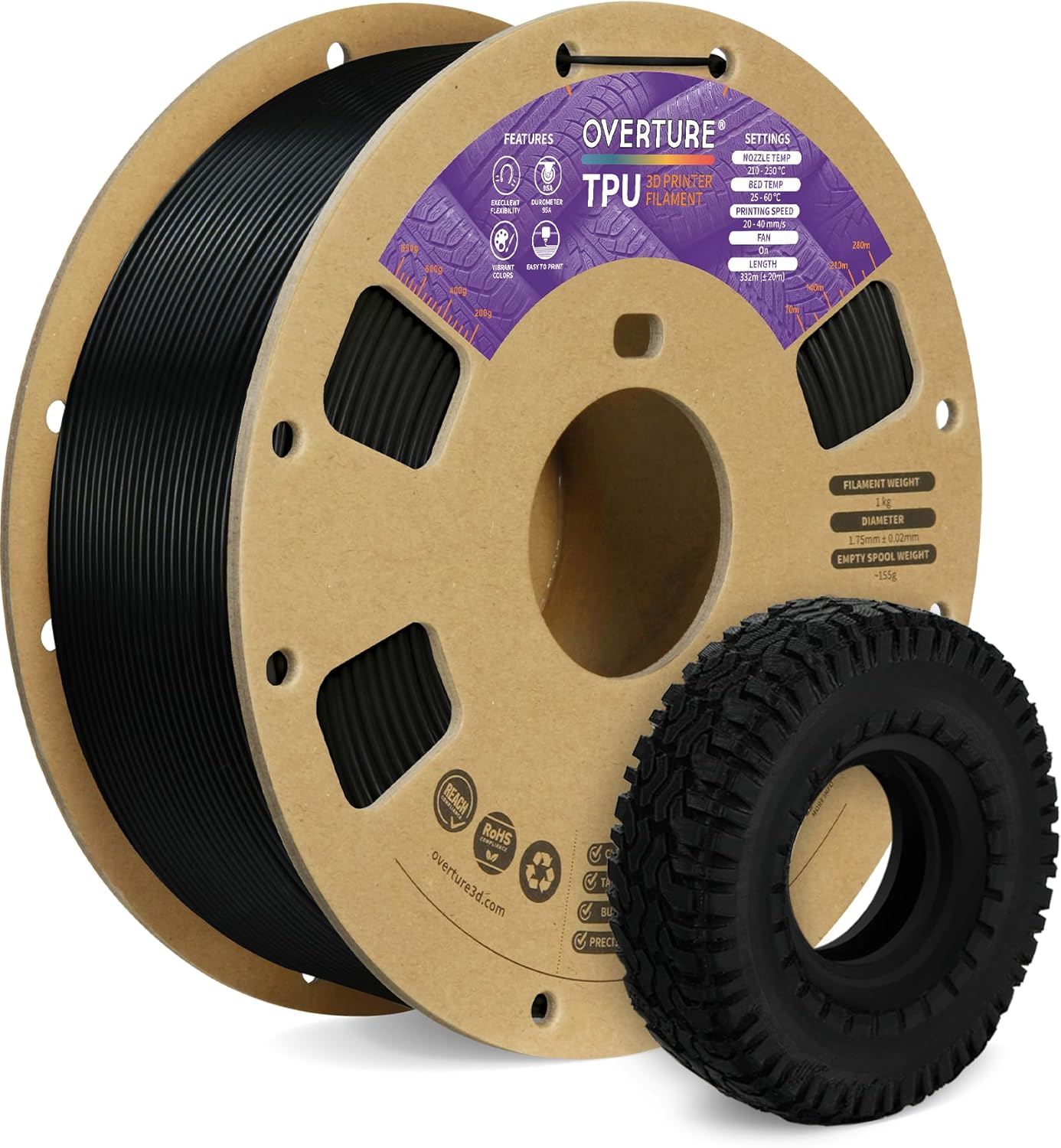
OVERTURE TPU 95A offers the most convincing balance of flexibility, spool size, availability, and customer history. Its 95A hardness is flexible enough for phone cases, RC bumpers, protective sleeves, grips, and printer feet without becoming excessively difficult to feed.
The standard 1.75mm spool contains 1kg of material. Its Amazon product family has accumulated thousands of reviews while maintaining strong overall feedback, making it a safer starting point than an obscure bargain brand.
Key features
- 95A Shore hardness
- 1.75mm diameter
- 1kg spool
- Suitable for most FDM printers
- Multiple color choices
Pros
- Good balance of softness and printability
- Large customer-review history
- Useful for decorative and functional projects
Cons
- Still requires slower settings than PLA
- Can string when damp or poorly tuned
2. SUNLU High-Speed TPU 95A
Best for: Modern direct-drive printers

SUNLU High-Speed TPU is a sensible choice when ordinary flexible filament feels painfully slow. It retains the widely useful 95A hardness but is formulated for faster extrusion on compatible machines.
Customer feedback is particularly strong for the black, gray, green, and white variations. Still, “high speed” does not mean you should immediately select PLA-level speeds. Begin conservatively, complete a flow test, and increase speed only after extrusion looks stable.
Key features
- High-speed 95A formula
- 1.75mm diameter
- 1kg spool
- Broad color selection
Pros
- Faster potential than conventional TPU
- Strong review volume
- Good choice for newer direct-drive machines
Cons
- Maximum speed depends heavily on the printer
- Some colors may look slightly translucent
3. eSUN eTPU-95A Filament
Best for: Wear-resistant functional parts

eSUN eTPU-95A is a dependable option for parts that will be repeatedly bent, squeezed, or rubbed. Its resilient 95A formula is well suited to insoles, protective corners, seals, wristbands, flexible couplings, and workshop components.
The material is available in 1kg spools and has a substantial customer history. eSUN describes it as flexible, resilient, wear-resistant, and resistant to deformation, although results will still depend on wall thickness, infill, and print orientation.
Pros
- Established filament manufacturer
- Full 1kg spool
- Good elasticity and rebound
Cons
- Can develop stringing when moisture is present
- Softer designs may need reduced retraction
4. SainSmart 95A TPU 250g
Best for: Trying TPU without buying a full spool
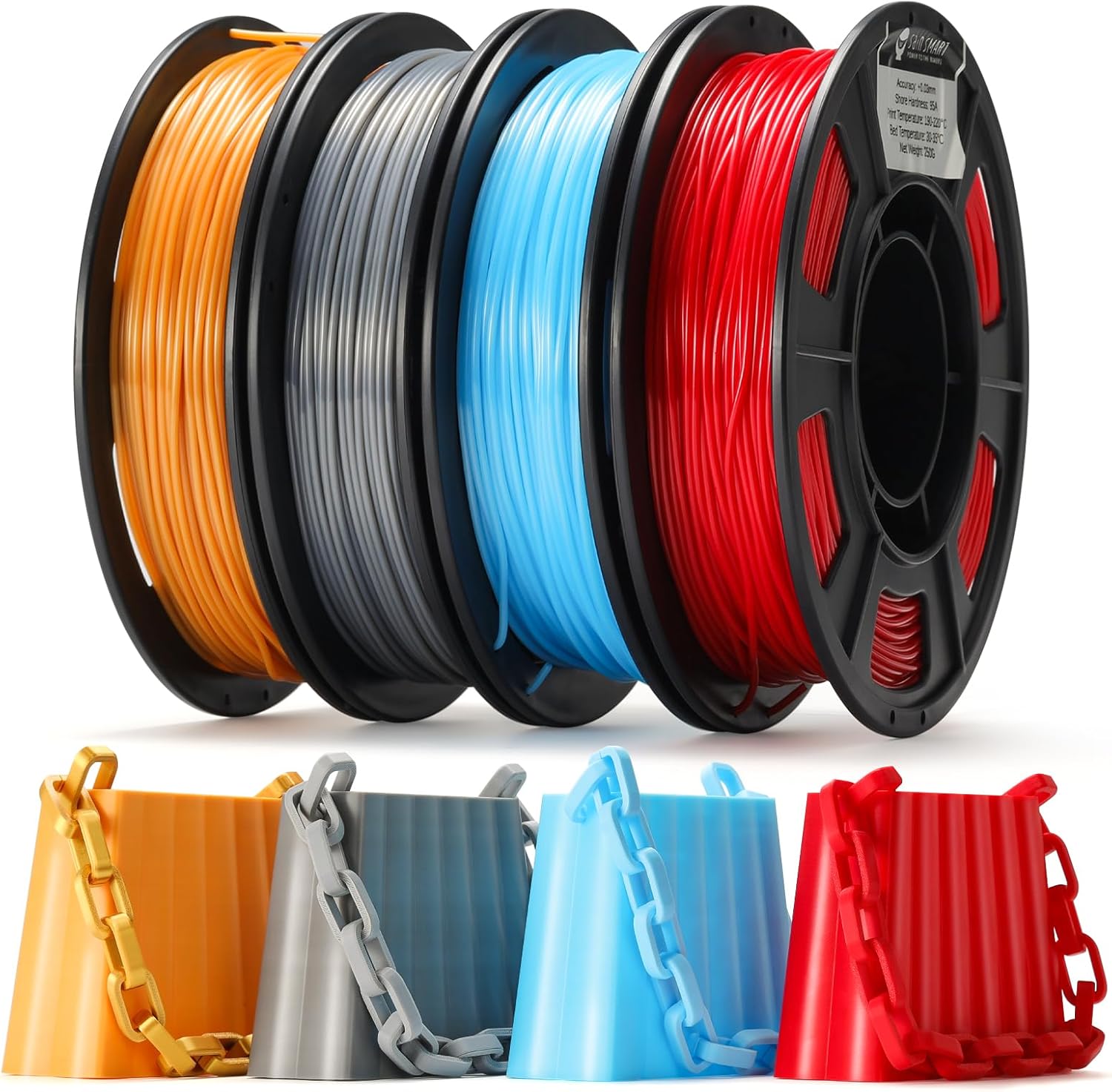
A 1kg roll is unnecessary when you only want to test printer compatibility or complete one small project. SainSmart’s 250g TPU spool gives beginners enough material for calibration pieces, feet, plugs, cable protectors, or a compact phone case.
SainSmart’s 95A formula has a long customer history, and the smaller spool lowers the commitment for anyone unsure whether their Bowden or direct-drive setup will handle flexible material smoothly.
Pros
- Practical trial size
- Established TPU brand
- Suitable for small projects
Cons
- Higher cost per gram than larger spools
- Not enough material for repeated large prints
5. Polymaker PolyFlex TPU95
Best for: Makers who prioritize consistent material

PolyFlex TPU95 is aimed at users willing to pay a little more for predictable performance and manufacturer documentation. Polymaker engineered it for broad compatibility with desktop FDM printers, making it a worthwhile option for prototypes, flexible fixtures, grips, and replacement components.
The spool contains 750g rather than the more common 1kg. That reduces its raw value, but the controlled material properties and dependable finish may matter more for professional or repeatable work.
Pros
- Well-documented material
- Clean, consistent printing once calibrated
- Suitable for professional prototypes
Cons
- Only 750g per spool
- Costs more per gram than budget TPU
6. DURAMIC 3D TPU Filament
Best for: Tough everyday parts
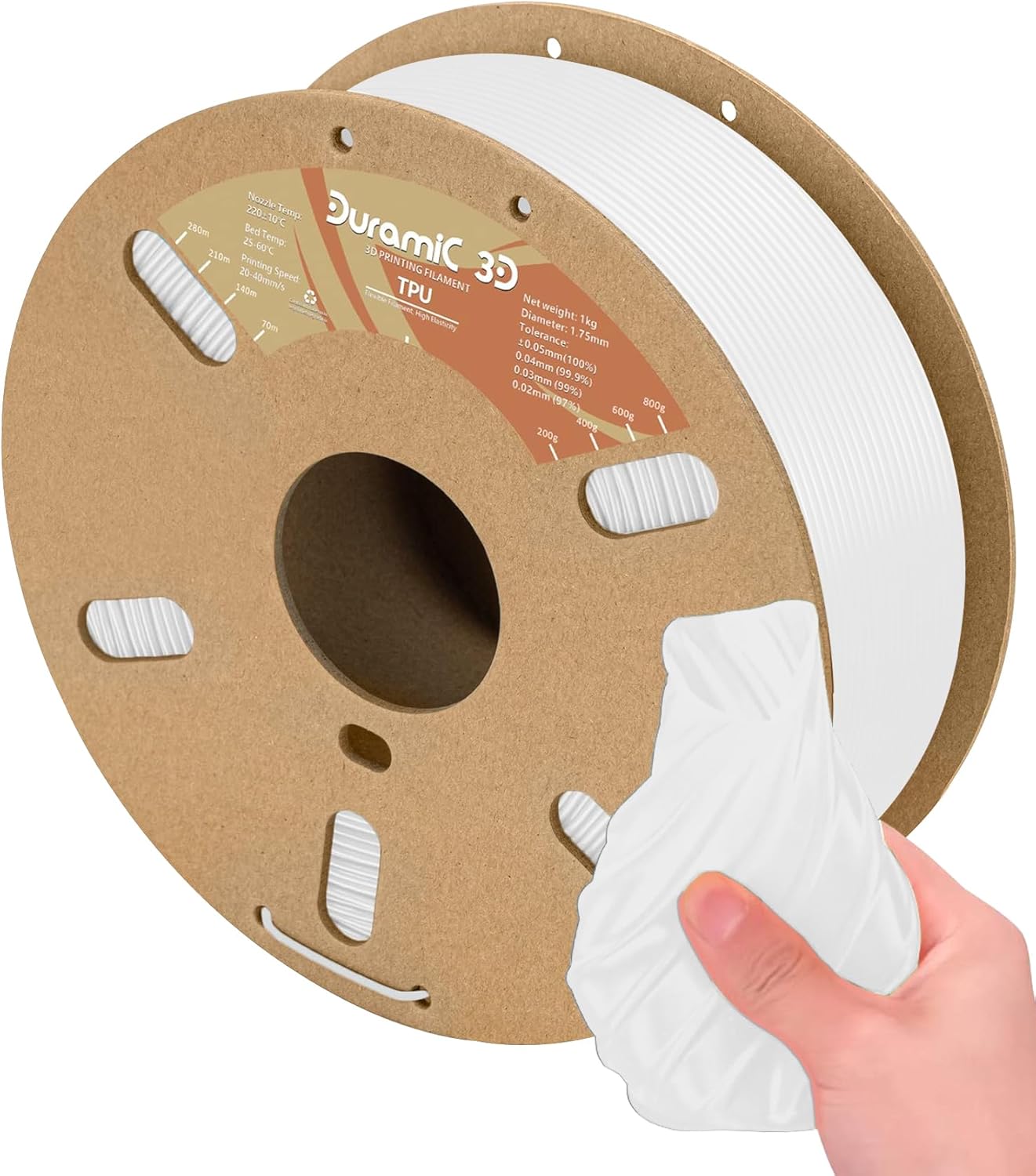
DURAMIC 3D TPU stands out for its strong customer score and full-size 1kg spool. It is a good candidate for basketball-style lattice prints, protective parts, bumpers, flexible feet, and workshop pieces where toughness matters more than an ultra-soft feel.
Customer feedback frequently mentions strong adhesion and durable completed parts. As with any TPU, letting the first layer cool completely before removal can prevent stretching or distorting the print.
Pros
- Excellent customer rating
- Full 1kg spool
- Strong choice for functional designs
Cons
- Limited published material data
- Bed adhesion may be stronger than expected
7. SainSmart 87A TPU Filament
Best for: Softer, more rubber-like prints

Most beginner TPU is rated around 95A. SainSmart 87A is noticeably softer, making it better for flexible seals, cushioning, soft camera mounts, wearables, and parts designed to compress.
That added softness also makes feeding more demanding. A tightly constrained filament path and direct-drive extruder are strongly preferred. Beginners should master 95A TPU before moving to this spool.
Pros
- Softer than standard 95A TPU
- Better cushioning and compression
- Strong customer feedback
Cons
- More difficult to feed
- Less suitable for Bowden extruders
8. AMOLEN Transparent Rainbow TPU Bundle
Best for: Colorful flexible models

AMOLEN’s bundle contains four smaller transparent multicolor spools, giving makers more variety without requiring four full-size rolls. It works nicely for flexible toys, accessories, decorative straps, cosplay parts, and projects where gradual color changes are part of the design.
The smaller spools are less economical for production work, but they are much more interesting than another plain black roll. Customer ratings meet the minimum threshold and the review count is unusually high for a specialty TPU bundle.
Pros
- Four colors in one package
- Attractive transparent effects
- Useful for short creative projects
Cons
- Color transitions cannot be precisely controlled
- Less material per individual spool
9. YOYI 95A TPU Filament
Best for: Compact functional projects

YOYI 95A TPU offers a strong, flexible material in smaller spool sizes. It is suitable for laptop feet, cable-management parts, pads, protective covers, and other projects that do not require an entire kilogram.
The 95A hardness keeps it more manageable than very soft TPU, although calibration is still essential. Customer feedback suggests that experienced users get better results than absolute beginners, so plan to print a temperature tower or small test part first.
Pros
- Durable 95A material
- Smaller spool reduces waste
- Large customer-review history
Cons
- Limited instructions for beginners
- Smaller spool can cost more per gram
10. PRILINE 98A TPU Filament
Best for: Firmer flexible components

PRILINE 98A is stiffer than typical 95A TPU. That makes it easier to feed and useful for RC tires, semi-rigid bumpers, impact-absorbing parts, brackets, and components that should flex without feeling floppy.
The firmer formula may also work better in some Bowden-style printers. However, customer feedback regarding winding and diameter consistency is mixed, so this is best for users comfortable inspecting filament and calibrating flow.
Pros
- Firmer and easier to push through an extruder
- Good for impact-absorbing parts
- Full 1kg spool
Cons
- Less rubber-like than 95A or 87A TPU
- Some reports of inconsistent winding
What to Look for When Buying TPU Filament
Choose the Right Shore Hardness
Shore hardness tells you how firm the material feels. For most buyers, 95A is the safest starting point. It bends easily but remains firm enough to feed through a well-configured extruder.
Choose 87A when you need softness and compression. Choose 98A when you need a flexible part that still holds its shape.
Check Your Extruder
Direct-drive extruders generally handle TPU more easily because the filament travels a shorter distance between the drive gears and nozzle. Bowden printers can still print firmer TPU, but they benefit from a tightly constrained filament path and slow speeds.
Keep the Spool Dry
TPU absorbs moisture from the air. Wet filament commonly produces popping, bubbles, rough surfaces, weak layers, and extra stringing.
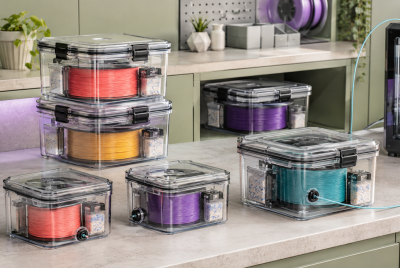
Store opened spools in an airtight container with desiccant. This guide to keeping 3D printer filament dry covers practical storage and drying methods in more detail.
Start Slowly
Do not copy PLA speeds and hope for the best. Begin with the manufacturer’s recommended profile, keep retraction conservative, and print a small calibration model before committing to a long job.
Final Thoughts
The best TPU 3D printer filament depends on how soft, fast, colorful, or durable your project needs to be. OVERTURE TPU 95A is the strongest all-around starting point, SUNLU is appealing for faster machines, and SainSmart 87A makes sense when genuine softness matters. Whichever spool you choose, dry it properly, begin with conservative settings, and test a small model before launching a long print.
Frequently Asked Questions
What is the best TPU hardness for beginners?
A 95A TPU is usually the best starting point. It provides useful flexibility while remaining firmer and easier to feed than softer 85A or 87A materials.
Can every 3D printer use TPU filament?
Not every printer handles TPU equally well. The machine needs compatible hotend temperatures and an extruder that can guide flexible filament without allowing it to buckle. Direct-drive machines usually perform best.
Does TPU filament need a heated bed?
Some TPU prints successfully on an unheated bed, while other formulas benefit from mild bed heat. Follow the spool manufacturer’s recommendations and avoid excessive adhesive because TPU may bond aggressively to certain surfaces.
Why is my TPU print stringy?
Common causes include moisture, excessive nozzle temperature, overly long retractions, slow travel moves, and an untuned flow rate. Drying the spool is often the best first troubleshooting step.
Can TPU filament be used for outdoor parts?
TPU can work for some outdoor parts, but performance varies by formula, colorant, heat exposure, and UV resistance. Check the manufacturer’s technical data before using a printed piece in demanding outdoor or safety-critical applications.