Top 10 Carbon Fiber Filaments
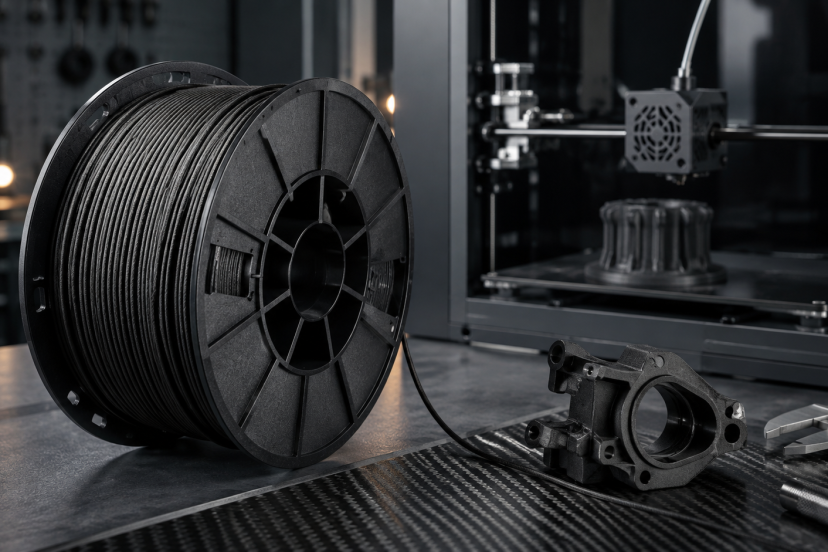
Carbon fiber filaments can produce lightweight, rigid parts with a clean matte finish that hides layer lines beautifully. However, choosing the right spool takes more thought than simply ordering the strongest-looking material.
Some carbon fiber blends print almost as easily as regular PLA, while engineering-grade nylon and polycarbonate require high temperatures, careful drying, and an enclosed printer. This guide compares ten worthwhile options for prototypes, brackets, tools, drone components, automotive projects, and other functional prints.
Our Top Picks
| Product | Best For | Key Feature | Rating | Read More |
| PRILINE Carbon Fiber Polycarbonate | Best overall | Strong PC-CF engineering blend | ★★★★⯪ | Read more |
| ELEGOO PLA-CF | Beginners | Approachable PLA base | ★★★★⯪ | Read more |
| iSANGHU PETG-CF | Best PETG option | 20% carbon fiber formula | ★★★★⯪ | Read more |
| ELEGOO PETG-CF | Functional everyday parts | Balanced rigidity and toughness | ★★★★⯪ | Read more |
| Creality Hyper PLA-CF | High-speed printing | Supports faster print speeds | ★★★★⯪ | Read more |
| ERYONE PETG-CF | Surface finish | Refined matte appearance | ★★★★⯪ | Read more |
| SUNLU PETG-CF | Best value | Accessible 10% CF blend | ★★★★⯪ | Read more |
| ELEGOO PAHT-CF | Heat-resistant parts | High-temperature nylon base | ★★★★⯪ | Read more |
| eSUN ePLA-CF | Mechanical components | Tough carbon-fiber nylon | ★★★★⯪ | Read more |
| Polymaker Fiberon PA6-CF20 | Advanced users | 20% carbon fiber reinforcement | ★★★★⯪ | Read more |
What to Know Before Buying Carbon Fiber Filaments
Carbon fiber filaments are not a spool of continuous carbon fiber. Most consumer products combine short, chopped fibers with a thermoplastic such as PLA, PETG, nylon, ABS, or polycarbonate.
Those fibers commonly improve stiffness, dimensional stability, and surface texture. They do not automatically make a print tougher in every direction, however. Poor layer bonding, unsuitable print settings, or an incorrect part orientation can still create a weak component.
The base polymer determines most of the material’s behavior:
- PLA-CF is generally the easiest to print and produces attractive, rigid models.
- PETG-CF balances printability, durability, and moderate heat resistance.
- Nylon-CF suits demanding mechanical parts but absorbs moisture quickly.
- PC-CF offers stiffness and heat resistance but requires capable hardware.
- ABS-CF works well for enclosures and automotive projects when printed in an enclosure.
Before experimenting, review this guide to 3D printing filament types to compare the temperature, strength, and handling characteristics of each base material.
1. PRILINE Carbon Fiber Polycarbonate – Best Overall

PRILINE combines chopped carbon fiber with polycarbonate to create a stiff material for brackets, fixtures, machine components, and structural prototypes. Its strength and heat resistance make it more suitable for serious functional work than decorative PLA-CF.
This is not a beginner spool. You need a high-temperature hotend, wear-resistant nozzle, heated bed, and preferably an enclosure. Drying the material before use can also make a noticeable difference.
Key features:
- 1.75 mm PC-CF filament
- 1 kg spool
- Designed for strong engineering parts
- High rigidity and heat resistance
Pros:
- Excellent stiffness
- Suitable for demanding applications
- Clean, professional-looking finish
Cons:
- More difficult to print than PLA or PETG
- Requires capable hardware
Best for: Experienced users printing structural and heat-exposed parts.
2. ELEGOO PLA-CF – Best for Beginners

ELEGOO PLA-CF is a practical introduction to filled materials. It retains much of PLA’s user-friendly behavior while creating stiffer models with a subdued matte-black surface.
Use it for display models, jigs, organizers, housings, and prototypes that need better rigidity rather than extreme temperature resistance. A hardened nozzle is still necessary despite the approachable PLA base.
Key features: 1.75 mm diameter, 1 kg spool, matte finish, broad FDM compatibility.
Pros:
- Easier to dial in
- Smooth finish hides layer lines
- Good dimensional stability
Cons:
- Limited heat resistance
- Can be more brittle than unfilled PLA
Best for: First-time carbon fiber users and cosmetic functional parts.
3. iSANGHU PETG-CF – Best PETG Carbon Fiber Filament

This iSANGHU formula combines PETG with a stated 20% carbon fiber content. The result is intended to deliver greater stiffness and a more technical appearance while retaining PETG’s useful toughness.
It is a sensible middle ground for tool holders, drone parts, equipment mounts, and workshop components. You avoid some of nylon’s moisture sensitivity while gaining better functional performance than basic PLA-CF.
Key features: 20% carbon fiber content, PETG base, 1.75 mm diameter, matte-black finish.
Pros: Good balance of stiffness and toughness; useful for functional prints; less demanding than nylon.
Cons: Can string if printed too hot; requires a hardened nozzle.
Best for: Makers who want an all-purpose functional composite.
4. ELEGOO PETG-CF – Best for Everyday Functional Parts

ELEGOO PETG-CF targets brackets, housings, fixtures, and other parts that must withstand more handling than a decorative PLA print. It offers a useful mix of rigidity, wear resistance, and dimensional accuracy.
PETG-CF still benefits from drying, particularly if the spool has been open for several days. Once calibrated, it can become a dependable workshop material.
Key features: Carbon-fiber-reinforced PETG, 1 kg spool, 1.75 mm diameter, functional matte finish.
Pros: Strong all-around performance; attractive surface; reputable filament brand.
Cons: Requires temperature and retraction tuning; not ideal for very hot environments.
Best for: Workshop parts, equipment mounts, and durable enclosures.
5. Creality Hyper PLA-CF – Best for High-Speed Printing

Creality designed Hyper PLA-CF for users who want a carbon-fiber appearance without dramatically slowing a modern printer. The manufacturer specifies a broad speed range reaching 300 mm/s, although real results depend on the machine and model geometry.
Its low-warping PLA base makes it useful for rapid prototypes, organizers, jigs, and large cosmetic components. Do not choose it for parts exposed to high temperatures.
Key features: High-speed formula, matte surface, ±0.03 mm dimensional tolerance, 1.75 mm diameter.
Pros: Fast-printing potential; easy bed adhesion; clean surface quality.
Cons: PLA-level heat limitations; stiffness does not guarantee impact toughness.
Best for: High-speed printers and rapid prototyping.
6. ERYONE PETG-CF – Best Matte Finish

ERYONE PETG-CF is a strong candidate when appearance matters nearly as much as function. Its dark, textured surface helps disguise ordinary FDM layer lines and gives finished components a convincing technical look.
The PETG base makes it appropriate for camera accessories, electronic enclosures, display hardware, and custom computer components. Print a temperature tower before committing to a long model.
Key features: PETG-CF construction, matte appearance, 1.75 mm diameter, 1 kg spool.
Pros: Refined finish; practical durability; suitable for visible components.
Cons: May need careful retraction tuning; moisture can reduce surface quality.
Best for: Attractive functional parts and electronics projects.
7. SUNLU PETG-CF – Best Value

SUNLU’s PETG-CF uses a stated 10% short-carbon-fiber blend. It is a good choice for makers who want to test reinforced PETG without immediately moving to a costly engineering spool.
The material suits prototypes, brackets, cases, and general workshop accessories. It may not match the stiffness of higher-fiber formulas, but that can also make it less troublesome to print.
Key features: 10% short carbon fibers, 1 kg spool, PETG base, matte texture.
Pros: Good value; accessible material characteristics; widely compatible diameter.
Cons: Lower fiber content than some competitors; still abrasive.
Best for: Budget-conscious users and routine workshop projects.
8. ELEGOO PAHT-CF – Best for Heat Resistance

ELEGOO PAHT-CF uses a high-temperature nylon base for gears, bearings, structural brackets, and parts exposed to friction or heat. It offers a substantial performance step above PLA-CF and PETG-CF.
That performance comes with stricter preparation. An enclosed printer, high-temperature hotend, abrasion-resistant nozzle, and effective filament dryer should be considered essential.
Key features: High-temperature nylon composite, 500 g spool, corrosion resistance, strong dimensional stability.
Pros: Excellent mechanical potential; handles heat well; suitable for precision parts.
Cons: Smaller spool; highly moisture-sensitive; demanding print requirements.
Best for: Engineering parts used in warm or mechanically demanding conditions.
9. eSUN ePLA-CF – Best for Mechanical Components

eSUN ePLA-CF is a reinforced nylon made for gears, robotic components, tooling, and load-bearing prototypes. Nylon supplies toughness, while the chopped fibers improve stiffness and help control dimensional movement.
Keep the spool dry before and during printing. Wet nylon may pop at the nozzle, produce a rough surface, and weaken the finished part.
Key features: Nylon-carbon-fiber blend, engineering-grade focus, low-warping formulation, 1.75 mm diameter.
Pros: Tough and rigid; suitable for moving assemblies; established filament manufacturer.
Cons: Requires active drying; poor choice for basic open-frame printers.
Best for: Robotics, mechanical assemblies, and replacement components.
10. Polymaker Fiberon PA6-CF20 – Best for Advanced Users

Fiberon PA6-CF20 combines Nylon 6 with 20% carbon fiber for demanding components where rigidity and mechanical performance matter. It is well suited to fixtures, manufacturing aids, automotive prototypes, and machine parts.
This filament rewards careful preparation but exposes underpowered hardware quickly. Confirm that your printer can reach the recommended nozzle and bed temperatures before buying.
Key features: PA6 base, 20% carbon fiber reinforcement, engineering-focused formula, 1.75 mm diameter.
Pros: High stiffness; strong dimensional stability; suited to demanding applications.
Cons: Needs aggressive drying; advanced printing hardware recommended.
Best for: Experienced makers producing serious functional components.
How to Get Better Results With Carbon Fiber Filaments
A 0.4 mm hardened nozzle may work, but a 0.6 mm nozzle usually reduces clogging risk and allows chopped fibers to flow more freely. Avoid brass nozzles because abrasive fillers can enlarge the opening and gradually ruin dimensional accuracy.
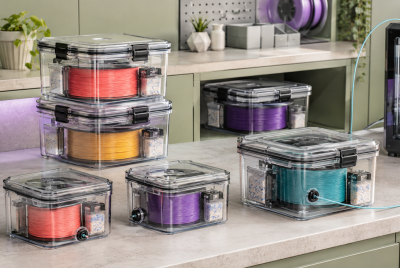
Dry PETG-CF, nylon-CF, and PC-CF according to the manufacturer’s instructions. Store opened spools in sealed containers with fresh desiccant, and print directly from a dryer when working with nylon.
For additional upgrades, see these useful 3D printer accessories, including tools that can make filament storage, printer maintenance, and post-processing more reliable.
Final Thoughts
The best carbon fiber filaments match both the job and the printer. ELEGOO PLA-CF offers the easiest starting point, iSANGHU PETG-CF provides a versatile balance for everyday functional work, and PRILINE PC-CF or Fiberon PA6-CF20 better serves experienced users chasing engineering-level performance. Whichever material you choose, pair it with an abrasion-resistant nozzle, dry it properly, and test a small calibration model before beginning an important print.
FAQs
Is carbon fiber filament stronger than regular filament?
It is generally stiffer and more dimensionally stable than the unfilled base polymer. However, it may not have better impact resistance or layer adhesion, so “stronger” depends on the load and part orientation.
Can any 3D printer use carbon fiber filament?
No. At minimum, the printer needs a wear-resistant nozzle and suitable hotend temperature. Nylon-CF and PC-CF may also require an enclosure, high bed temperatures, and active filament drying.
What nozzle works best for carbon fiber filaments?
A hardened-steel nozzle is the most accessible option. A 0.6 mm opening is often preferred because it is less likely to clog than a 0.4 mm nozzle.
Does carbon fiber filament need to be dried?
Most carbon fiber blends benefit from drying, but nylon-based materials need it most urgently. Always follow the spool manufacturer’s temperature and duration recommendations.
Is PLA-CF suitable for structural parts?
PLA-CF works well for rigid jigs, fixtures, housings, and prototypes used indoors. For heat, repeated impact, or sustained mechanical loads, PETG-CF, nylon-CF, or PC-CF may be more appropriate.